How to Track Referral Traffic for Startups
Your startup just launched on Product Hunt. Three hundred visitors showed up. But where do they go from here? Understanding referral traffic helps you double down on what works without burning through your limited marketing budget.
Why Referral Traffic Matters for Startups
Startups live and die by customer acquisition cost. Every dollar counts when you’re pre-revenue or just starting to scale. Referral traffic typically converts better than any other channel because it comes with built-in trust.
First, referrals reduce CAC significantly. When a founder shares your product on Twitter or a podcast mentions your startup, those visitors arrive pre-sold. They convert at rates 2-3x higher than cold organic traffic.
Second, referral sources are trackable and replicable. Unlike viral growth that happens by accident, strategic partnerships with complementary startups, industry blogs, or affiliate programs create predictable traffic flows.
Third, referral data reveals product-market fit signals. If users from specific communities keep bouncing, your product might not resonate there. But high engagement from referral sources often indicates strong product-market fit.
Finally, referrals compound over time. A single press mention or partnership can drive traffic for months, creating a compounding效应 that paid ads cannot match.
How to Check in GA4
Setting up referral tracking in GA4 takes about fifteen minutes.
First, create your GA4 property and install the tracking code on your site. Make sure enhanced measurement is enabled so traffic sources auto-populate.
Next, go to Reports, then Traffic Acquisition. Here you’ll see all sessions grouped by source, medium, and campaign. Look for “referral” in the medium column to find your incoming links.
Click on any referral source to see behavior metrics. Sort by conversion rate, average engagement time, or pages per session to find quality sources, not just high volume ones.
Create custom alerts for significant referral spikes. In GA4, go to Admin, then Audiences, and set up notifications when referral traffic from specific sources exceeds thresholds.
The Easier Way
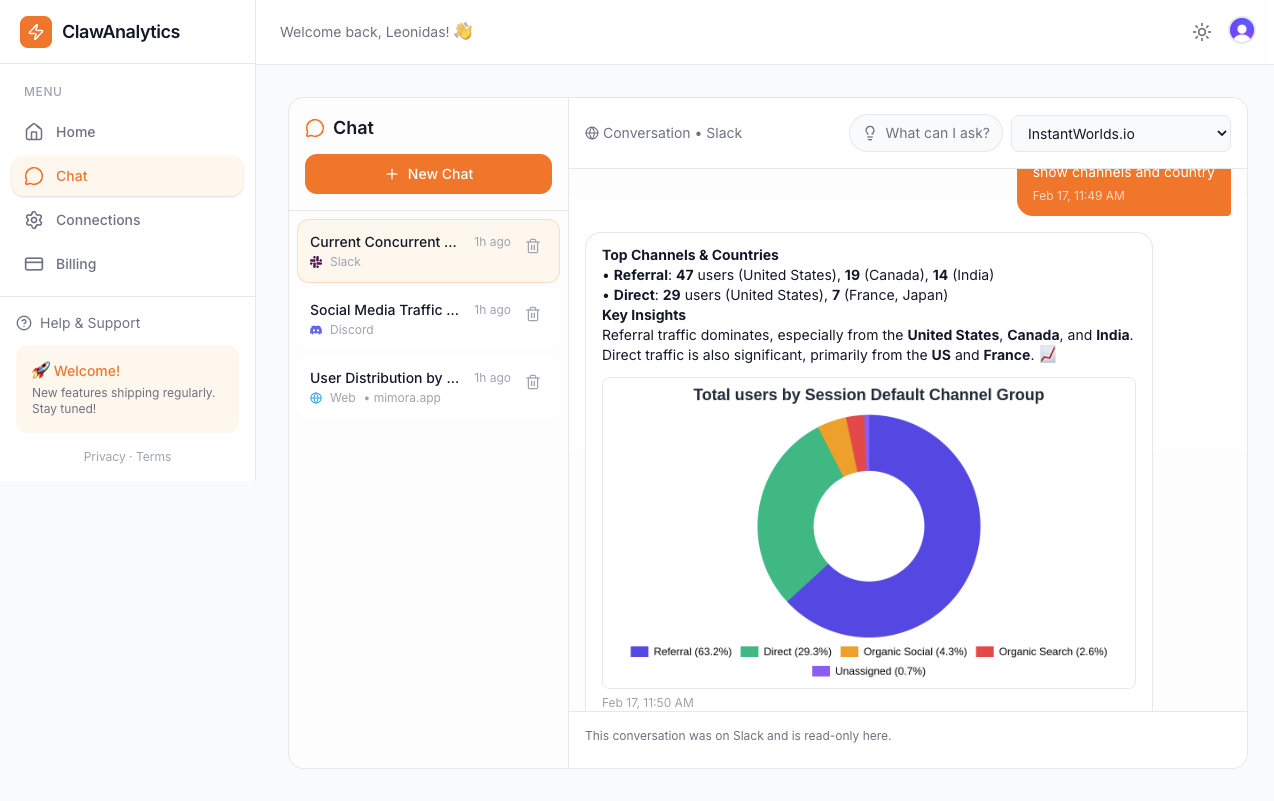
Setting up proper UTM parameters across every partnership and tracking them manually becomes a time sink as you scale. ClawAnalytics automates this entire process.
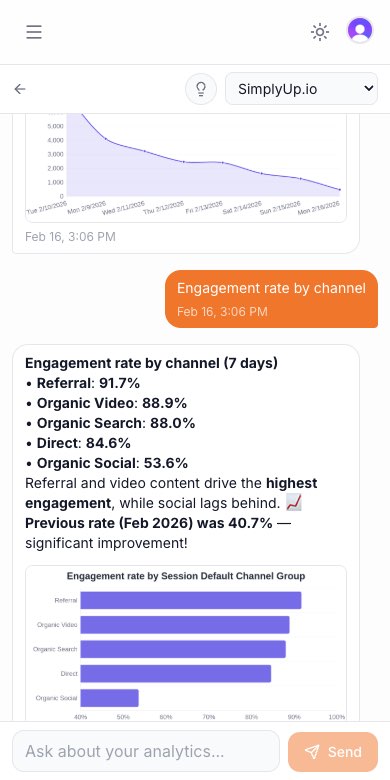
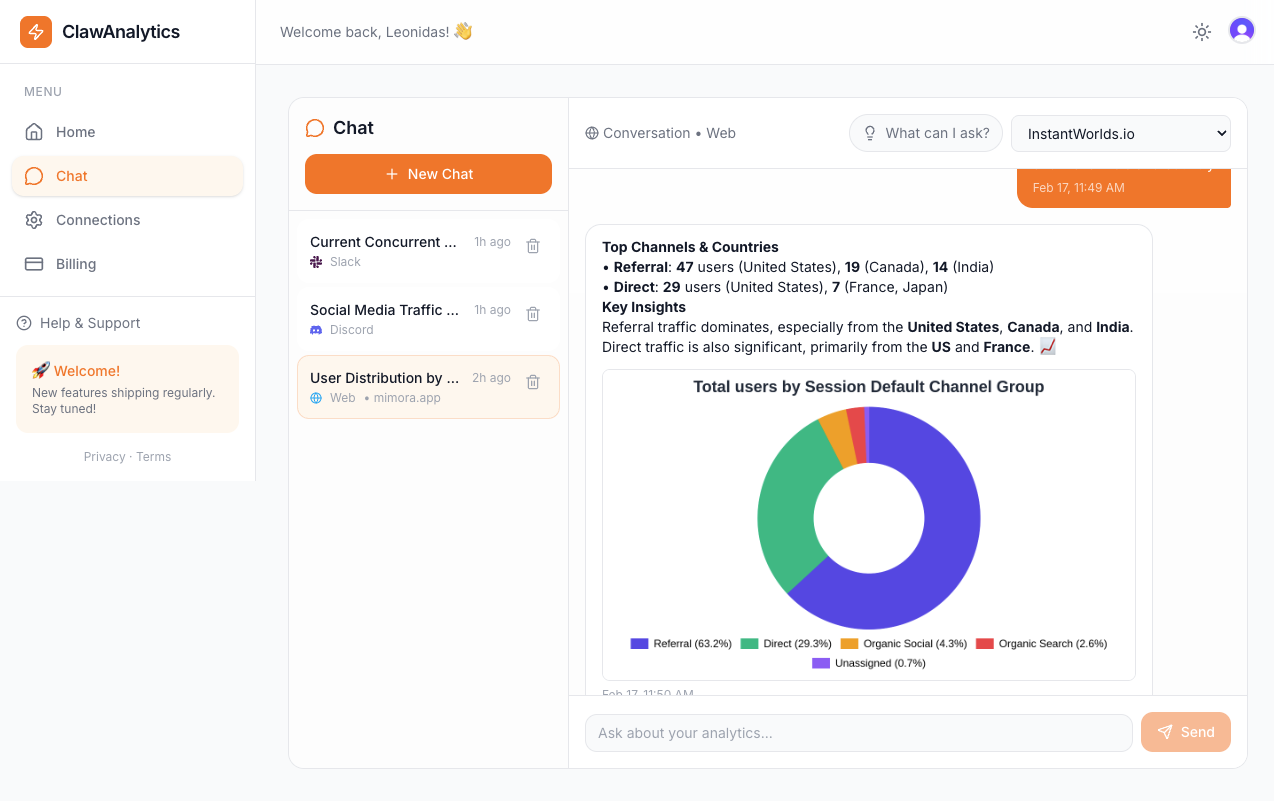
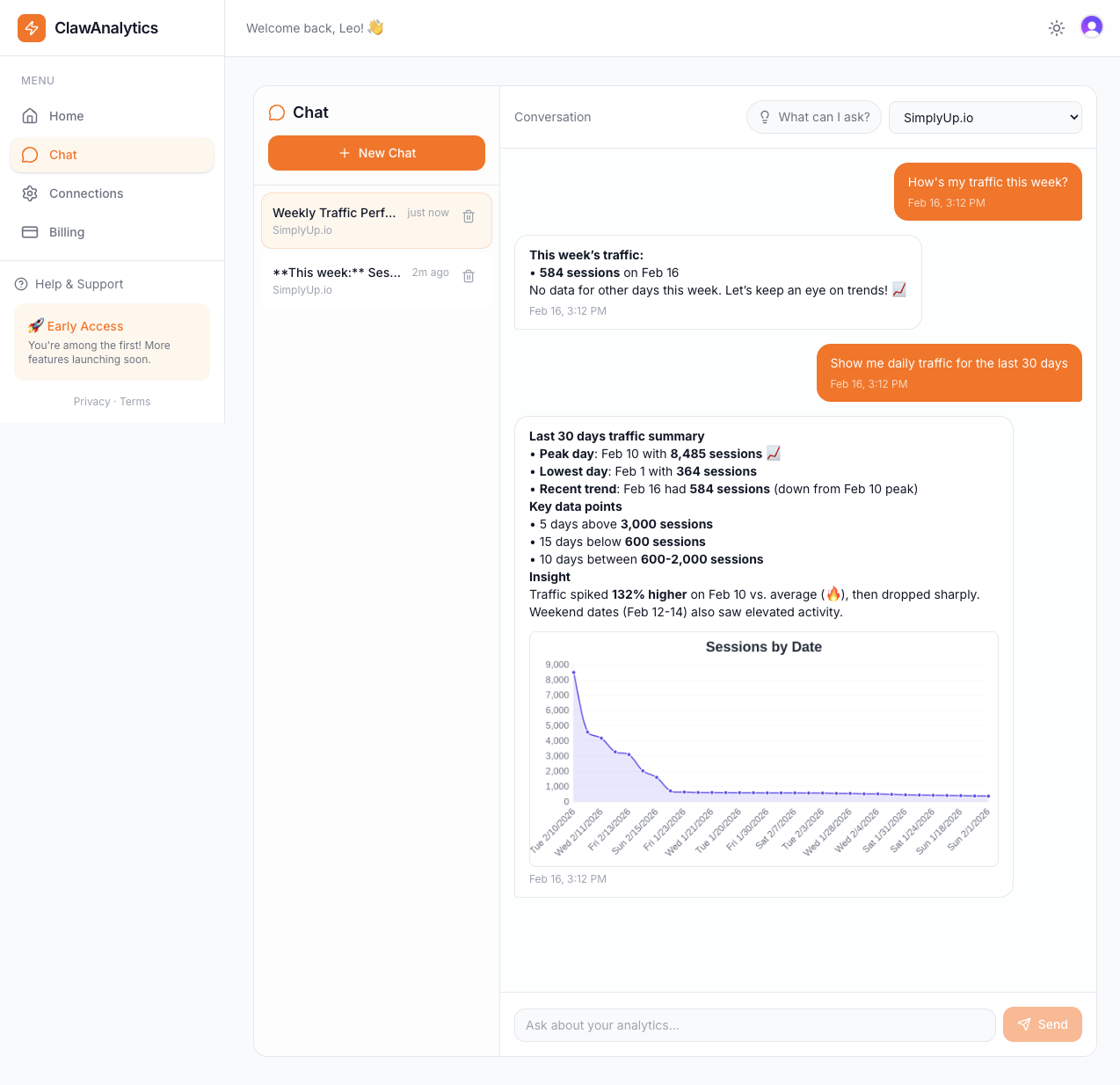
Instead of manually tagging every link, ClawAnalytics automatically captures and normalizes referral data across all your campaigns. You get clean dashboards showing which partnerships drive the most valuable traffic.
For example, you might discover that your startup’s guest post on a specific tech blog drives 50 conversions per month, while a partnership with a complementary SaaS drives only 5, despite similar traffic volumes. This insight helps you allocate partnership resources more effectively.
ClawAnalytics also surfaces questions like: Which referral sources have the highest lifetime value? Which industry blogs send visitors who actually sign up for trials? Which podcast mentions convert best?
The platform consolidates data from multiple GA4 properties, partner portals, and affiliate networks into one view, so you’re not constantly switching between dashboards.
Quick Wins
Create a standard UTM template for all partnership links. Include consistent naming conventions for source, medium, and campaign. This makes comparison easy across all referral channels.
Set up conversion events for key startup metrics like sign-ups, trial starts, or demo requests. Track these against referral sources to measure actual business impact, not just vanity traffic numbers.
Reach out to top referrers monthly with updates. Build relationships with blogs, podcasts, and partners who send quality traffic. A quick thank-you email often leads to more mentions.
Audit your backlink profile quarterly using tools like Ahrefs or Semrush. Identify new referral sources you might be missing and reach out to claim those referral credits in your analytics.
Finally, test new referral channels in small batches before scaling. A small partnership might deliver your best ROI, but you’d never know without tracking the data systematically.