How to Track Return On Ad Spend for Accountants
Imagine spending $500 on Facebook Ads and landing a client who pays you $6000 for annual accounting services. That is a 12:1 return. But how do you know which ads actually work? Tracking return on ad spend gives you the answer.
Why Return On Ad Spend Matters for Accountants
It reveals your true client acquisition cost. Every dollar spent on Google Ads, Facebook, or LinkedIn should bring in more revenue. ROAS tells you exactly how much.
It identifies wasteful spending. If one campaign has a 2:1 ROAS and another hits 8:1, you know where to put your money. Stop throwing budget at ads that do not perform.
It helps you bid smarter. Knowing your ROAS lets you set realistic bid strategies. You can afford to pay more per click when you know those clicks convert.
It attracts the right clients. Tracking ROAS across channels shows which platforms bring in clients who stay longer and spend more. A small business owner needing monthly bookkeeping is more valuable than a one-time tax return.
How to Check in GA4
Google Analytics 4 makes tracking ROAS straightforward. Here is how to do it.
First, set up conversion events for client inquiries or bookings. In GA4, go to Configure > Events. Mark your key actions as conversions. This might be “booking_submitted” or “contact_form_submit.”
Next, link your Google Ads account. Go to Admin > Property > Google Ads linking. This imports your cost data directly into GA4.
Then, create a custom report. Go to Reports > Acquisition > User acquisition. Add a comparison for ROAS. You will find it under the revenue metrics. Set your date range to 30 days for accurate data.
Finally, check the Campaigns report. Look at each campaign’s cost and conversion value. Sort by ROAS to see top performers at the top.
The Easier Way
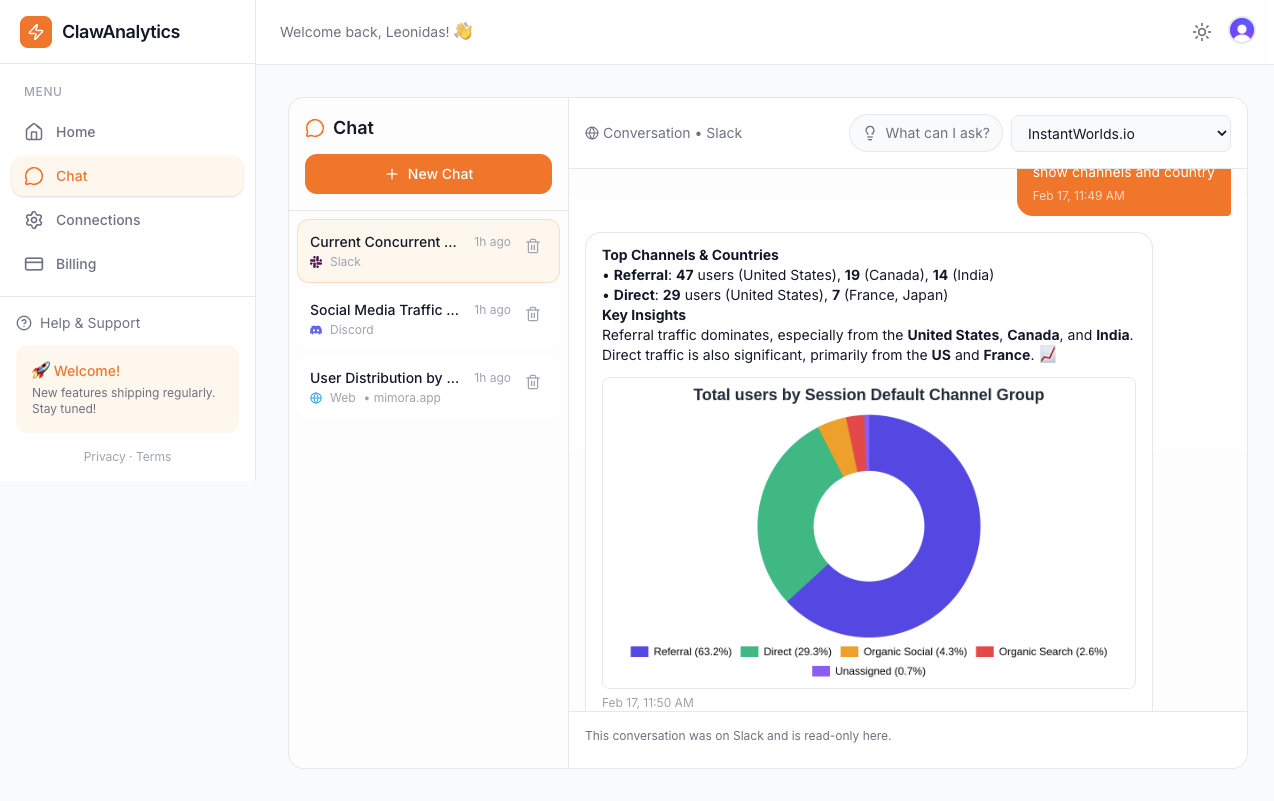
Manually calculating ROAS in GA4 takes time. You have to link accounts, set up conversions, and build custom reports. ClawAnalytics does this automatically.
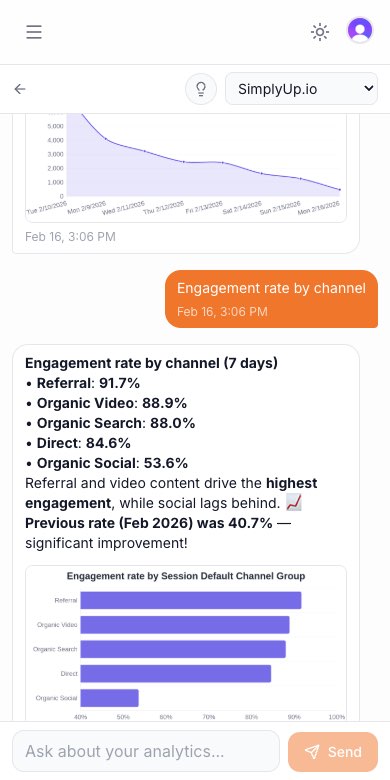
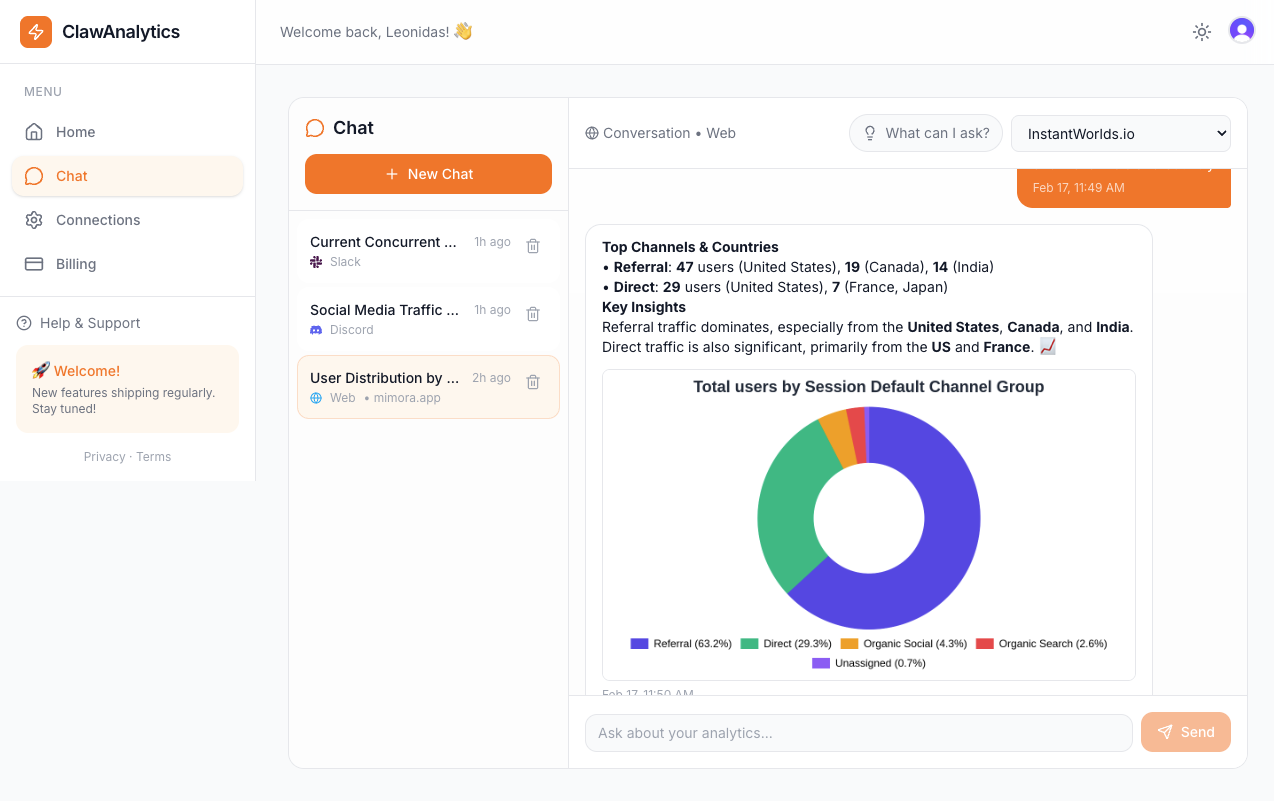
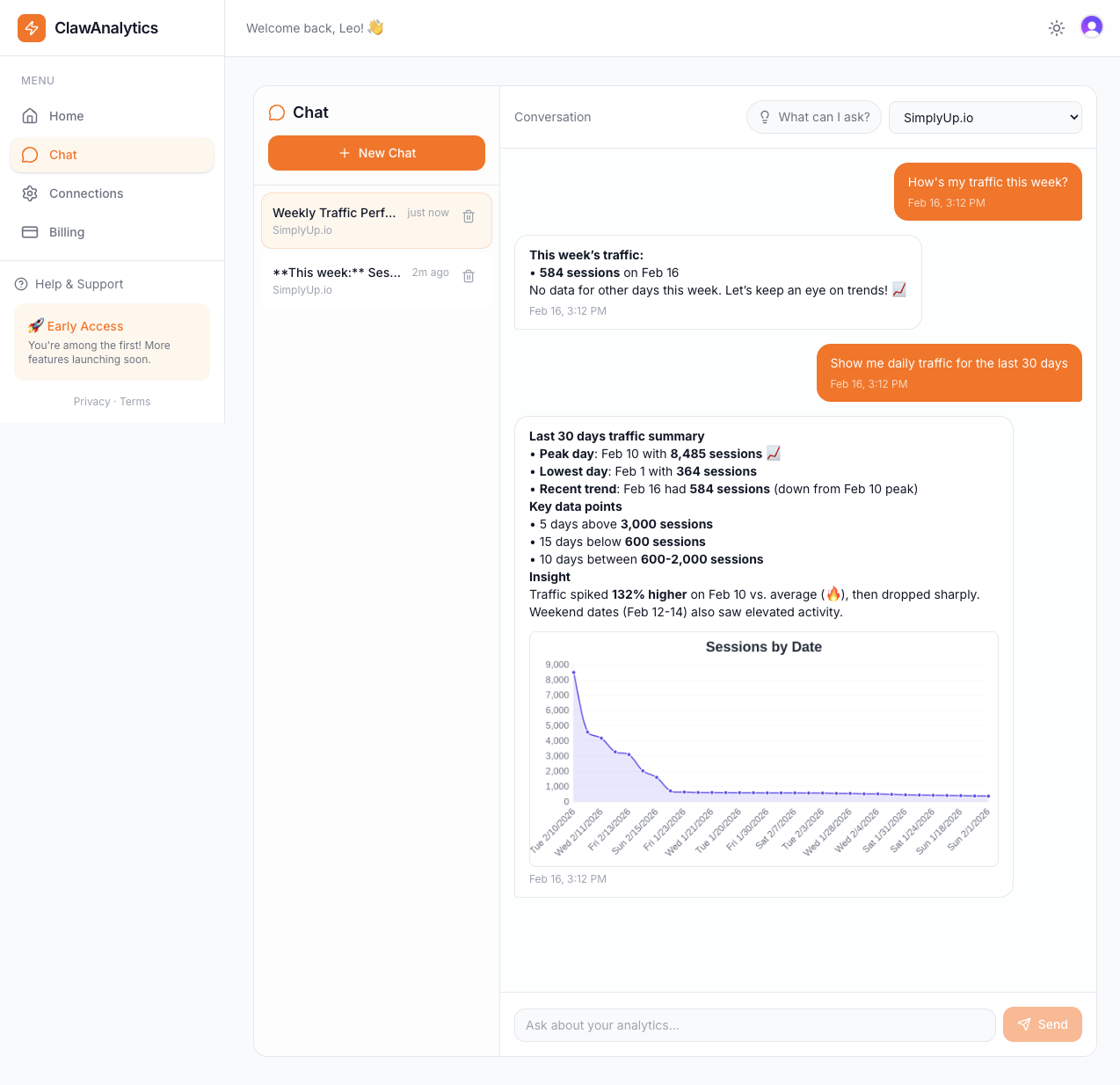
ClawAnalytics pulls your Google Ads data and GA4 conversions together in one dashboard. It calculates ROAS for each campaign automatically. You see at a glance which ads bring in clients worth $5000 versus $500.
For example, you can ask: “Which ad campaign brought the most high-value clients this month?” ClawAnalytics shows you the exact ROAS per campaign.
Another useful question: “What is my average ROAS across all Google Ads?” The dashboard displays the number instantly.
You can also ask: “Compare ROAS between my Facebook and LinkedIn campaigns.” ClawAnalytics breaks it down side by side so you know where to invest.
Quick Wins
Start with one platform. Do not try to track everything at once. Master Google Ads first, then expand to Facebook or LinkedIn.
Set a minimum ROAS target. For accountants, a 4:1 ROAS is usually healthy. If you are below that, optimize your ads or reduce spend on underperformers.
Track leads, not just clicks. A click is meaningless if it never becomes a client. Focus on conversion events that matter.
Review weekly. Marketing budgets evaporate fast. Check your ROAS every week so you can shift money to winning campaigns quickly.