How to Track Return On Ad Spend for Architects
You spend $800 on a Google Ads campaign and land a residential project worth $40,000. That is a 50:1 return. But would you know which ad brought that client? Without tracking return on ad spend, you are guessing.
Why Return On Ad Spend Matters for Architects
Architectural projects are expensive. A single commercial building or luxury home can generate fees in the tens of thousands. Your ad spend is an investment, and ROAS tells you if it is paying off.
Different projects have different values. A kitchen remodel might bring $3000, while a full commercial build could bring $50,000. ROAS helps you focus on ads that attract high-value work.
It justifies marketing budgets. When you can show stakeholders concrete ROAS numbers, getting approval for ad spend becomes much easier.
It improves bidding strategy. Knowing which ads convert lets you allocate budget to the channels and messages that work.
How to Check in GA4
Google Analytics 4 provides ROAS tracking if you set it up correctly.
Start by creating conversion events for project inquiries and consultation requests. In GA4, navigate to Configure > Events. Mark “inquiry_sent” or “consultation_booked” as conversions.
Link your Google Ads account. Go to Admin > Property > Google Ads linking. This imports your cost data automatically.
Build a custom report. In the Acquisition section, look for User acquisition. Add ROAS as a metric. Compare it across your campaigns and ad groups.
Filter by traffic source. Look specifically at Google Ads, then sort by conversion value. This shows you which campaigns bring the most valuable leads.
The Easier Way
Setting up ROAS in GA4 takes technical setup and regular monitoring. ClawAnalytics makes it simple.
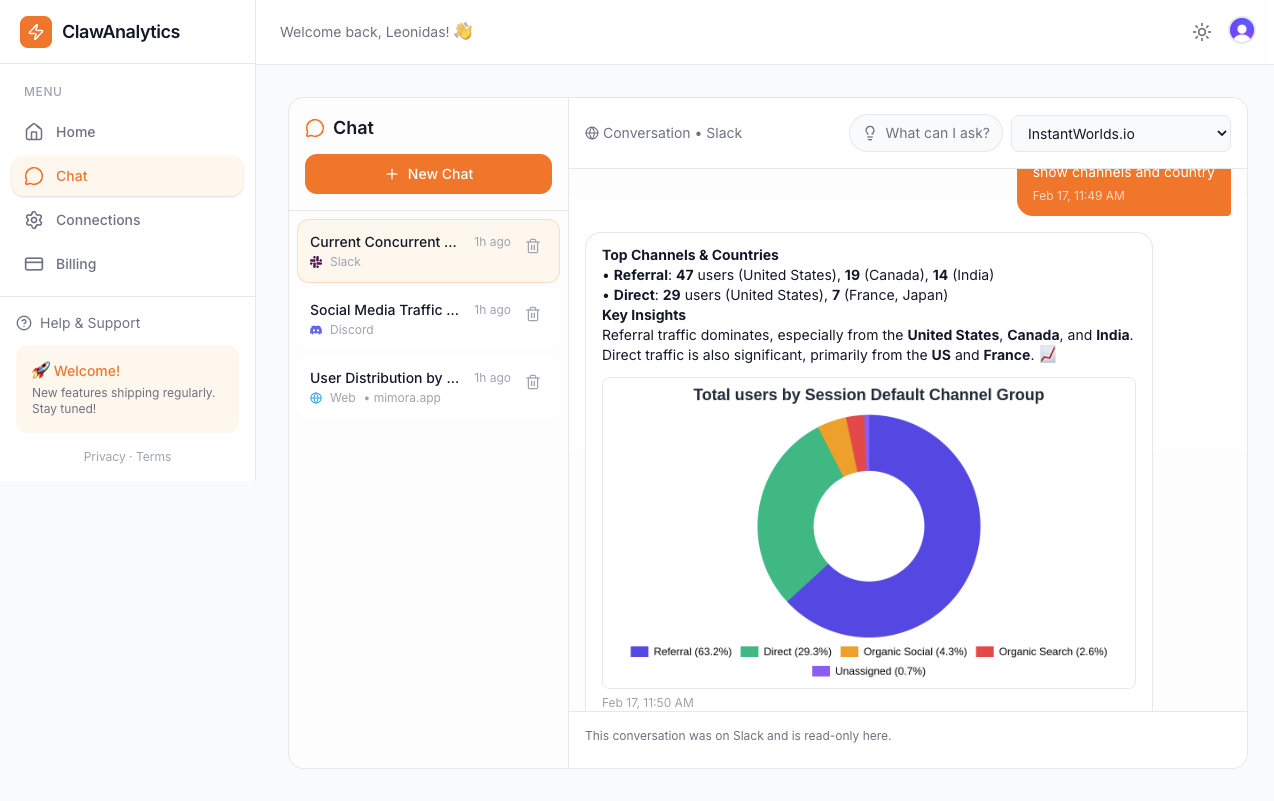
ClawAnalytics connects to your Google Analytics 4 and Google Ads accounts automatically. It pulls together costs and conversions in one clear view. You do not build any reports yourself.
You can ask: “Which ad brought my biggest project this quarter?” ClawAnalytics attributes the conversion and shows you the exact ROAS.
Another question: “What is my ROAS for residential versus commercial ads?” The dashboard separates these automatically.
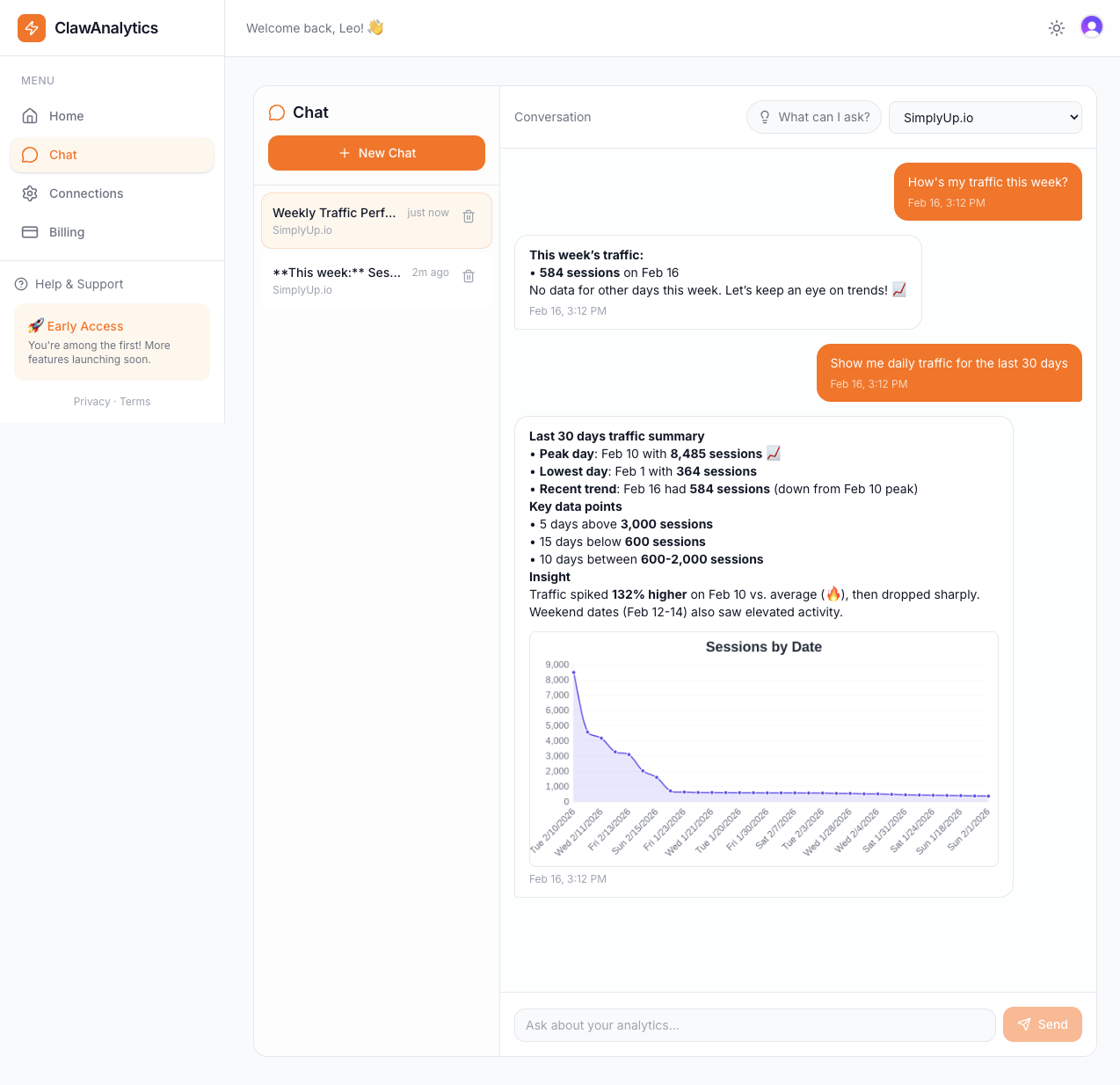
You might also ask: “Show me the trend of ROAS over the past three months.” ClawAnalytics displays the trajectory so you can spot problems early.
Quick Wins
Track inquiry value, not just count. Not all leads are equal. Assign dollar values to different inquiry types so ROAS reflects real revenue.
Use offline conversion tracking. Ask new clients how they found you. Link that to your ad data for accurate ROAS.
Test one variable at a time. Change your ad copy, then check if ROAS improves. This isolates what works.
Review monthly at minimum. Architectural sales cycles are long. Check ROAS monthly to catch trends before they become problems.