How to Track Return On Ad Spend for Finance
You just launched a $20,000 monthly ad campaign for your fintech app. You got 5,000 sign-ups, but only 150 became paying customers worth $50 each. Your revenue is $7,500, which means you’re losing on every money ad dollar spent. This is why ROAS tracking isn’t optional for financial services, it’s essential.
Why Return On Ad Spend Matters for Finance
Customer lifetime value is high but complex. A single banking customer might bring in $2,000 over 10 years, but only if they use multiple products. ROAS helps you understand which acquisition channels deliver profitable long-term relationships.
Regulatory constraints affect tracking. Financial ads face strict compliance rules, but that doesn’t mean you should skip ROAS measurement. You just need to focus on the metrics that don’t violate regulations.
Product complexity requires segmented tracking. A checking account, a mortgage, and an investment product all have different values. Treating them the same in your ROAS calculation hides important insights.
**Trust matters more than conversion volume.**In finance, a few high-quality leads beat thousands of unqualified ones. ROAS helps you identify which channels bring customers who actually stay.
How to Check in GA4
Set up conversion tracking for your key financial products. In Configure > Events, mark account openings, quote requests, and consultation bookings as conversions. This is your foundation.
Link your advertising accounts. Go to Configure > Google Ads links and connect all platforms where you run ads. Without this link, GA4 can’t calculate ROAS.
Create a custom dimension for product type. Tag your campaigns so you can see ROAS broken down by checking accounts, loans, investments, and insurance separately.
Use Monetization reports. GA4’s built-in Monetization section shows revenue from products and services. Compare this against your ad spend to get accurate ROAS figures.
The Easier Way
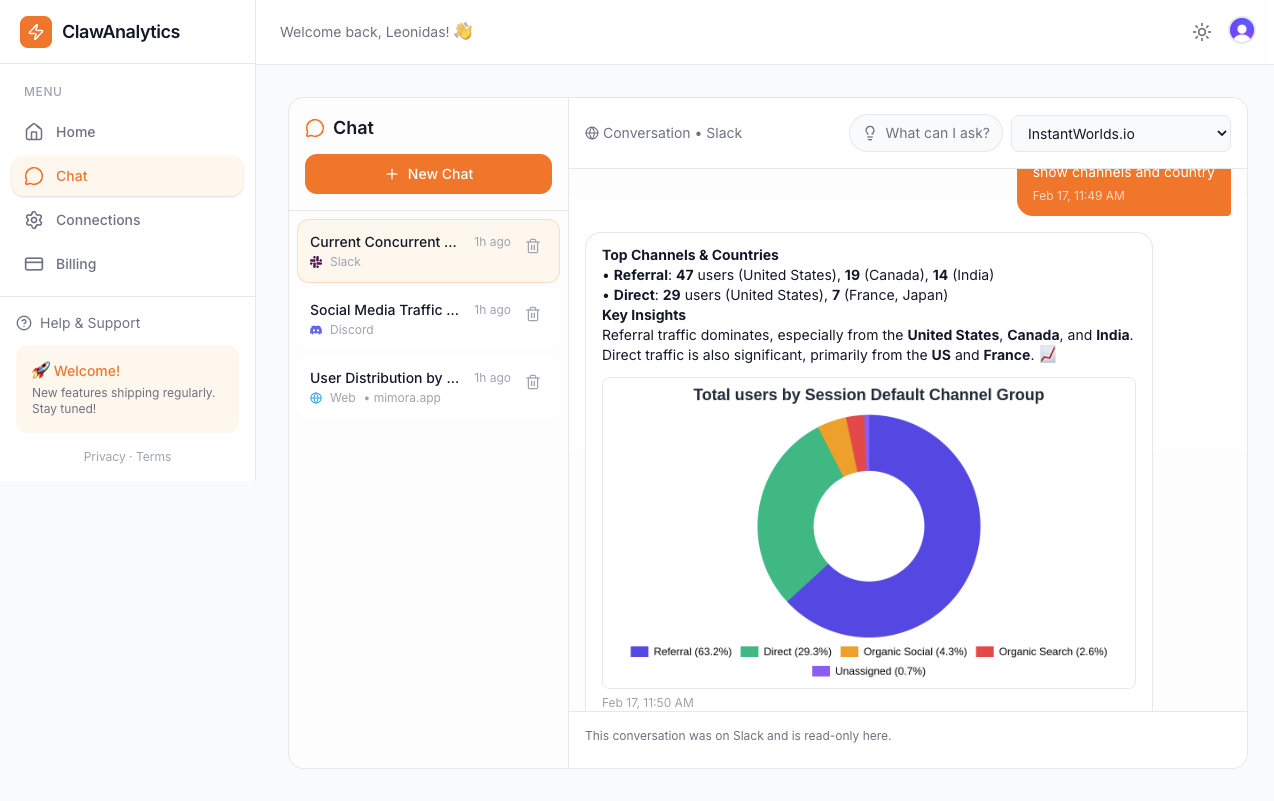
ClawAnalytics makes financial services reporting straightforward. Ask: “What’s the ROAS on our mortgage advertising compared to our checking account campaigns?” and it shows you the comparison instantly.
Another useful question: “Which channels bring in the highest-value customers for our wealth management division?” ClawAnalytics factors in customer value beyond the first purchase.
You can also ask: “Are our LinkedIn ads profitable for acquiring business banking clients?” This helps you allocate budget across B2B and B2C financial products intelligently.
ClawAnalytics understands the multi-product nature of finance and helps you see which ads actually build profitable customer relationships over time.
Quick Wins
Assign customer values based on product mix. A customer with a checking account, savings, and investment portfolio is worth more than one product alone. Use this in your ROAS calculation.
Track cost per qualified lead, not just total leads. In finance, a lead that becomes a customer is worth tracking separately from unqualified form fills.
Separate brand from performance campaigns. Your brand awareness ads might not convert immediately but still add value. Track them separately from direct-response campaigns.
Test and iterate on ad creative quarterly. Financial products require trust. Rotate messaging and measure which builds the most confidence and conversions.