A $5,000 engagement ring sale might come from a single ad click. Or you might spend that much on ads that never result in a sale. The difference comes down to understanding your return on ad spend.
Why Return On Ad Spend Matters for Jewelers
Jewelry stores operate on thin margins with high ticket prices. Every marketing dollar needs to work harder.
Why tracking matters:
- High values per sale. One engagement ring or luxury watch equals months of advertising costs if misaligned. ROAS tells you exactly what’s working.
- Multiple product categories. Engagement rings, wedding bands, watches, and fashion jewelry each appeal to different audiences. Tracking reveals which categories perform.
- Gift-giving seasons are critical. Valentine’s Day, Christmas, and anniversaries drive huge spikes. ROAS data helps you allocate budget during peak periods.
- Long decision cycles. Jewelry buyers often research for weeks. Understanding which touchpoints convert helps retarget effectively.
Without ROAS tracking, you’re essentially advertising blind. You might be overspending on brand awareness while underspending on the campaigns that actually close sales.
How to Check in GA4
Google Analytics 4 can track your return on ad spend, but setup matters.
Steps:
- Connect Google Ads to GA4 through Admin settings.
- Create conversion events for purchases, quote requests, and appointment bookings.
- Assign conversion values. For jewelry, this means entering the average order value for each product type.
- Navigate to Acquisition, then Google Ads, to view campaign performance.
- Add the ROAS column if it does not appear by default.
The critical step is accurate conversion values. A $200 fashion bracelet should not be valued the same as an $8,000 diamond ring. Segment your products properly.
The Easier Way
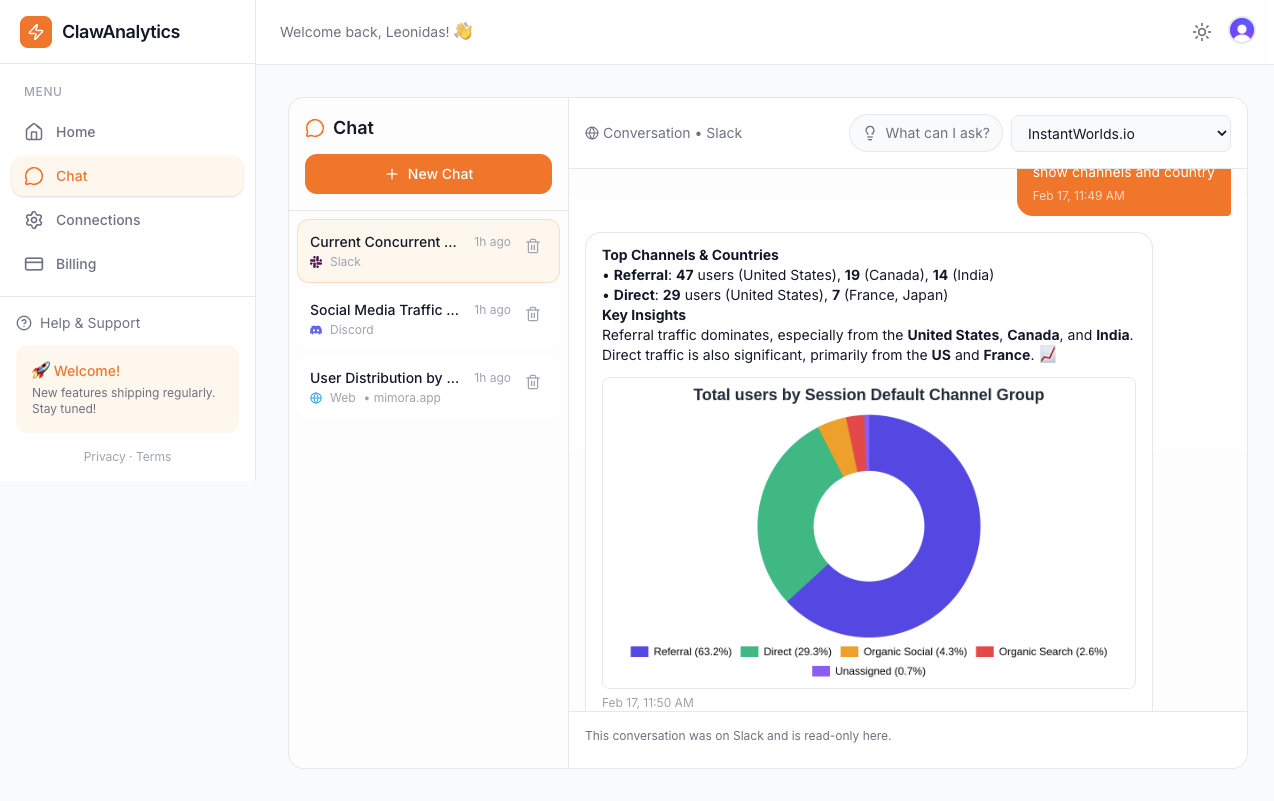
Setting up proper GA4 tracking takes technical knowledge that most jewelers don’t have. ClawAnalytics handles this automatically.
With ClawAnalytics, you see your ROAS by campaign, ad group, and keyword without any setup. The dashboard highlights which jewelry pieces and promotions deliver the best returns.
You might find that your “engagement rings” ads have a ROAS of 4:1 while your “fashion jewelry” ads only hit 1.2:1. That insight lets you shift budget immediately.
ClawAnalytics also answers questions like: Which neighborhoods have customers who buy higher-value pieces? Or: Should I increase budget for wedding band promotions in spring? These insights help you make data-driven decisions fast.
Quick Wins
Improve your jewelry store ROAS with these actionable tips.
Focus on specific products. Instead of “buy jewelry,” advertise “engagement rings under $5000” or “wedding bands for men.” Specific queries convert better.
Use high-quality visuals. Jewelry is visual. Your ads need professional photography that shows sparkle and detail. Poor images kill click-through rates.
Retarget site visitors. People who viewed specific pieces but didn’t buy are prime retargeting candidates. These ads typically show much higher ROAS than new customer prospecting.
Track by category. Separate your campaigns by jewelry type. Track engagement rings separately from watches. This reveals which products deserve more budget.
Season your strategy. Valentine’s Day and November-December are your peak seasons. Ramp up spend during these periods based on historical ROAS data.
Start tracking, optimize weekly, and watch your jewelry sales grow.