How to Track Return On Ad Spend for Restaurants
Imagine spending $1,000 on Instagram ads for your restaurant and getting 50 orders worth $2,500 in total. That is a 2.5:1 return delivery fees, you might barely break even. But what if that same, and after $1,000 spent on Google Local Search ads brought in 40 orders worth $4,500? Without tracking return on ad spend, you would never know which approach actually pays off.
Why Return On Ad Spend Matters for Restaurants
Restaurant margins are thin, and advertising costs add up fast. Understanding ROAS helps you decide where to put your marketing budget.
First, it reveals which platforms bring orders. Instagram might look great with likes and comments, but Google might actually bring orders. ROAS tells you the truth. Second, it helps you price promotions correctly. If you know your typical ROAS, you can design specials that still profit after ad costs. Third, it guides menu decisions. If your top-selling dish brings in more profit per order, you might want to promote it specifically. Fourth, it handles the delivery fee math. With platforms taking big cuts, knowing your actual profit after fees keeps you from losing money on seemingly successful campaigns.
How to Check in GA4
Google Analytics 4 can track orders if your restaurant uses online ordering. Here is how to set it up.
Start by linking your Google Ads and Meta Ads accounts to GA4. If you use multiple delivery platforms, create a simple ordering page on your own website that redirects to each platform. This lets you track clicks properly. Define your conversions. Each online order counts as a conversion. Use your average ticket size as the conversion value. If customers typically spend $35, each order is worth $35. Then, create custom reports in GA4 that show revenue divided by ad spend for each campaign.
The challenge? Delivery platforms make this tricky. You may need to use UTM parameters to track which ads lead to which orders on third-party platforms.
The Easier Way
Let us be honest: running a restaurant is exhausting. You do not have time to become an analytics expert. This is where ClawAnalytics comes in.
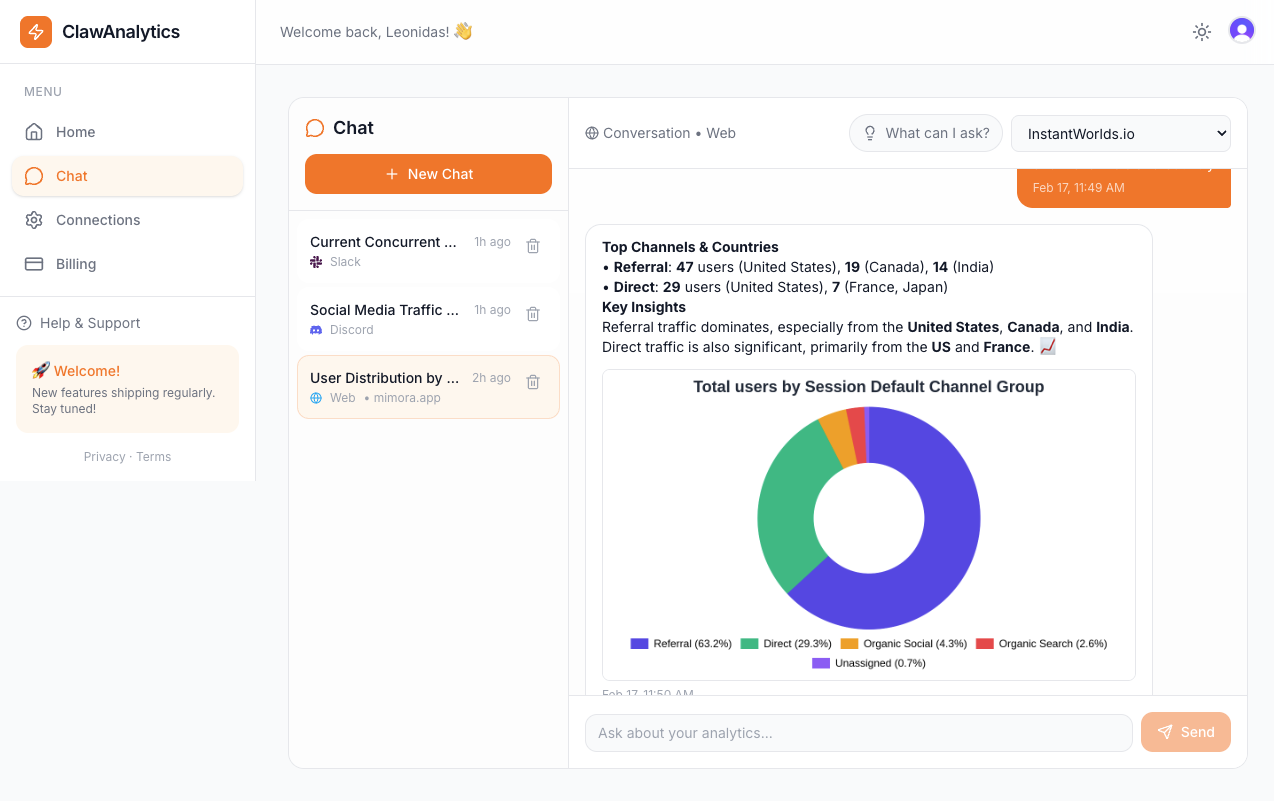
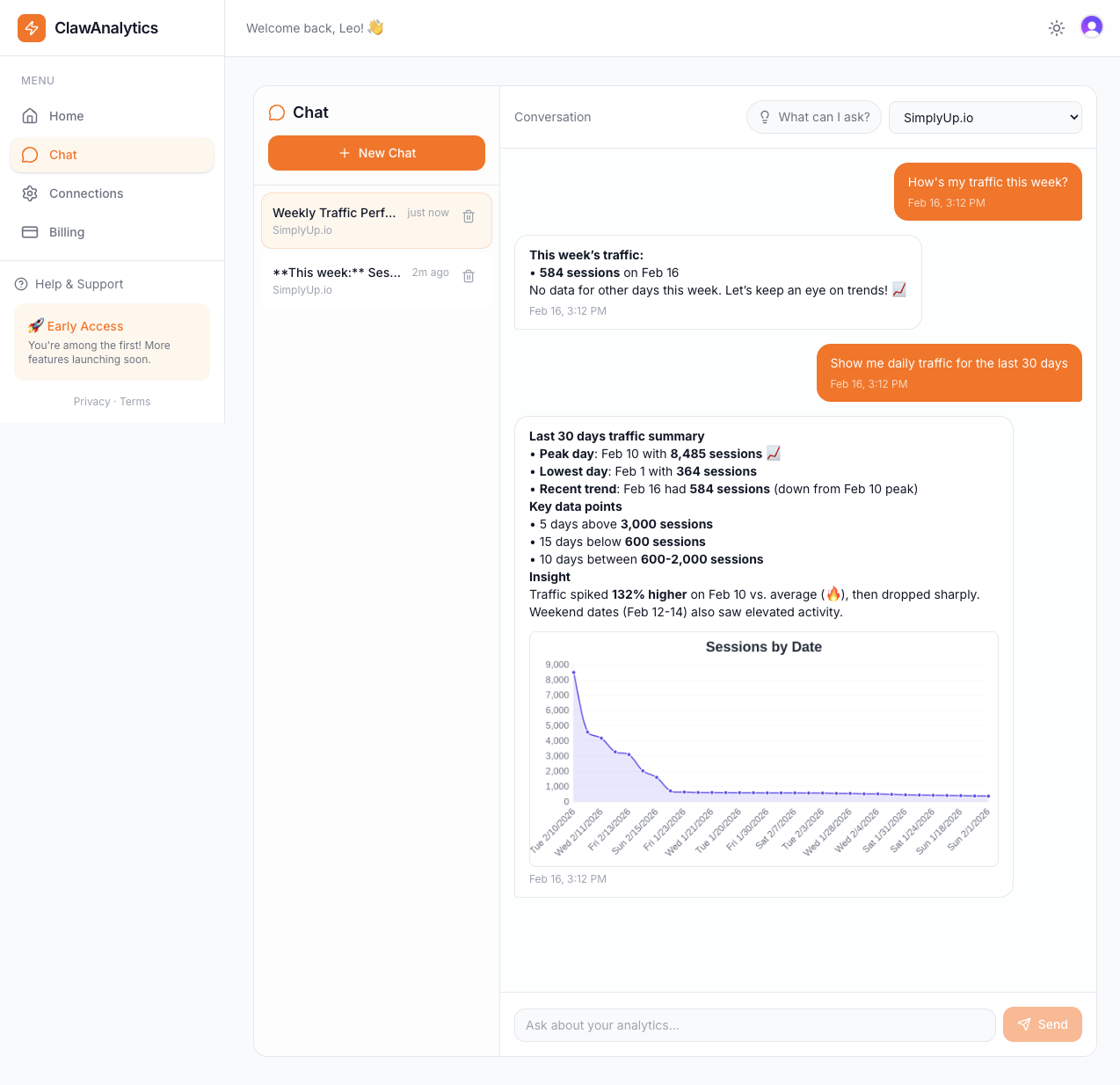
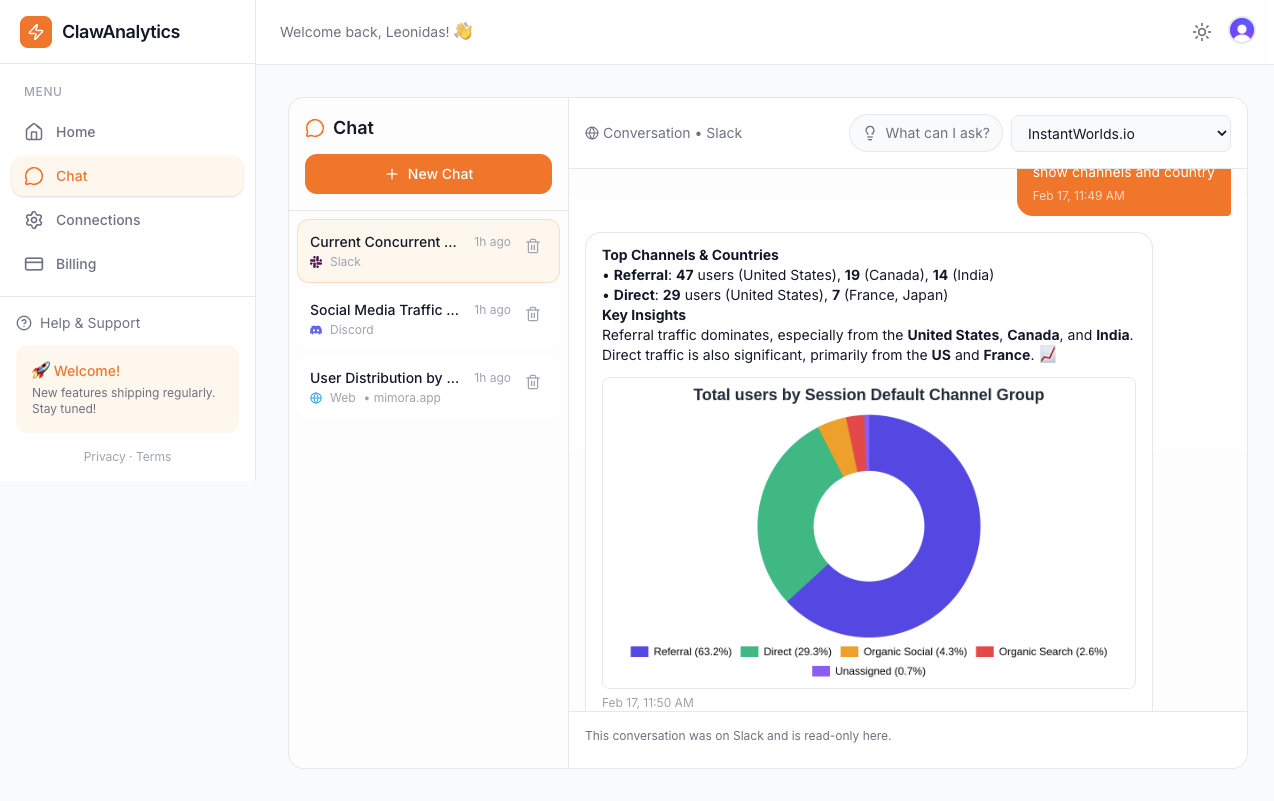
ClawAnalytics connects to your ad accounts and automatically calculates ROAS across all your campaigns. You see at a glance whether your Instagram promotions, Google Local ads, or Facebook events are actually bringing in orders. The tool handles the tracking math for you.
With ClawAnalytics, you can answer questions like: “Which ad brought in the most weekend orders?” or “Is our Tuesday special promotion worth the ad spend?” The answers are right there, ready to help you decide what to do tomorrow.
Quick Wins
Here are three things you can do today to start tracking ROAS better.
Use UTM codes on every link. If you post on Instagram, use a link like yoursite.com/order?utm_source=instagram&utm_campaign=weekend. This tracks exactly where each order comes from.
Offer a first-order discount tracked by code. Something like ORDER20 gives you 20% off their first order. Track how many people use it and how much they spend. This directly ties ad spend to revenue.
Check your ROAS weekly. Look at how much you spent on ads versus how much in orders came in. This weekly habit helps you catch losing campaigns early and double down on winners.