How to Track Return On Ad Spend for Travel
Your travel agency spent $8,000 on Instagram ads promoting Bali vacation packages. You got 400 clicks and 25 bookings worth $3,000 each. Your revenue is $75,000, which sounds great until you do the math. That’s a ROAS of 9.4x, which is excellent. But without tracking, you’d never know which destinations and platforms actually drive those bookings.
Why Return On Ad Spend Matters for Travel
Seasonal demand shifts dramatically. Summer travel might need different ROAS thresholds than winter campaigns. Tracking lets you adjust expectations and budgets based on when people actually book.
Destination profitability varies. A $5,000 Bali package brings more revenue than a $2,000 weekend getaway, but costs more to advertise. ROAS reveals which destinations are worth the extra spend.
Booking windows matter for planning. Some travelers book months ahead, others last minute. ROAS helps you time your ad spend to match when different segments actually convert.
High competition drives costs. Travel keywords get expensive during peak seasons. Knowing your exact ROAS prevents overspending during competitive periods.
How to Check in GA4
Implement enhanced ecommerce tracking. In GA4, go to Configure > Data streams and enable enhanced ecommerce. This automatically captures booking data, destination info, and transaction values.
Set up purchase events with proper values. Every booking should pass its total value to GA4. This is essential for accurate ROAS calculation.
Create a destination-based dimension. Tag your campaigns by destination so you can see ROAS for Bali versus Paris versus Tokyo separately.
Use the Shopping analysis reports. GA4’s ecommerce reports show product performance, which for travel means destination or package performance. Compare this against ad spend to calculate true ROAS.
The Easier Way
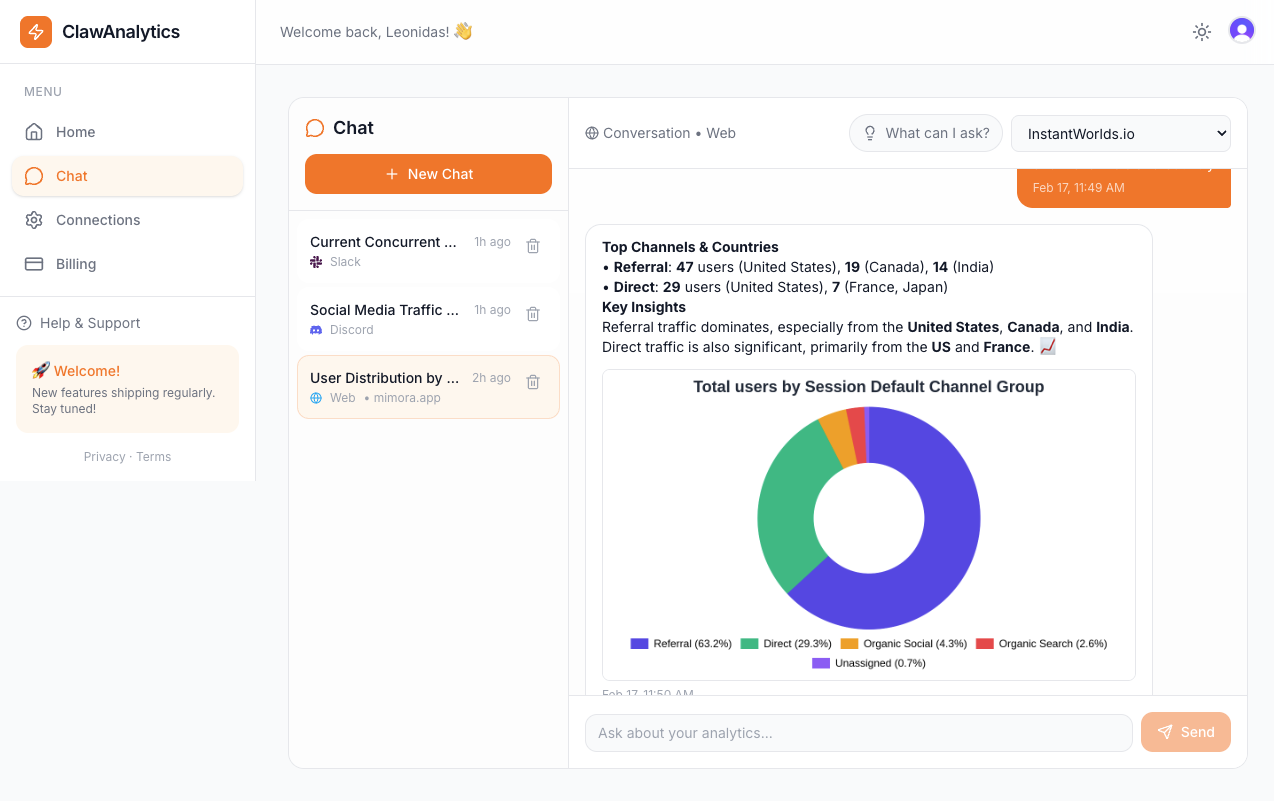
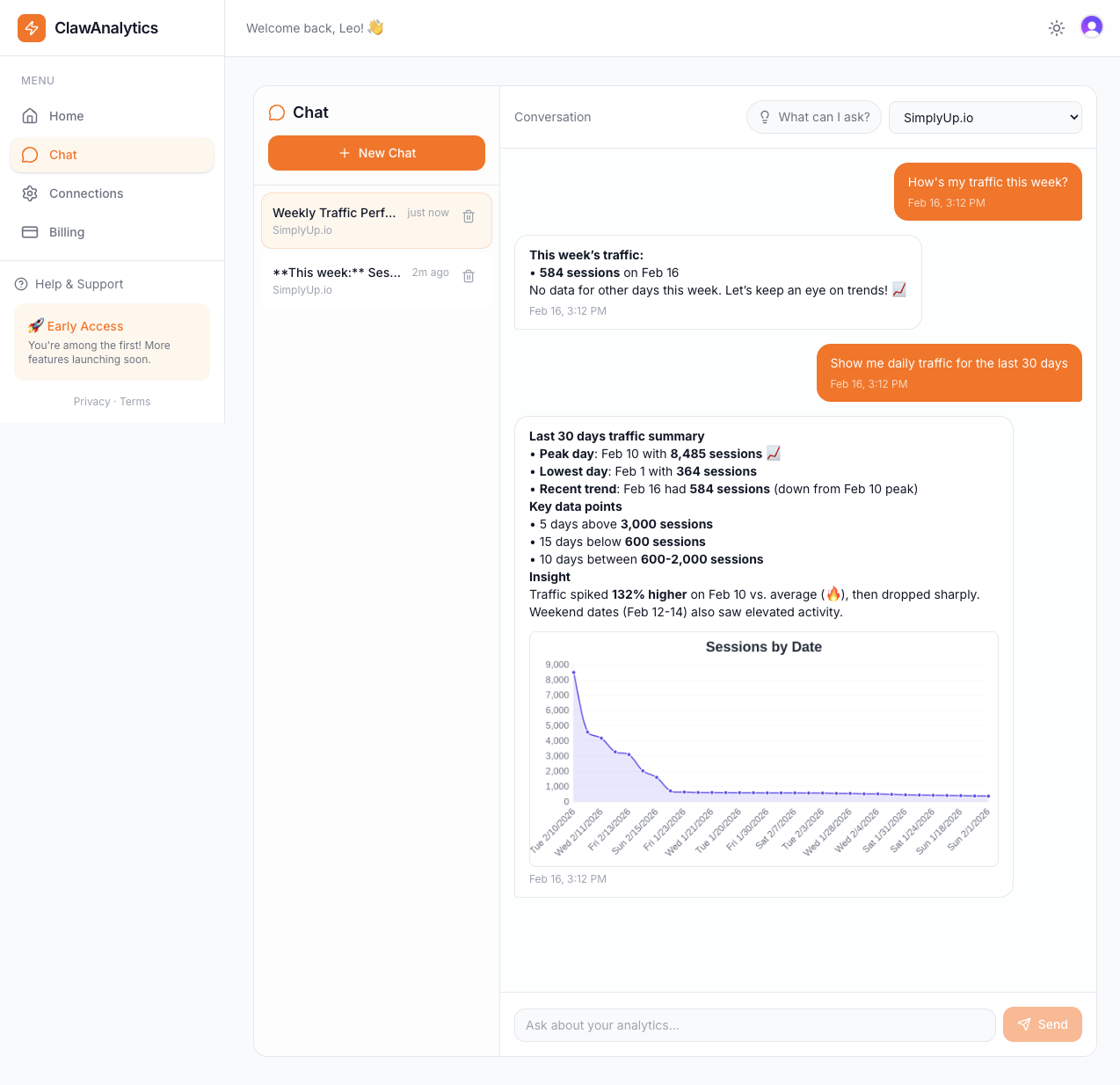
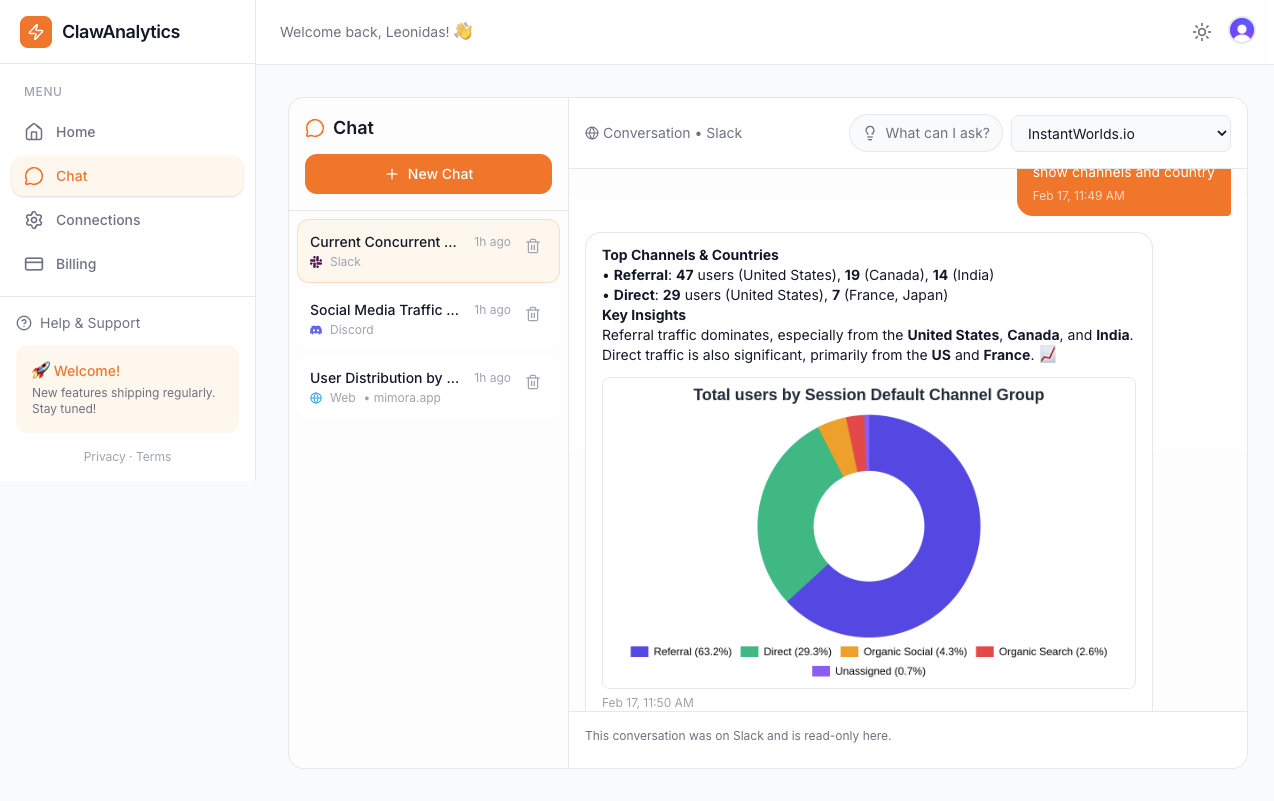
ClawAnalytics makes travel reporting intuitive. Ask: “Which Instagram campaigns are driving the most Hawaii bookings this month?” and get a clear answer without building custom reports.
Another powerful question: “Is our GoogleAS better for international Ads RO or domestic destinations?” This helps you allocate budget intelligently across your portfolio.
You can also ask: “What should we spend on spring break destinations based on last year’s performance?” ClawAnalytics uses historical data to help you plan confidently.
The platform understands travel’s seasonal nature and helps you identify which ads work best during different booking windows.
Quick Wins
Track cost per booking, not just cost per click. In travel, clicks are meaningless if they don’t convert to reservations. Always tie spend to actual bookings.
Segment by booking value. Luxury travelers booking $10,000 trips are worth more than budget travelers. Track ROAS separately to understand true profitability.
Test different ad formats. Video ads showing destination footage often outperform static images. Measure ROAS by creative type to find winners.
Review performance weekly during booking peaks. Travel moves fast. Weekly ROAS checks help you shift budget to winning destinations before the opportunity passes.