How to Track Scroll Depth for Bloggers
You just published a 2,000-word blog post. It took hours to write. But analytics show most readers leave after 30 seconds. Scroll depth tracking reveals exactly where they stopped reading.
Why Scroll Depth Matters for Bloggers
Bloggers succeed when readers consume and engage with content. Scroll depth tells the full story:
- Headlines and intros hook readers. If they bounce immediately, your opening needs punch.
- Body sections hold attention. Users who scroll past the first few paragraphs find your content valuable.
- Call-to-action areas matter for conversions. Bloggers monetizing through affiliates or products need readers to reach these spots.
- Related posts drive pageviews. Low scroll depth means fewer opportunities to keep visitors on your site.
Without scroll data, you only know that someone visited. You do not know if they read one paragraph or the entire piece. This gap hurts your content strategy.
How to Check in GA4
GA4 offers scroll tracking through custom events:
- Go to Admin > Data Streams > select your website
- Navigate to Configure > Events
- Create a new custom event called
scroll_depth - Set conditions:
event_nameequalsscrollandscroll_thresholdequals25 - Repeat for 50%, 75%, and 100%
Build a report using the Explore feature. Add page_path as a dimension and event_count for each scroll threshold. Compare scroll depth across your top articles to spot patterns.
Look for pages with 90% scroll at 25% but only 30% at 75%. These posts likely have weak conclusions or buried key information.
The Easier Way
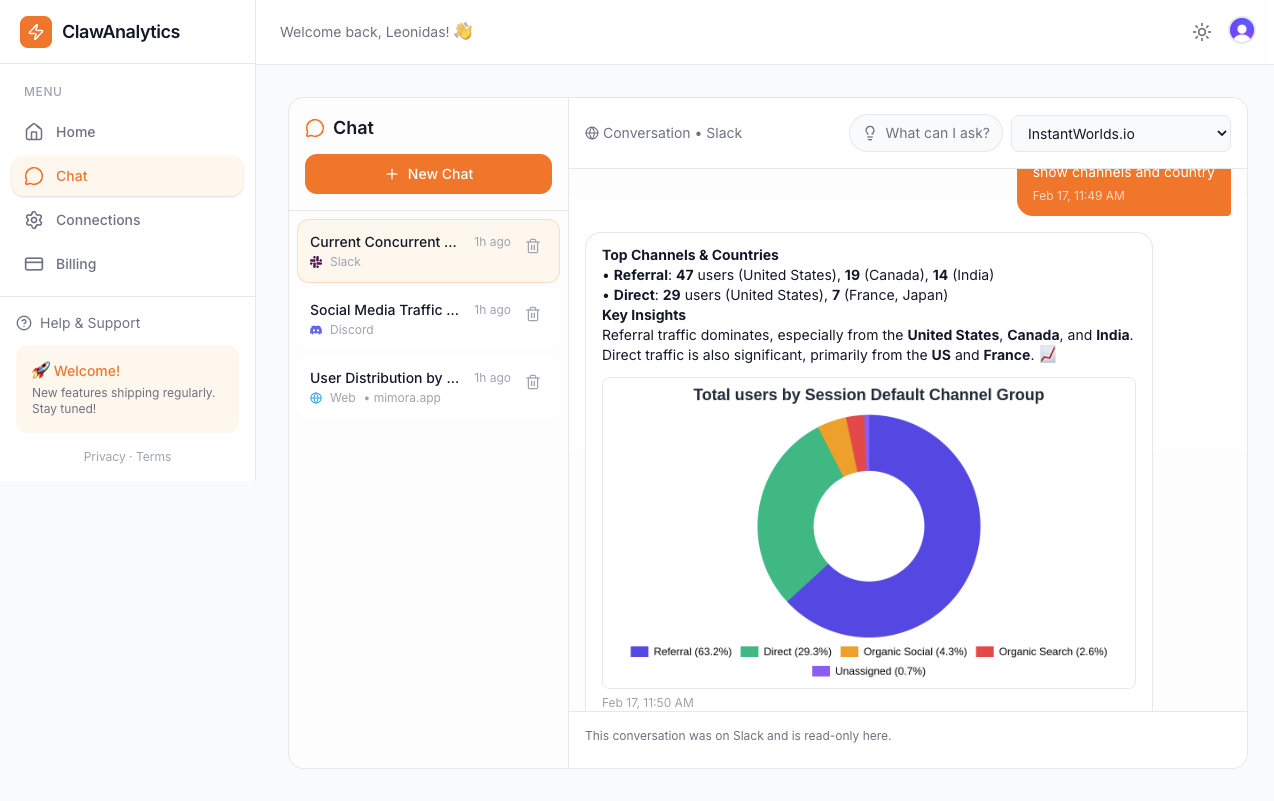
ClawAnalytics removes the setup headache. Connect your blog and get scroll depth insights immediately.
Questions ClawAnalytics answers for bloggers:
- Which blog posts have the highest读完率 (completion rate)?
- Where do readers stop on my most popular articles?
- Does adding images or videos improve scroll depth?
The tool shows you the exact percentage of readers reaching each section. You learn which articles perform well and which need restructuring.
Quick Wins
- Rewrite intros that lose 50% of readers in the first 25% of scroll
- Add subheadings every 300 words to break up text and encourage scrolling
- Move affiliate links lower in posts where readers scroll to 75%
- Test shorter posts if long-form content shows poor scroll retention
- Add a progress bar to encourage readers to finish articles
- Check mobile scroll depth separately from desktop
Scroll depth data transforms how you create content. You stop guessing and start writing based on what readers actually read.