How to Track Scroll Depth for Chiropractors
A patient suffering from chronic back pain lands on your sports injury page, reads the headline about relief, and leaves immediately. They never saw your detailed explanation of spinal adjustment techniques or your online booking form. Scroll depth tracking reveals whether actually see the information that patients would convert them.
Why Scroll Depth Matters for Chiropractors
Chiropractic care decisions involve understanding treatment approaches and trusting the provider. Here’s why scroll depth is essential:
- Treatment explanations build confidence. Patients research techniques like spinal manipulation, decompression, and massage therapy. Those who don’t scroll far enough might miss treatments you offer.
- Condition pages serve specific needs. Back pain, headaches, and sports injuries each need dedicated content. Scroll patterns reveal which conditions patients research most thoroughly.
- Process explanations reduce anxiety. First-time chiropractic patients often feel nervous. Information about what to expect during visits appears in lower page sections.
- Booking CTAs need visibility at multiple points. Patients ready to book should find your scheduling options easily, whether they scroll a little or a lot.
How to Check Scroll Depth in GA4
Google Analytics 4 automatically tracks scroll behavior. Here’s how to access the data:
- Open GA4 and navigate to Reports > Engagement > Events
- Search for “scroll” in the event filter
- Review the four scroll events: scroll_25, scroll_50, scroll_75, scroll_90
- Click each event to see which condition and treatment pages generate engagement
- Compare scroll depth across different service pages like adjustment, therapy, and consultation
Each scroll event represents percentage thresholds. Scroll_75 means the visitor reached 75% down the page.
The Easier Way
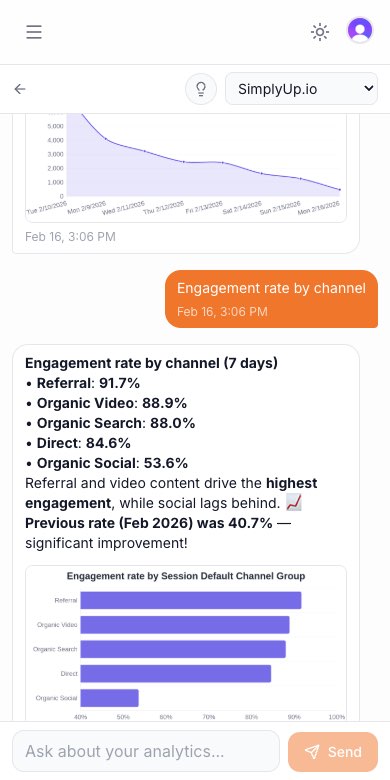
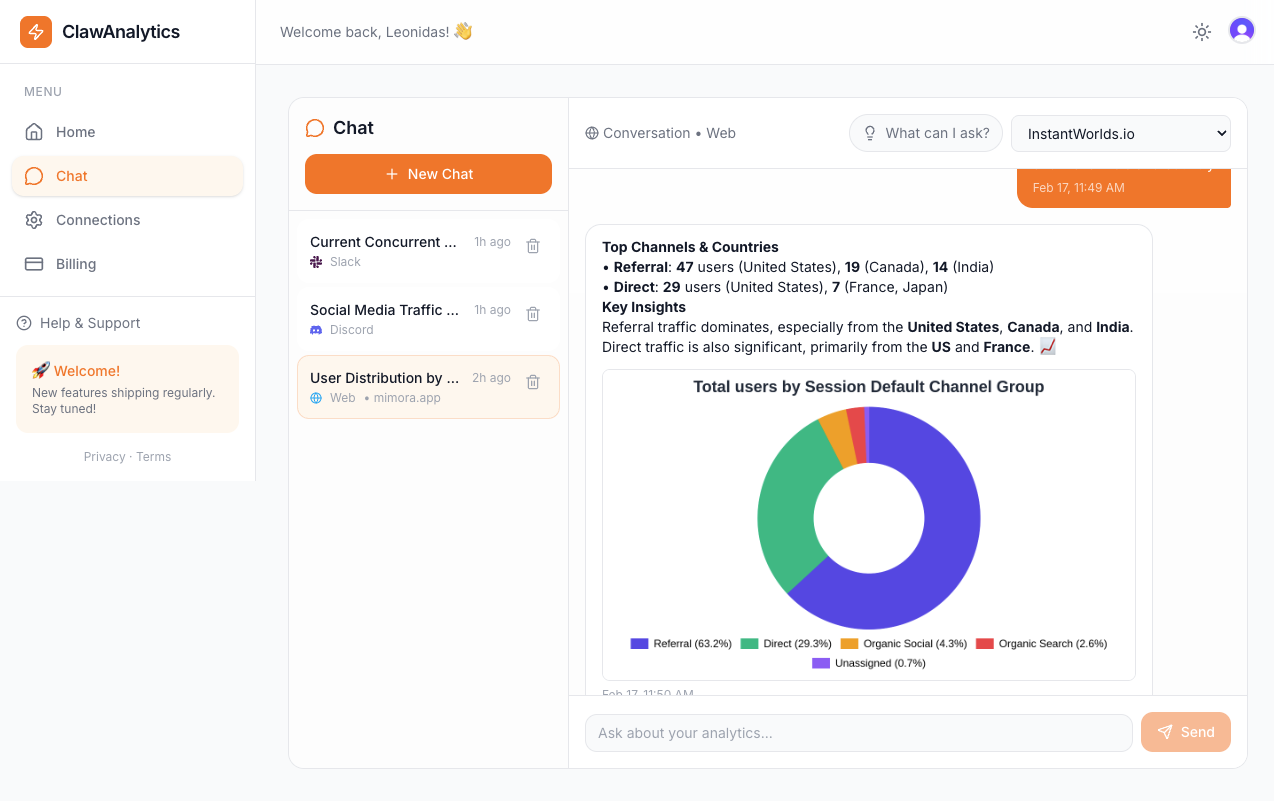
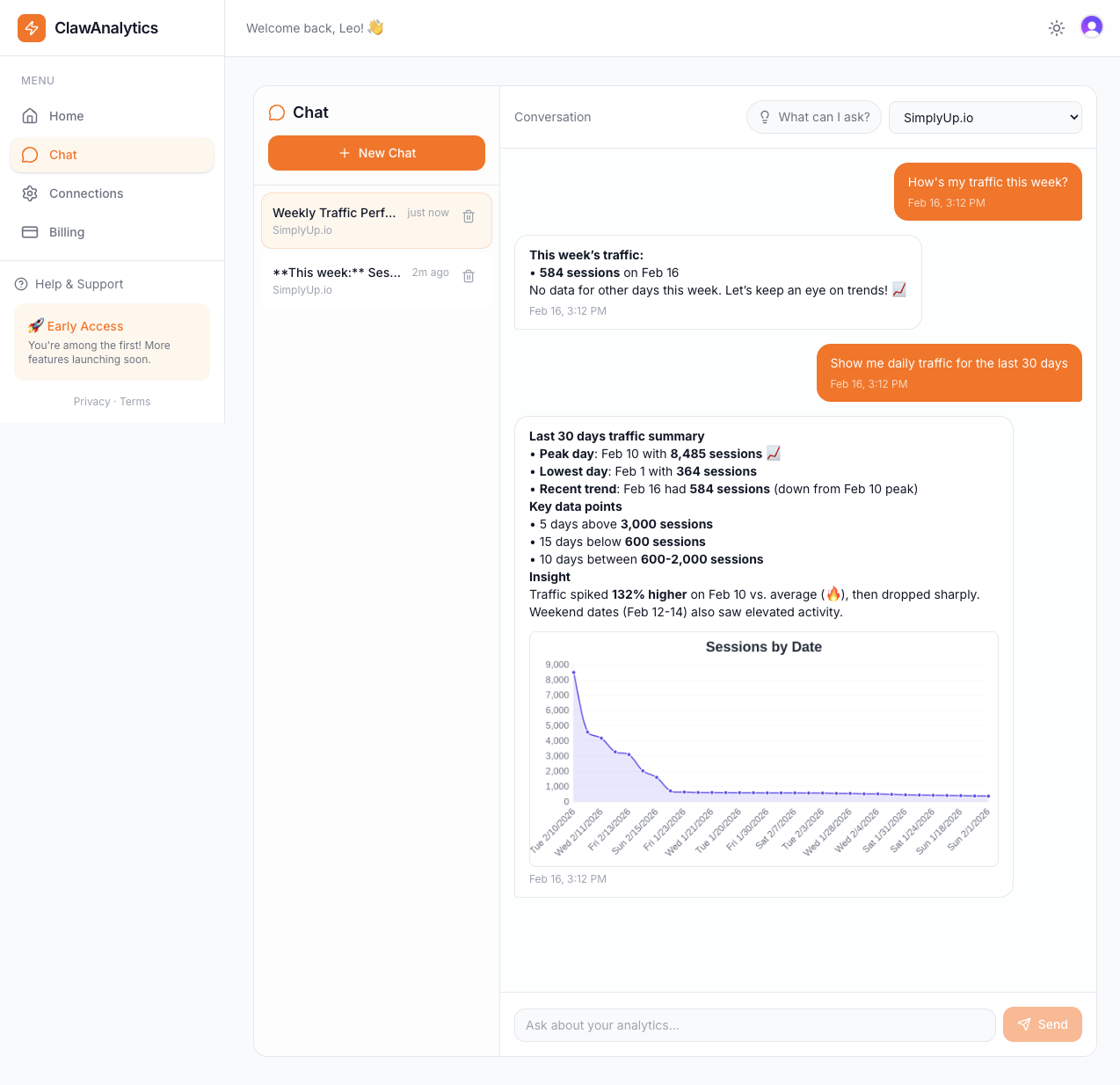
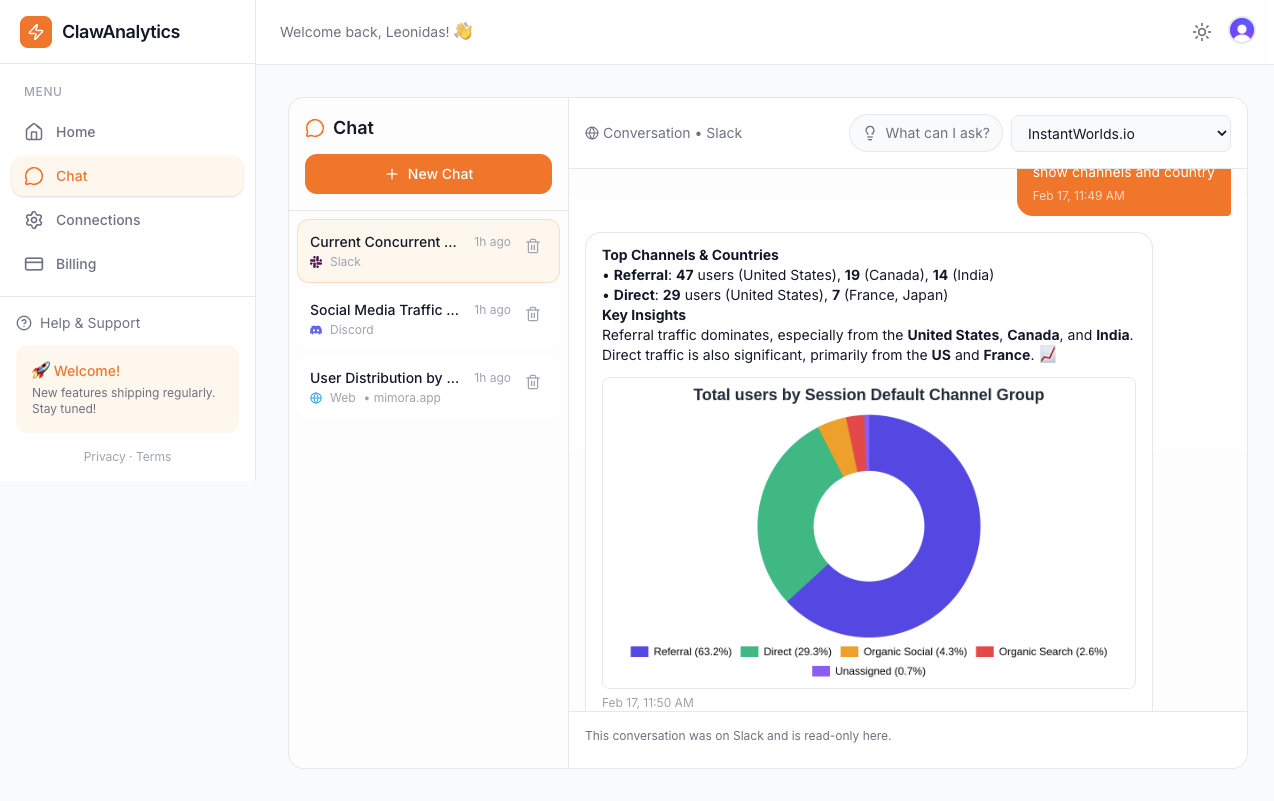
GA4 provides scroll data, but analysis requires technical knowledge. ClawAnalytics makes it simple for chiropractic practices.
Chiropractors use ClawAnalytics to answer:
- Are patients reading our full treatment technique explanations, or stopping early? This informs content depth decisions.
- Do visitors scroll through patient testimonials and success stories? Trust signals matter for new patients.
- Which condition pages keep readers engaged longest? Top content reveals what potential patients want to learn about.
You get alerts when scroll patterns change significantly, helping you quickly investigate whether new content is working.
Quick Wins
Optimize your chiropractic website with these scroll depth strategies:
- Highlight your expertise near the top. Years of experience and certifications should be visible without scrolling.
- Use condition-specific CTAs. “Relieve Your Back Pain Today” converts better than generic “Book Now” buttons.
- Add trust signals at scroll triggers. Certifications, patient counts, and success rates work well around the 50% mark.
- Explain the first visit process. Reducing anxiety helps patients take action.
- Test shorter treatment pages. Some conditions convert better with concise content linking to detailed resources.
Scroll depth transforms chiropractic website optimization from assumption into data-driven decisions. Every patient who scrolls to the booking form is a potential new client.