A shopper lands on a product page, sees the main image, reads the first few lines of description, and bounces. They never saw the size guide, customer reviews, or the add-to-cart button at the bottom. The store owner has no idea this happened. Scroll depth tracking reveals exactly where users disengage.
Why Scroll Depth Matters for Ecommerce
Understanding user behavior on your pages directly impacts sales.
1. Identify Where Users Drop Off If 60% of visitors leave before reaching product details, your page layout has problems. Scroll depth shows the exact drop-off points.
2. Optimize Page Layout Data on where users stop scrolling tells you where to place key information. Important content needs to appear before users bounce.
3. Improve Conversion Rates The add-to-cart button should appear before users stop scrolling. Scroll depth data tells you exactly where that needs to be.
4. Reduce Bounce Rate When you know what content keeps users engaged, you can replicate it across pages. Scroll depth is the diagnostic tool.
How to Check in GA4
Here’s the challenge: GA4 doesn’t automatically track scroll depth.
- Create a GA4 configuration tag in Google Tag Manager
- Set up scroll triggers at 25%, 50%, 75%, and 100% thresholds
- Create scroll event tags that fire on each threshold
- Build a custom report to visualize scroll behavior by page
This requires technical setup. Most ecommerce owners skip it and lose valuable optimization data.
The Easier Way
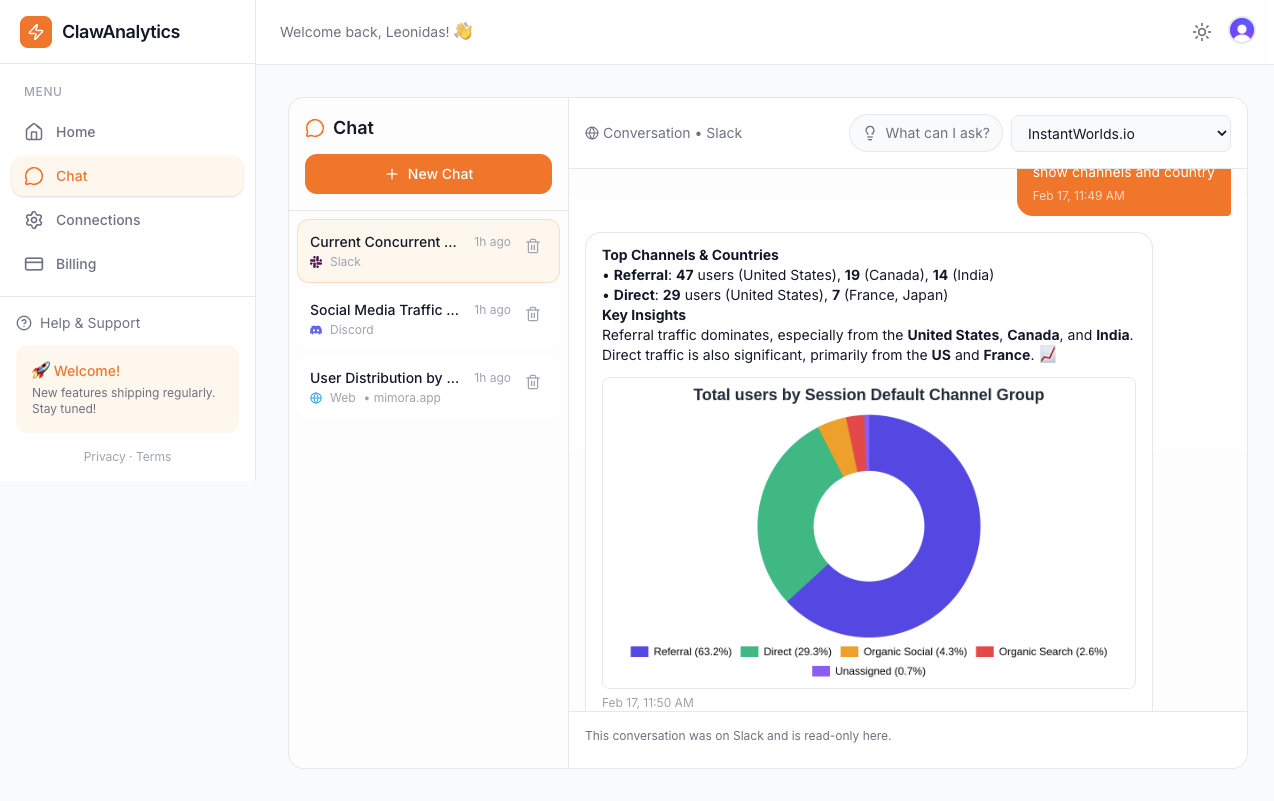
ClawAnalytics handles scroll depth automatically, without any tag manager configuration:
- Visual heatmaps of where users scroll on each page
- Drop-off points identified automatically
- Comparison of scroll behavior between high-converting and bouncing sessions
- Recommendations on where to move key elements
Example questions ClawAnalytics answers: “Do users scroll past our product video?” or “Where exactly do visitors bounce on our checkout page?”
This means you get scroll insights without the technical setup headache.
Quick Wins
Move key content higher. If data shows users bounce at 40%, move your value proposition, reviews, or add-to-cart above that point.
Test shorter product descriptions. If most users stop at 300 words, cutting to 150 words might improve engagement.
Add sticky elements. If users stop scrolling before the CTA, make it sticky so it’s always visible.
Use fold-line analysis. Compare scroll depth on mobile vs desktop. They often differ significantly.
Start tracking scroll depth today. Your product pages are hiding conversion opportunities you’re not seeing.