Insurance

How to Track Scroll Depth for Insurance

Find out how scroll depth tracking helps insurance agents optimize their websites and convert more leads.

How to Track Scroll Depth for Insurance

Insurance is complicated. People buy it hoping they’ll never need it, but they need to understand what they’re getting. Your website must explain coverage clearly and quickly. Scroll depth tracking reveals whether visitors actually read your explanations or leave confused. It shows you exactly where prospects stop engaging with your content.

Why Scroll Depth Matters for Insurance

Policy education drives conversions. Visitors who understand your coverage are more likely to request quotes. Scroll depth proves they’re reading what you publish.

Quote pages need optimization. If prospects never reach the quote form, your page layout is wrong. Scroll data reveals exactly where the drop-off happens.

Blog content builds authority. Insurance buyers research extensively. Scroll depth on educational articles shows which topics matter most to your audience.

Multi-policy opportunities exist. Visitors interested in auto insurance might also need home or life coverage. Scroll depth shows whether they see your full offering.

How to Check Scroll Depth in GA4

Google Analytics 4 provides scroll tracking automatically. Here’s how to use it:

  1. Open GA4 and go to the Events report
  2. Search for scroll to find scroll events
  3. Create a custom exploration with Page Path as a dimension
  4. Filter by /quote, /policy, or /insurance to focus on key pages
  5. Compare scroll rates across different coverage types

Look for patterns. Low scroll rates on certain policy pages suggest content problems. High rates on educational content indicate what your audience wants to read.

The Easier Way

ClawAnalytics turns scroll depth into clear insights for insurance agents. You see visual heatmaps of where prospects stop reading, making optimization straightforward.

An insurance agency discovered their health insurance page had very low scroll depth. The content was too dense and text-heavy. Adding charts, bullet points, and section headers increased engagement significantly.

ClawAnalytics answers questions like:

  • Which insurance products get the most complete page views
  • Do mobile visitors scroll through quote pages or bounce
  • What blog topics lead to the most quote requests

The platform connects scroll depth to actual lead submissions, so you know which pages drive business.

Quick Wins

Lead with benefits, not details. Scroll data usually shows visitors engage most with opening content. Start with what visitors care about: protection, savings, peace of mind.

Use plain language. Insurance jargon confuses readers and kills scroll depth. Write clearly and simply.

Add quote buttons throughout long pages. Don’t make visitors scroll to the bottom for action. Place call-to-action buttons at natural breaks in your content.

Break up policy explanations. Use bullet points, bold text, and short paragraphs. Dense blocks of text drive readers away before they reach your key messages.
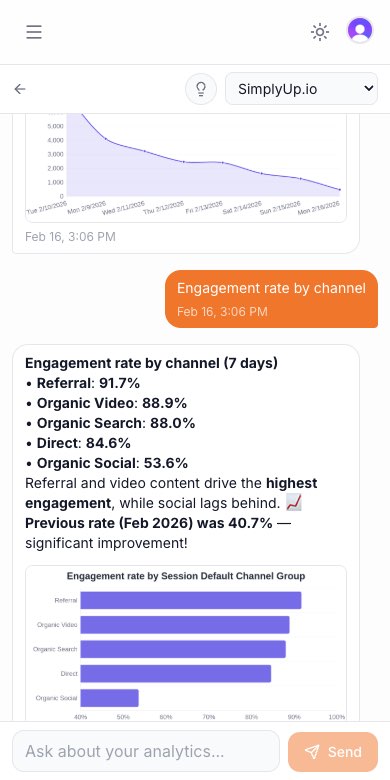
Check your analytics from anywhere

On your morning commute. At a coffee shop. In a meeting. Pull up your analytics on any device and get instant answers.

  • Web dashboard on desktop & mobile
  • Discord bot for team channels
  • Slack integration for your workspace
  • MCP server for AI agents (Claude, Cursor)
See your traffic in 60 seconds →
ClawAnalytics mobile chat showing engagement rate breakdown with charts

How ClawAnalytics helps

Skip the dashboards. Get answers in seconds.

🔗
1

Connect GA4

One-click OAuth. Read-only access. Takes 30 seconds to link your Google Analytics property.

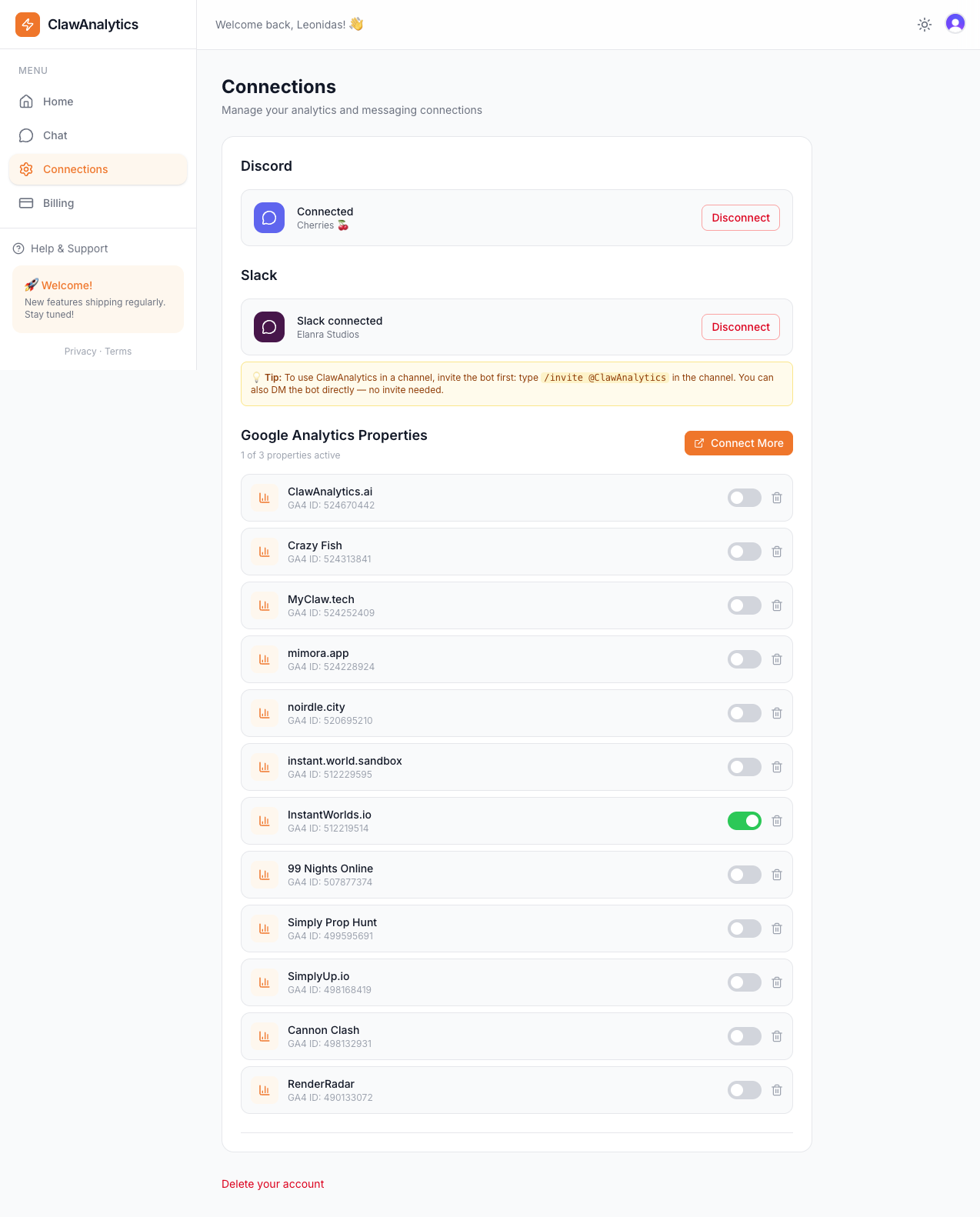
ClawAnalytics connections page showing Google Analytics properties linked
💬
2

Ask questions

Type in plain English. No query language, no filters, no date pickers. Just ask what you want to know.

ClawAnalytics chat interface with natural language query
📊
3

Get answers with charts

Instant responses with visualizations. Share charts with your team or export the data.

ClawAnalytics showing chart response to analytics query

See it in action

Ask a question. Get a chart. That simple.

ClawAnalytics Chat
ClawAnalytics chat interface showing a natural language analytics query with chart response

Works on web, Discord, and Slack. Also available as an MCP server for AI agents.

Leonidas Maliokas
"I used to open Google Analytics 5 times a day and still miss things. Now I get a summary every morning and ask follow-ups when something looks off. Takes 10 seconds instead of 10 minutes."

Leonidas Maliokas

Founder, Elanra Studios

🎮 5 games monitored 💼 3 businesses

Simple, honest pricing

Start free. Upgrade when you're ready.

Free

Try it out

$0 /month
  • 5 websites
  • 30 questions/month
  • Web dashboard
  • No credit card
Start Free

Website

For small businesses

$9 /month
  • 5 websites connected
  • 100 questions/month
  • Daily morning summary
  • Web dashboard + Discord
Get Started

Business

For agencies and portfolios

$79 /month
  • Unlimited websites
  • 2,000 questions/month
  • Everything in Pro
  • ✅ API access
  • ✅ MCP integration
  • ⭐ Priority support
Get Started

Stop opening dashboards.
Start asking.

Connect Google Analytics in 30 seconds. Get answers from the dashboard or Discord. Start free — no credit card needed.

Try it free — ask your first question
30-second setup Free plan available Cancel anytime

Got questions?

Why should insurance agents track scroll depth?
Insurance decisions are complex. Scroll depth shows whether prospects read your policy explanations, coverage details, and pricing information before requesting quotes.
How do I check scroll depth in Google Analytics 4?
GA4 records scroll events automatically. Go to Events and search for scroll. Compare scroll_25 through scroll_100 rates across your policy and quote pages.
How does ClawAnalytics help insurance agents?
ClawAnalytics shows which insurance topics keep prospects engaged longest. You see whether visitors read about auto, home, or life insurance and optimize your content accordingly.

Related guides

More resources to help you get the most from your analytics.