How to Track Site Search Usage for Content Creators
Picture this: you just published a detailed tutorial that took hours to create. Weeks later, you notice visitors repeatedly searching for the exact topic you covered. But here’s the frustrating part, they’re leaving because they can’t find it. This scenario plays out on content sites everywhere, and tracking site search usage is your solution.
Why Site Search Usage Matters for Content Creators
Understanding how visitors search your site reveals what content actually matters to your audience. When someone types a query into your search bar, they’re expressing a clear intent to learn about something specific. This makes site search data incredibly valuable for content creators who want to build content that resonates.
Site search usage helps you identify content gaps in your existing library. If dozens of visitors search for “Photoshop tutorials” but you only have one basic post, that’s a clear signal to create more content around that topic. The data shows you exactly what your audience wants, saving you from guessing which topics will perform well.
Tracking this metric also improves your site architecture. When you see which terms drive the most searches, you can reorganize your navigation and categories to surface relevant content faster. This keeps visitors on your site longer and which signals reduces bounce rates, quality to search engines.
Finally, site search data informs your content calendar. Instead of arbitrarily choosing topics, you can plan content based on actual demand from your real audience. This data-driven approach leads to higher engagement and more consistent traffic growth over time.
How to Check in GA4
To find site search data in GA4, start by logging into your property and navigating to the Reports section. Look for the “Search terms” report under the Engagement category. This shows you exactly what visitors are searching for on your site.
For more detailed analysis, go to Configure > Data display > Search terms. Here you can see not just the search queries, but also metrics like views, unique searches, and the percentage of searches that resulted in a useful outcome. Pay attention to queries with high volume but low engagement, as these indicate content opportunities.
You should also set up a custom exploration to analyze search terms over time. This lets you spot seasonal trends and track whether your content improvements are actually reducing search volume for specific queries. When search volume drops after publishing new content, that’s a sign your content strategy is working.
The Easier Way
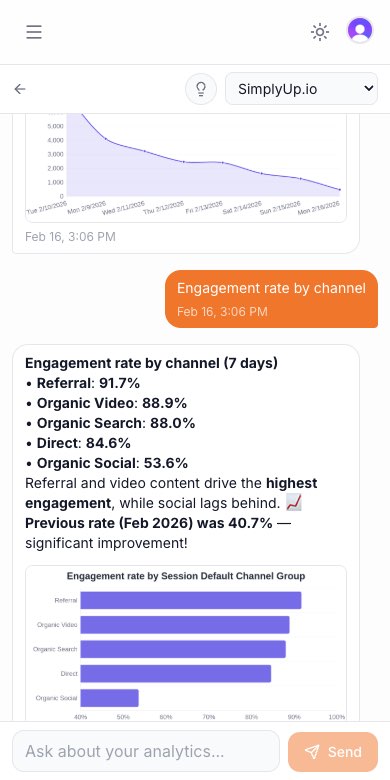
Let me be honest, diving through GA4 reports every time you want to check site search data takes away time from actually creating content. ClawAnalytics builds on GA4’s data but presents it in a way that saves you hours each week.
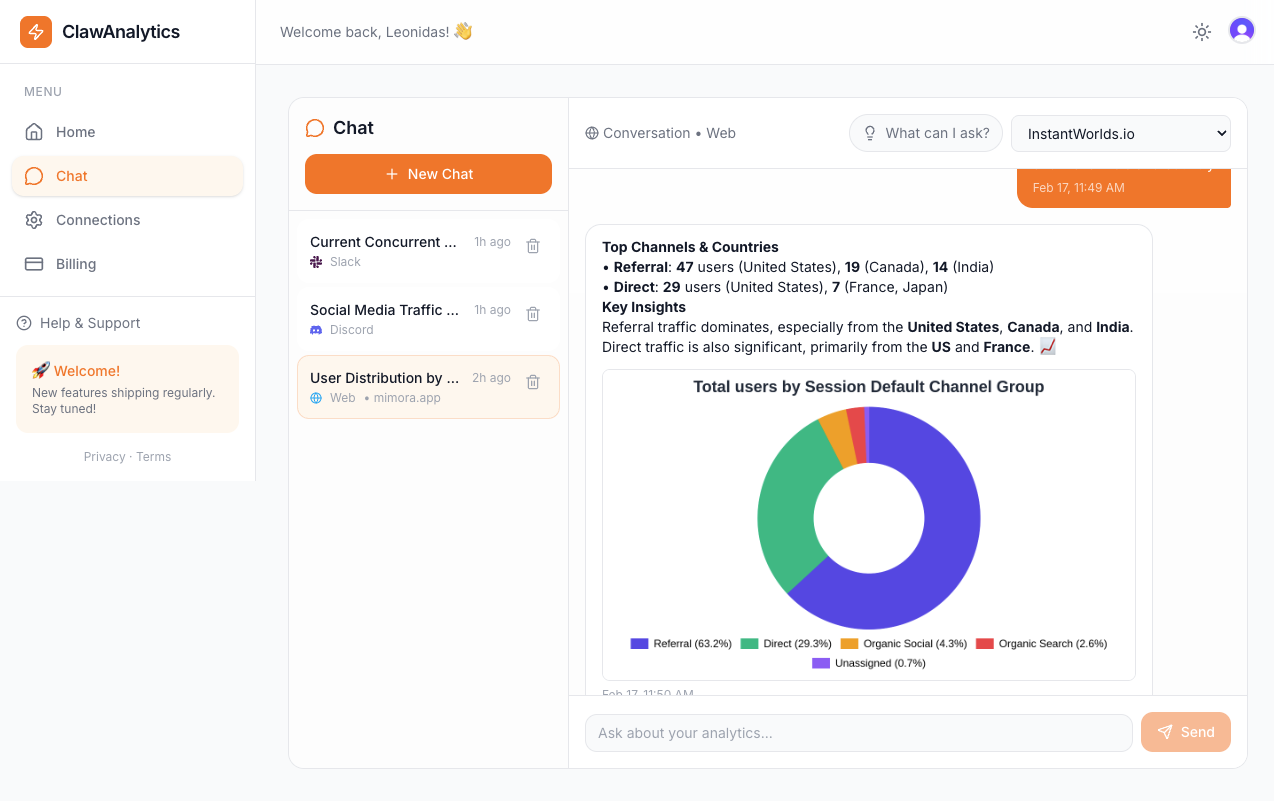
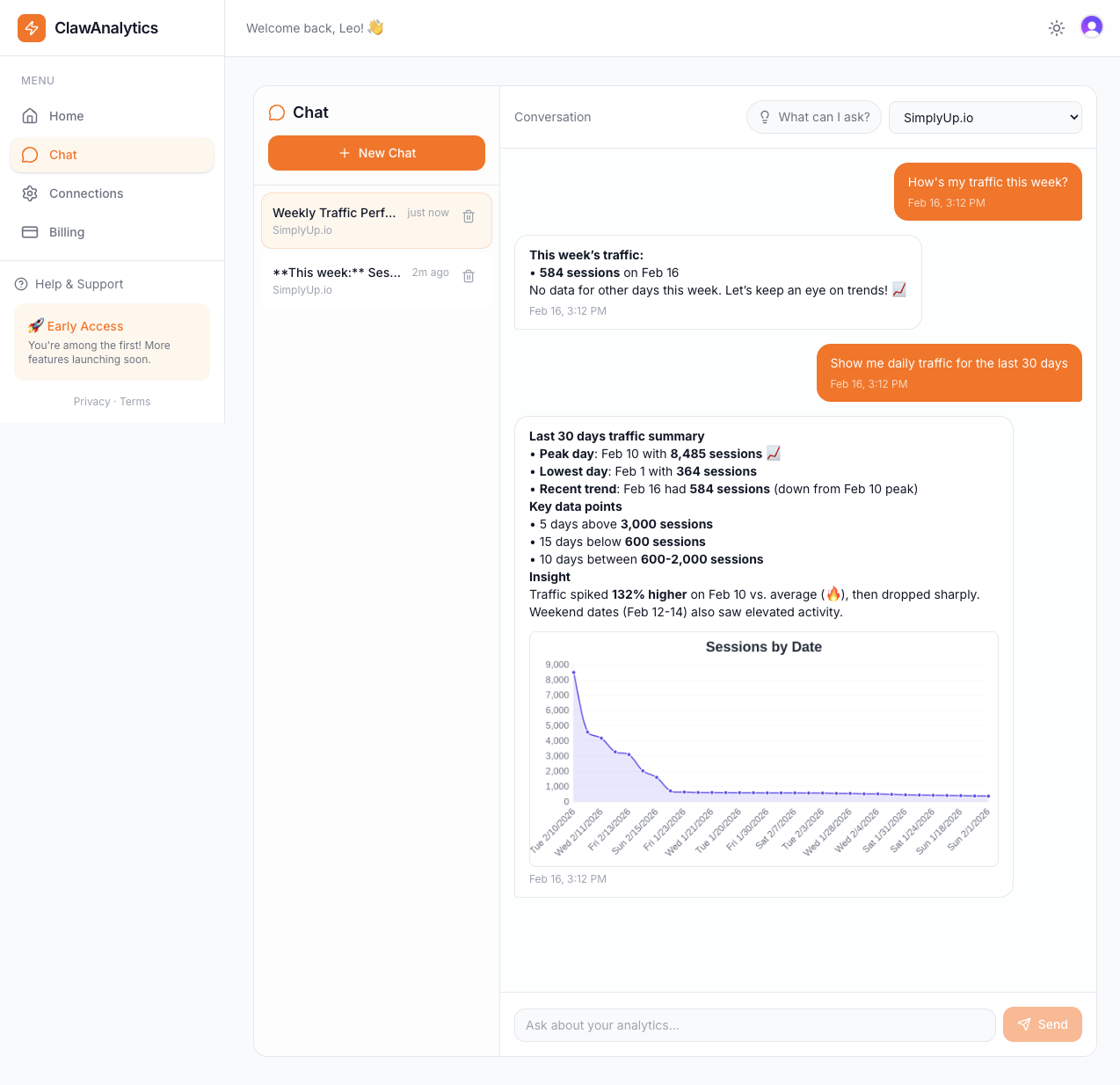
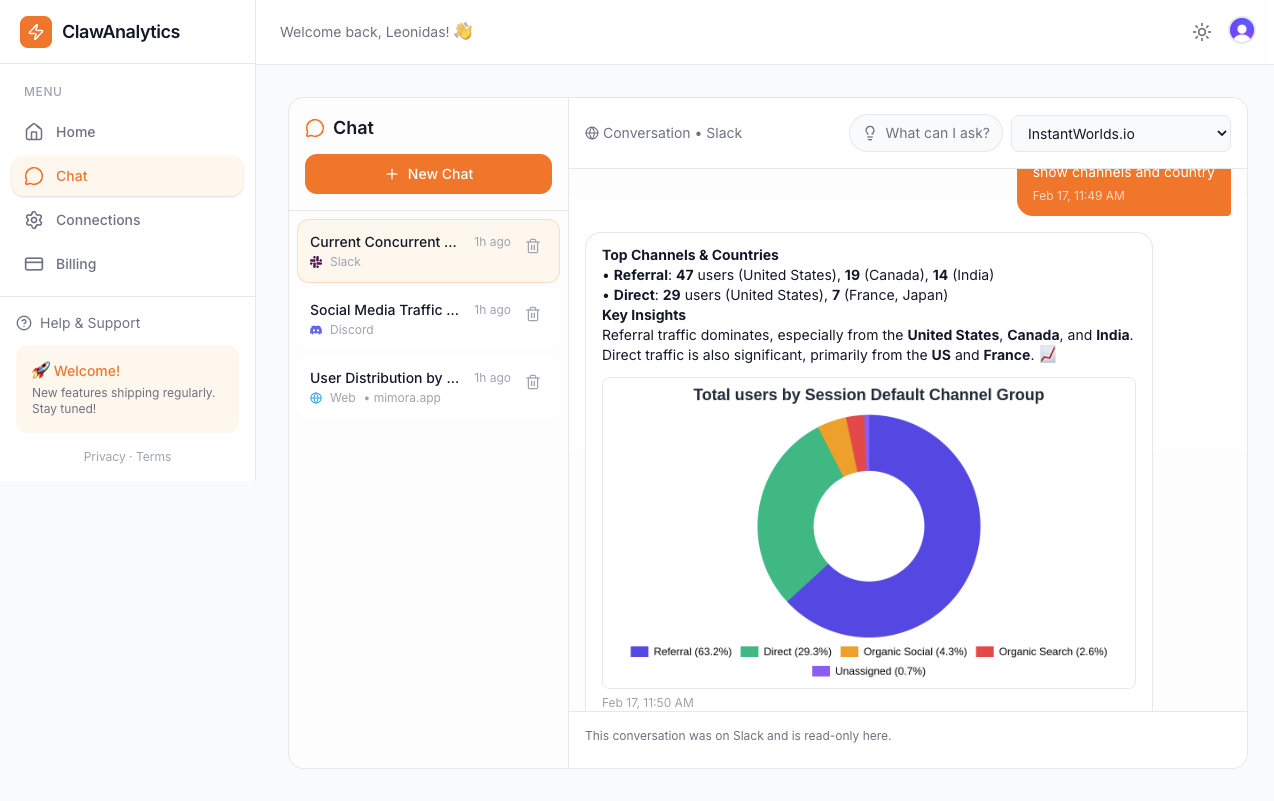
With ClawAnalytics, you get a visual dashboard showing your top search queries at a glance. You can see which queries are trending up or down, helping you spot opportunities before competitors do. For example, if you notice searches for “AI video editing” increasing, you can quickly create content around that topic.
ClawAnalytics also sends weekly insights about your site search patterns. This means you don’t even have to remember to check the data, it comes to you with actionable recommendations. The platform highlights queries that appear frequently but have no matching content, so you always know your next topic.
Example questions ClawAnalytics answers instantly:
- Which search queries have increased the most over the past month
- What percentage of searches result in a content match
- Which categories have the highest search volume but lowest satisfaction
Quick Wins
Start by identifying your top 10 search queries and checking whether each has dedicated content. If not, prioritize creating pages for the highest-volume terms. This is the fastest way to capture engaged traffic from visitors who already want what you’re offering.
Add prominent search functionality above the fold on your site. Visitors shouldn’t have to hunt for the search bar, and making it visible increases usage, giving you more valuable data to work with.
Track search success rates over time. If visitors frequently search for something and then leave, your site search might not be working well, or you might be missing content they need. Both are solvable problems once you have the data.
Finally, use search data to inform internal linking. When you create new content, link from it to pages that match common search queries. This helps visitors discover more of your content and reduces the need for them to search repeatedly.