How to Track Site Search Usage for Real Estate
A couple visits your real estate website looking for a three-bedroom home in a specific neighborhood. They search for “3 bedroom downtown,” but your listings don’t clearly show that option. They leave for a competitor. Site search tracking reveals these lost opportunities so you can capture more leads.
Why Site Search Usage Matters for Real Estate
Real estate buyers have specific criteria when house hunting. They know what they want: a certain number of bedrooms, a specific neighborhood, a price range. When they search on your site, they’re telling you exactly what properties to show them.
Inventory decisions become data-driven with search analytics. If dozens of visitors daily search for “condos under $400k” but you only list luxury homes, that’s a market gap. You might advise sellers on pricing or focus your marketing on what buyers actually want.
Understanding feature preferences helps with property presentations. If searches for “updated kitchen” are common, you know to highlight kitchen renovations in listings. The same applies to pools, garages, home offices, and other features.
Lead quality improves when your website delivers what searchers want. When visitors find properties matching their criteria, they’re more likely to contact you. This means better leads and higher conversion rates.
How to Check in GA4
Set up GA4 on your real estate website and navigate to Search terms. You’ll likely see searches for neighborhoods, property types, bedroom counts, and price ranges. This data directly informs your listing strategy.
Segment searches by season or campaign. Real estate demand fluctuates throughout the year. Understanding when certain searches peak helps you time your marketing efforts effectively.
Track whether search volume correlates with inquiries. High search volume for certain criteria should translate to leads for matching properties. If it doesn’t, your listing presentation might need work.
The Easier Way
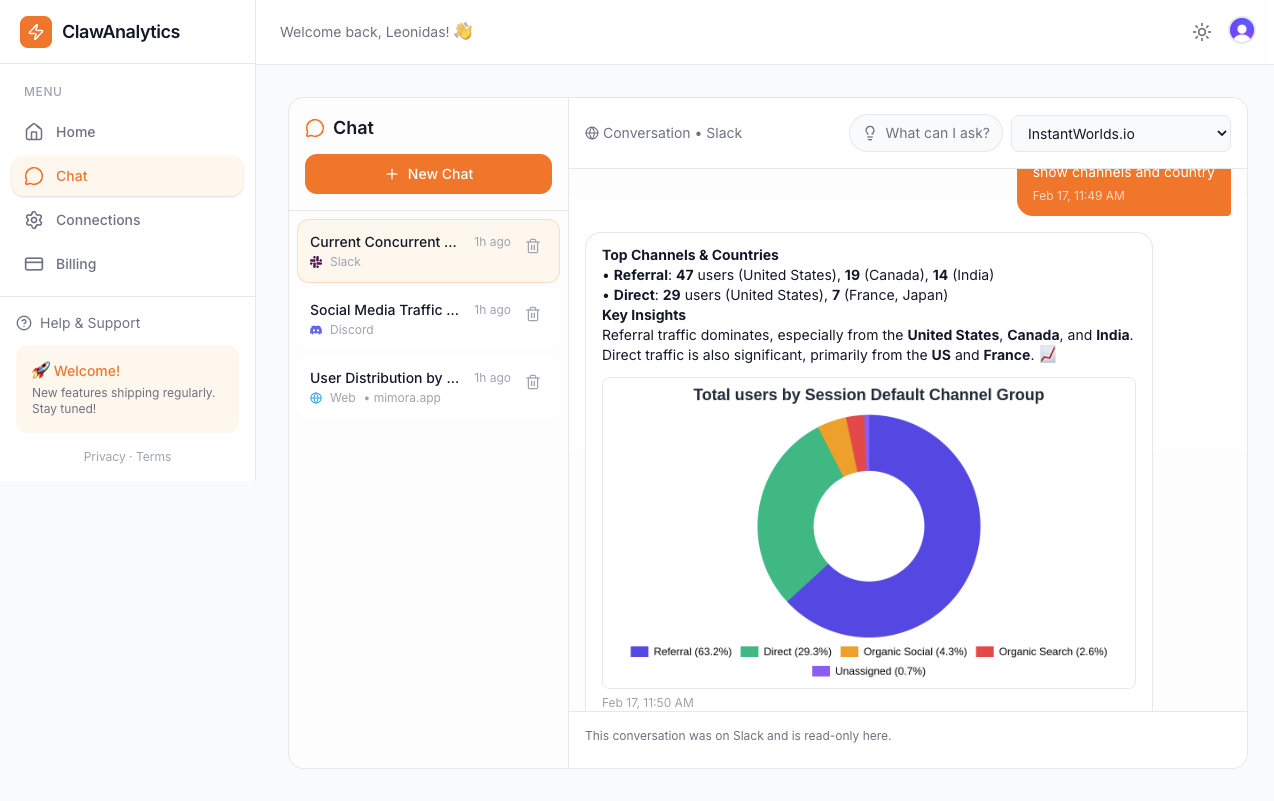
Real estate agents are busy showing properties and closing deals. ClawAnalytics simplifies search data so you can focus on selling rather than analyzing numbers.
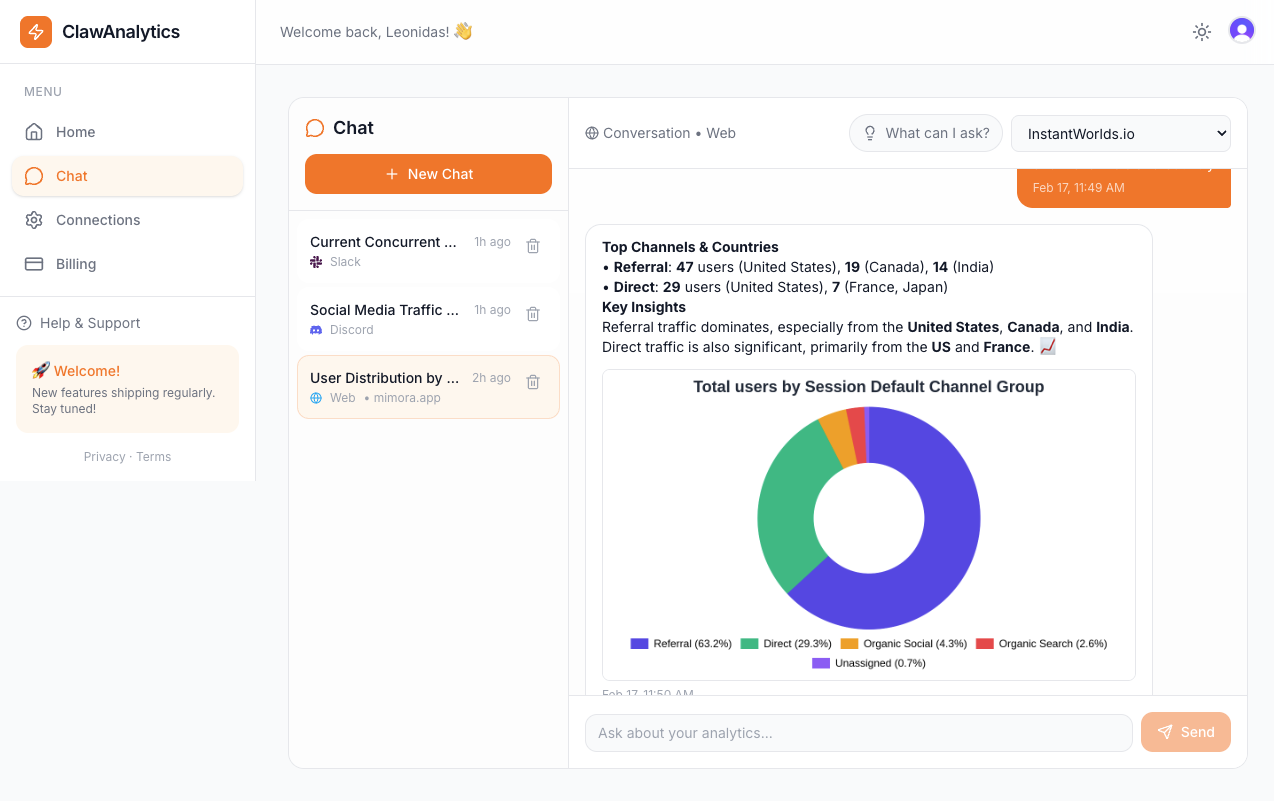
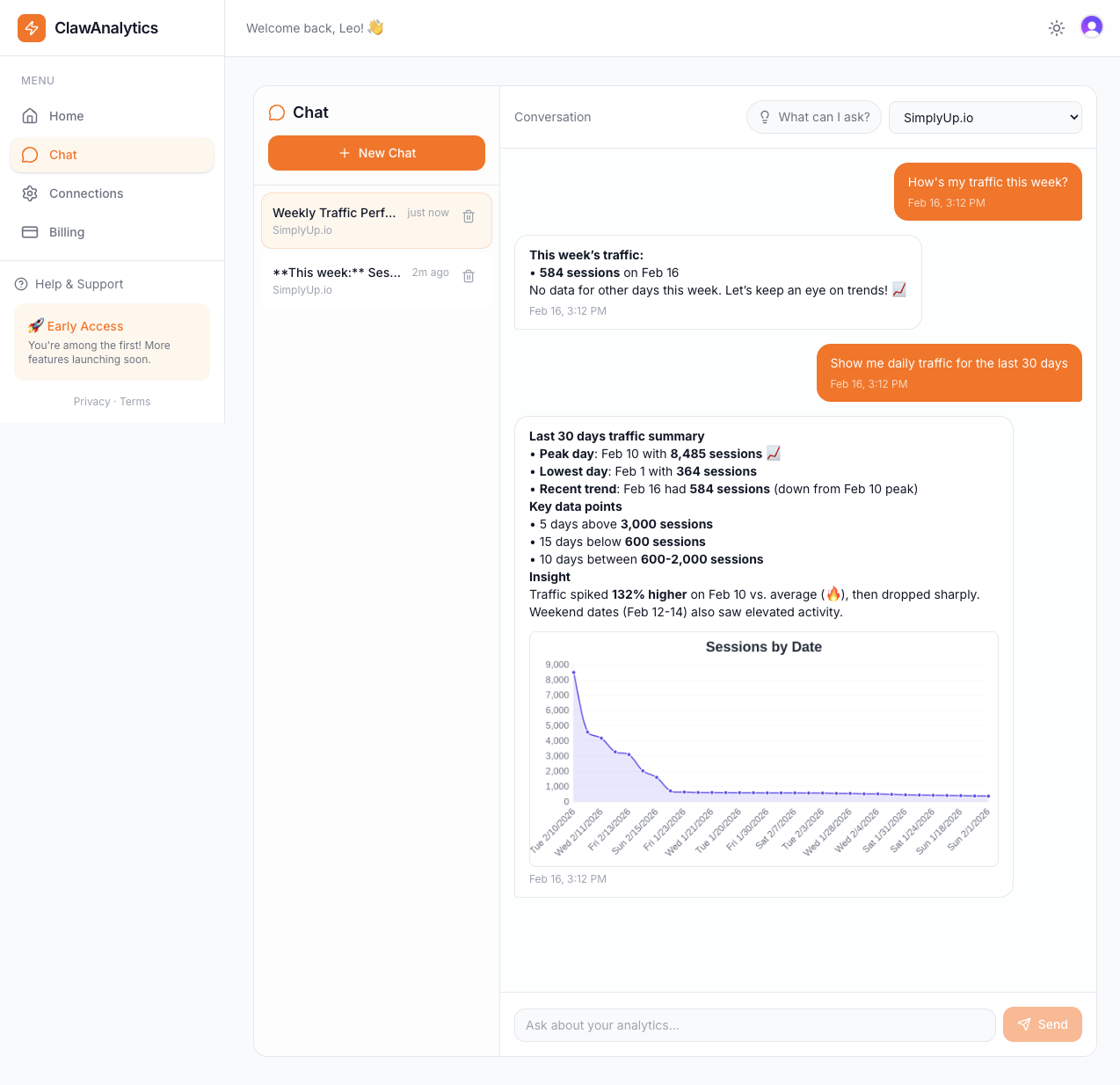
The dashboard shows which neighborhoods, property types, and features generate the most interest. You can see at a glance what’s hot in your market without running complex reports.
ClawAnalytics also helps you understand the sales funnel. You can track whether visitors who search for properties eventually contact you, giving insight into website effectiveness.
Example questions ClawAnalytics answers instantly:
- Which neighborhoods are buyers searching for most
- What property features should I highlight in listings
- Are my listings matching what the market wants
Quick Wins
Optimize property descriptions for common search terms. If searches for “hardwood floors” are frequent, make sure that feature appears in relevant listings. Same for pools, updated kitchens, or home offices.
Create landing pages for high-demand searches. If many visitors search for “downtown condos,” consider a dedicated page showcasing those properties. This improves both user experience and SEO.
Make contact options visible for serious searchers. When visitors search for properties matching their criteria, ensure they can easily schedule showings or request information.
Finally, use search data to advise sellers. If your market shows high demand for three-bedroom homes, sellers with that inventory can price accordingly. Your search data becomes a consulting tool.