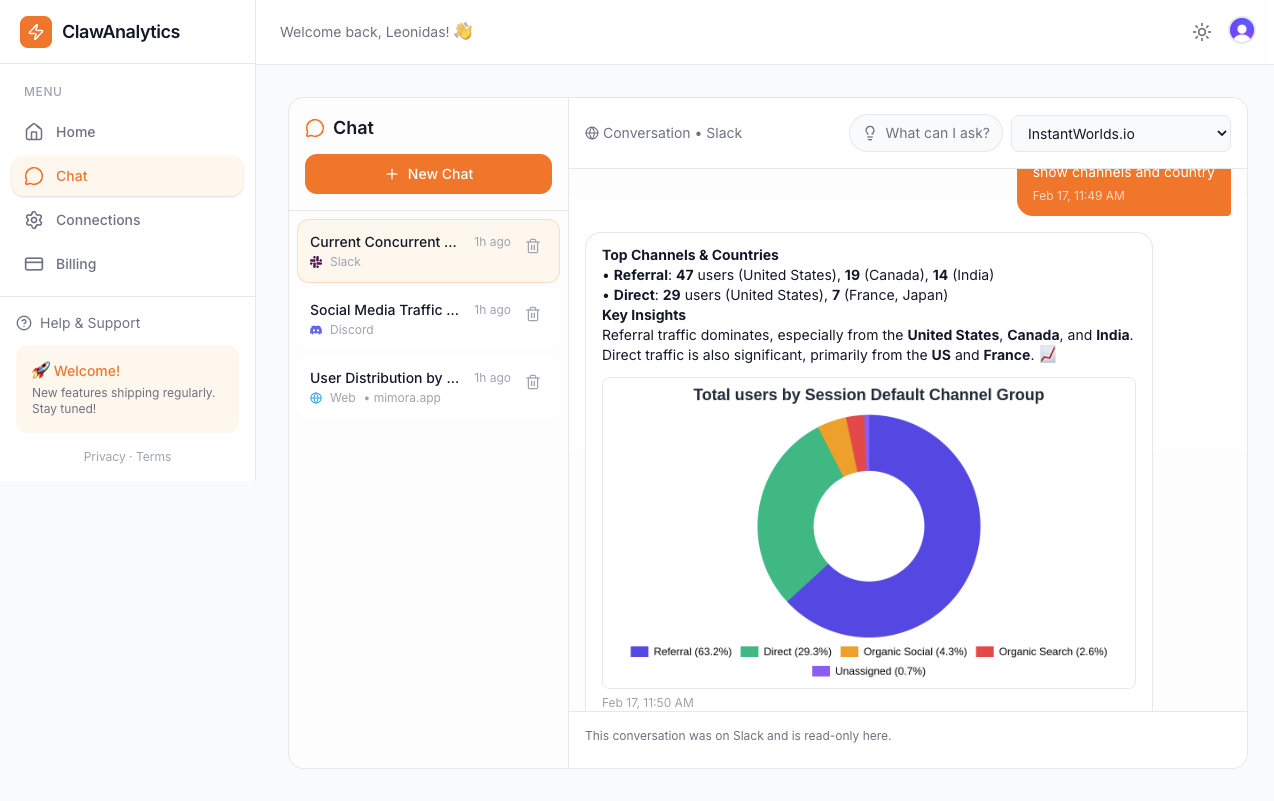
Slack is where work happens. Messages, decisions, updates. Adding analytics there means insights reach the right people at the right time. No more forwarding screenshots from dashboards. No more “let me check and get back to you.”
Why This Matters
Teams using Slack already have context. When someone asks about traffic, everyone sees the answer. New hires can scroll up and understand performance history. The data becomes part of the conversation, not a separate tool.
It also enables automation. Set up a daily morning summary. Create alerts for traffic spikes or drops. Build workflows that trigger based on analytics events.
The Traditional Way Takes Work
Getting analytics into Slack manually requires:
- Open Google Analytics
- Find or build the right report
- Choose your date range and filters
- Export or screenshot the data
- Create a message in Slack with context
This works but takes minutes each time. Most questions never get asked because the friction is too high.
The Easier Way
With Slack analytics integration, you just ask:
Team member: “How are our landing pages performing?” You: “Ask the analytics app” -> “Which landing pages have the best conversion rate?”
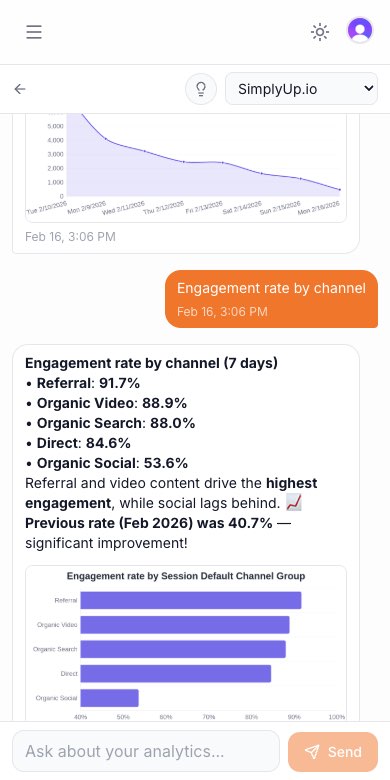
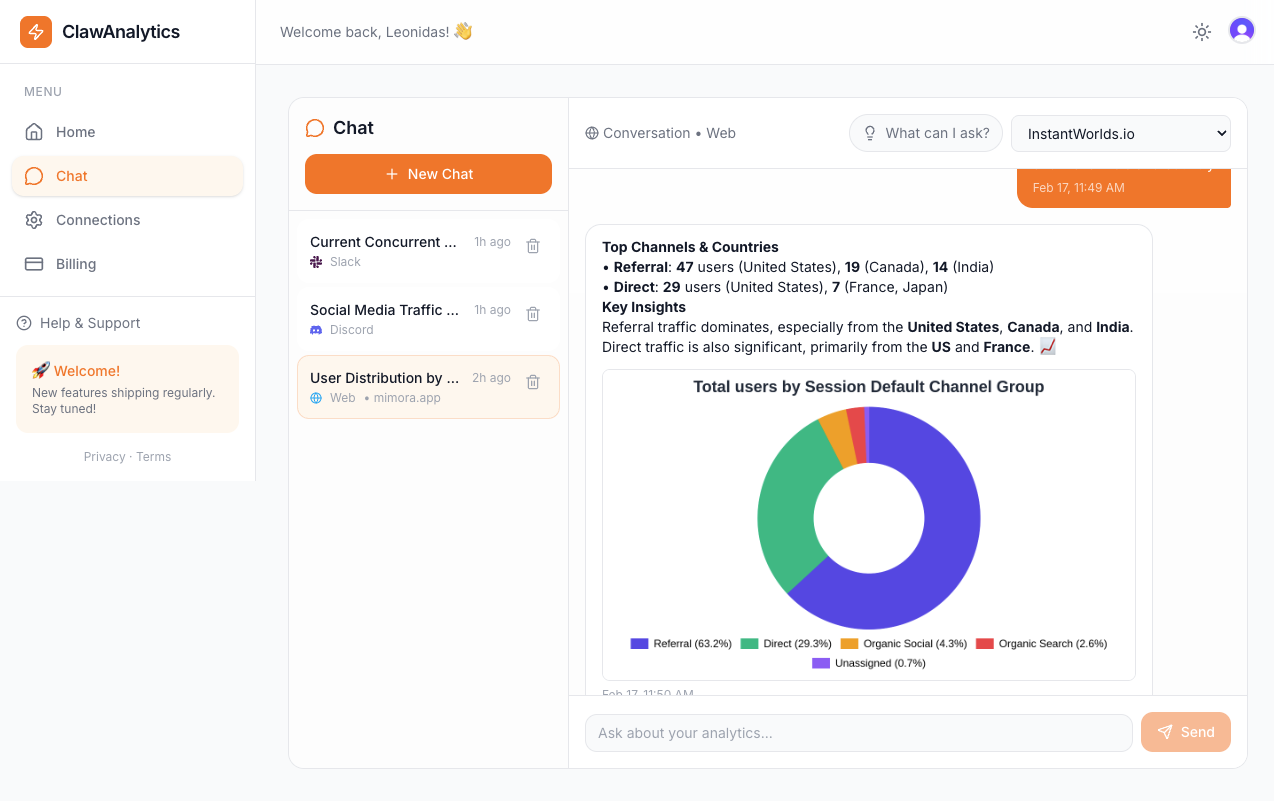
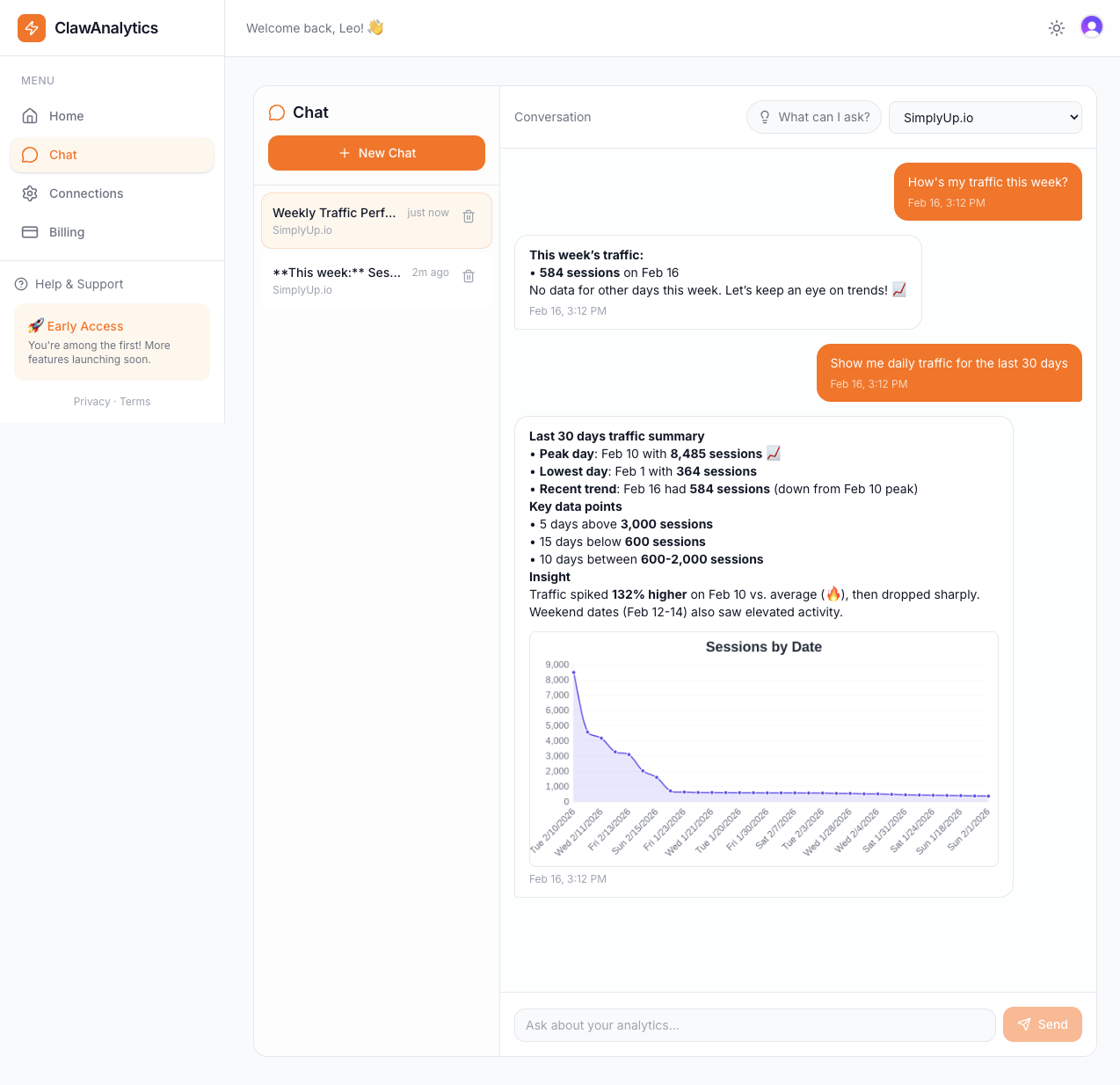
The response appears in seconds with details, context, and often a visualization. Follow-up questions work naturally. You can ask about trends, compare periods, or dig into specific segments.
Questions you can ask:
- What’s my overall conversion rate this week?
- Which traffic source brings the most valuable users?
- Are we getting more or less traffic than last month?
- Show me the top 10 pages by engagement
Quick Wins
Try integrating analytics into Slack this week:
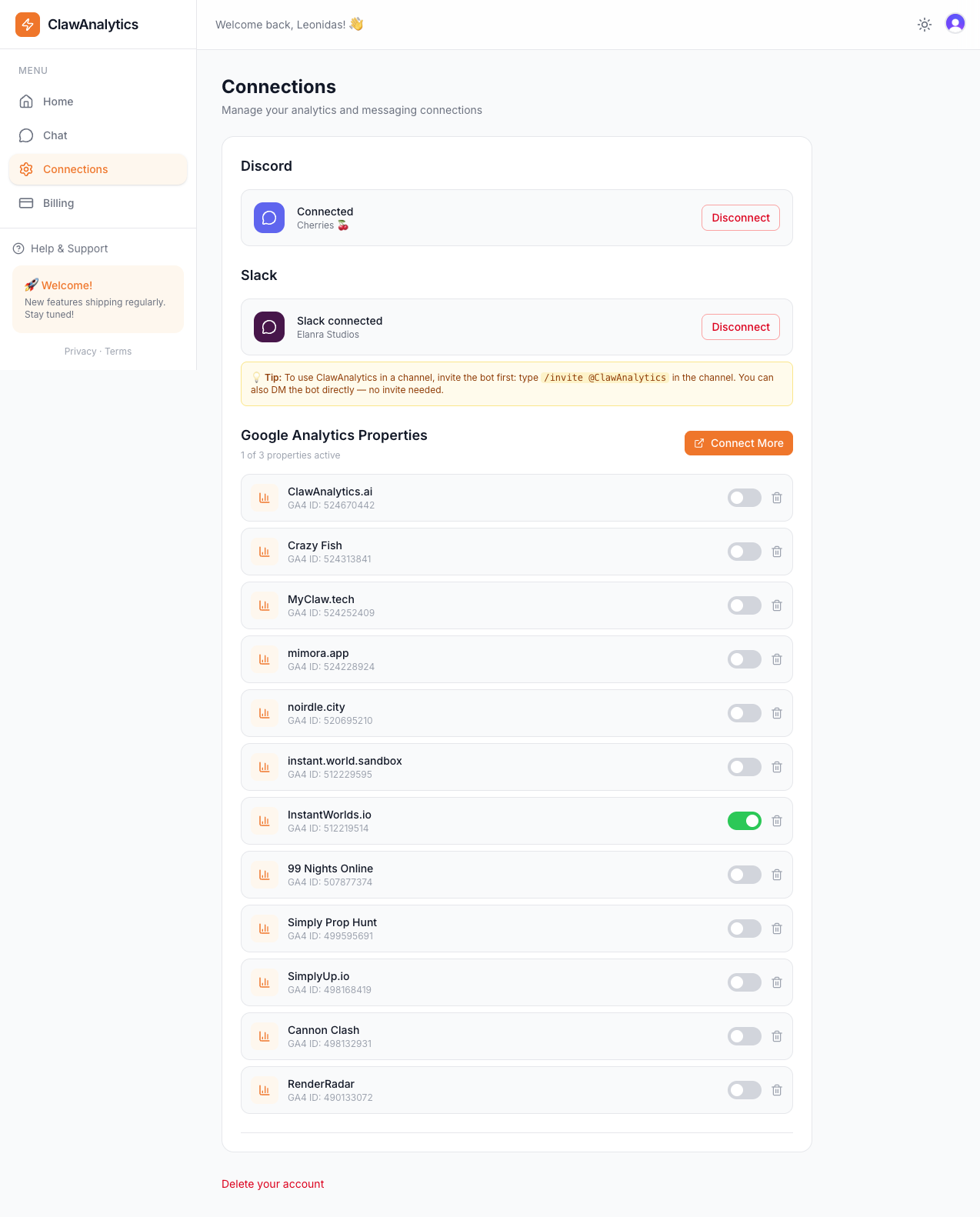
Add a Slack analytics app. Connect your Google Analytics. Set up one daily automated report. Answer three questions from your team using the bot instead of opening analytics.
With ClawAnalytics in Slack, you get natural language queries, automated daily summaries, and alerts. Your analytics becomes part of how your team works, not a separate tool you have to remember to check.