Your client asks for a social media report. You pull up the data and can show exactly how many visitors came from LinkedIn versus Instagram, what they did on the site, and whether they converted. That’s the power of tracking social media traffic properly.
Why Social Media Traffic Matters for Agencies
Tracking social media traffic helps agencies in several ways:
Client retention: When you can show clear numbers, clients trust your work. They stop asking “is this actually working?” because the data speaks for itself.
Budget allocation: You see which platforms deliver actual visitors versus just impressions. This lets you shift budget toward what works.
Campaign optimization: Traffic data reveals which posts drive site visits. You replicate successful content and retire what flops.
Competitive differentiation: Most agencies guess about social. You know. That’s rare.
How to Check in GA4
Open GA4 and navigate to Reports > Acquisition > Traffic acquisition. Look for “Social” in the default channel group. You’ll see sessions, users, and engagement metrics.
To dig deeper, go to Reports > Acquisition > User acquisition. Filter by session source. You can compare LinkedIn, Twitter, Facebook, Instagram, and other platforms side by side.
For client-specific reports, create explorations. Set dimension to “Session source/medium” and break down by “Session campaign.” This shows which specific posts drive traffic.
The Easier Way
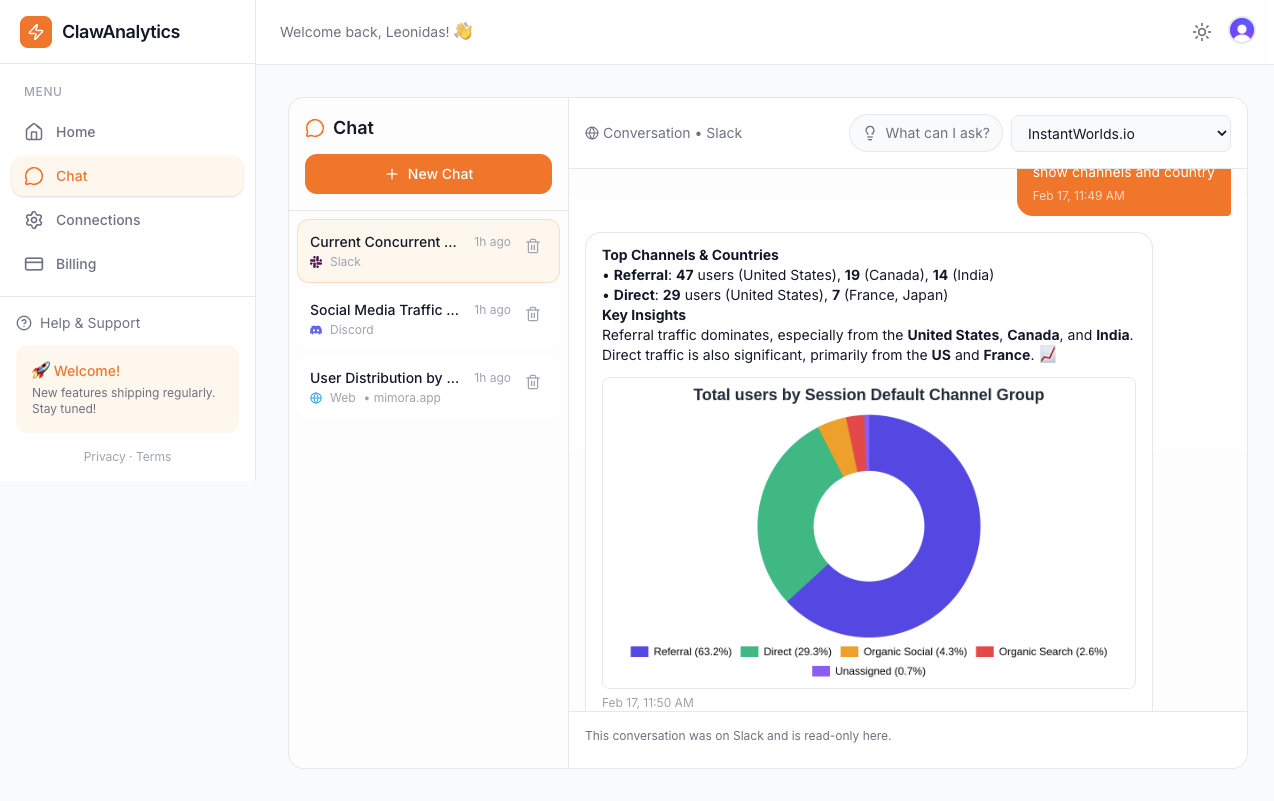
Setting up all these GA4 reports takes time. ClawAnalytics simplifies this significantly.
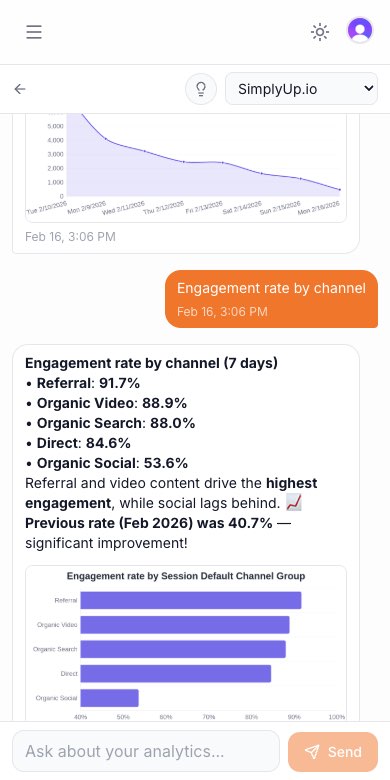
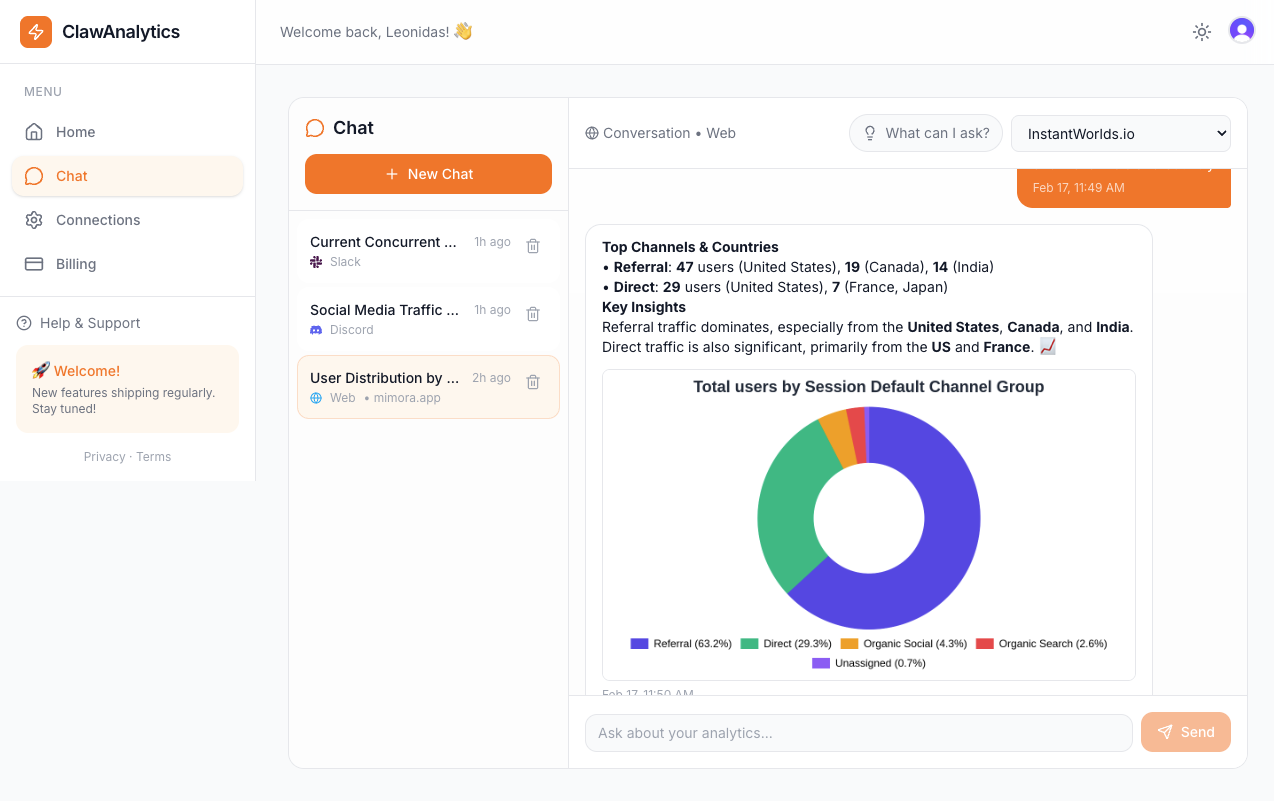
For agencies, ClawAnalytics answers questions like: Which client industries get the most social traffic? What posting times correlate with higher engagement? Which content formats (video, carousel, static) perform best?
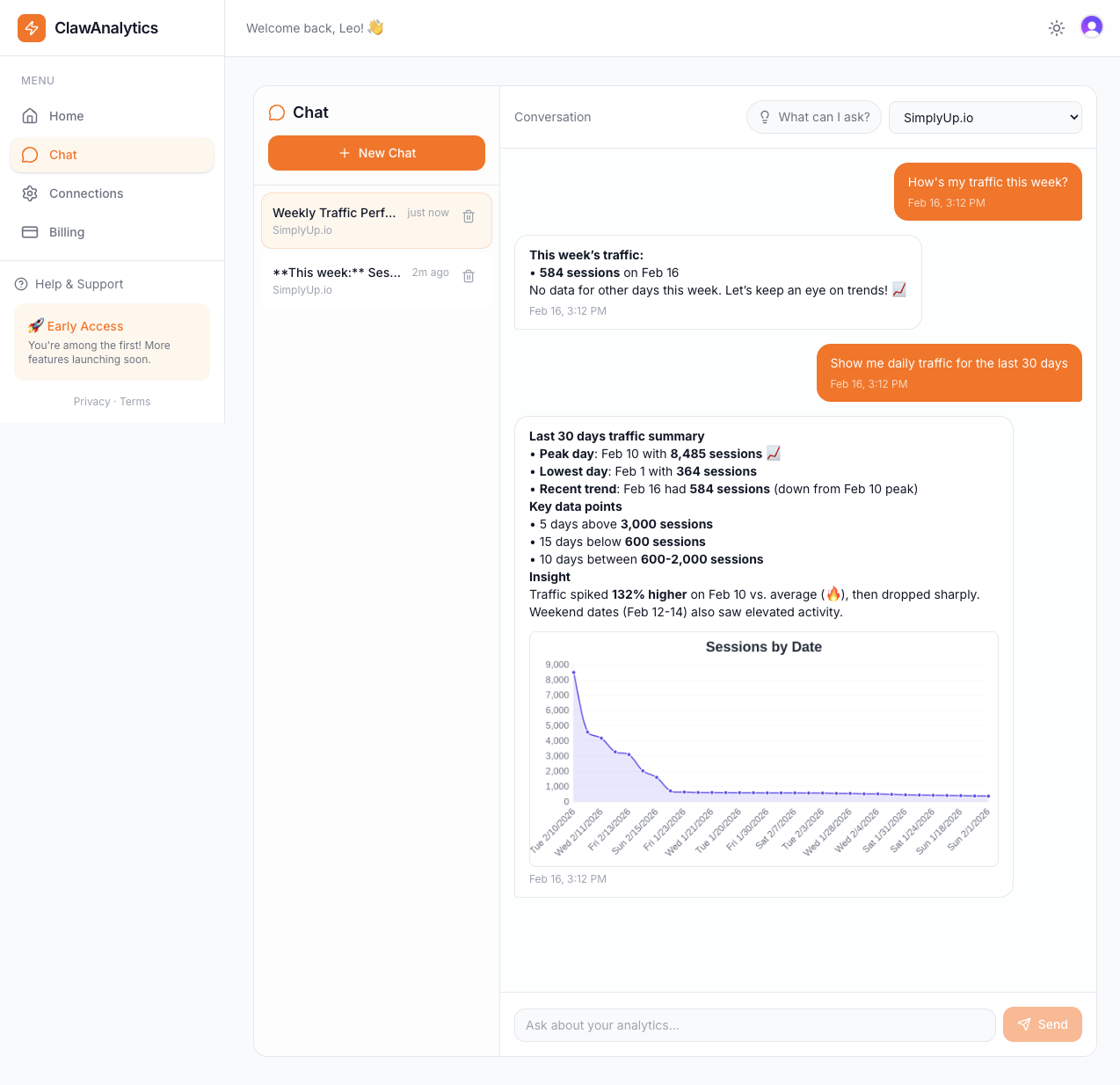
You can also ask: “Show me social traffic trends for the last 30 days” and get instant visual answers. This cuts reporting time from hours to minutes.
Quick Wins
Start tracking social media traffic today with these steps:
- Enable social tracking in GA4: Confirm social dimensions are firing. Test with a UTM-tagged link.
- Create a dashboard: Build a simple view showing sessions by source, conversion rate by platform, and top-performing posts.
- Set up UTM parameters: Use a consistent naming convention. Include source, medium, campaign, and content.
- Share weekly snapshots: Send clients a 30-second update showing social traffic trends. Consistency builds trust.