How to Track Social Media Traffic for Ecommerce
Your Instagram ad brought 500 visitors to your online store last week. Your TikTok video brought 1,000. Which one performed better?
If you only look at clicks, TikTok wins. But if those Instagram visitors spent $2,000 while TikTok visitors spent $300, Instagram wins. This is why tracking social media traffic matters.
Why Social Media Traffic Matters for Ecommerce
Traffic volume doesn’t equal revenue. A platform might send tons of visitors who browse and leave. Another might send fewer but higher-quality shoppers.
Different platforms attract different audiences. A 25-year-old professional buying work accessories behaves differently than a college student shopping for dorm decor. Understanding this helps you tailor offers.
Social traffic informs product development. If your Pinterest audience consistently buys one category, consider expanding that line. The data guides inventory and new product decisions.
Attribution shapes your strategy. Knowing which platform converts best determines where to spend your marketing budget next quarter.
How to Check in GA4
Open Google Analytics 4 and navigate to Reports > Acquisition > Traffic Acquisition. Filter by Session Source/Medium to isolate social platforms.
Look at these key metrics:
- Sessions from each platform
- Average engagement time
- Conversion rate
- Revenue per session
Create a comparison view. Select “Session Source” as the dimension and compare conversion rates side by side. This reveals true performer quality, not just traffic volume.
Set up custom events for “Add to Cart” and “Begin Checkout.” These mid-funnel metrics show where users drop off. A platform with high traffic but low add-to-cart rates might need better creative.
Check weekly during active campaigns. Social performance shifts quickly as algorithms and trends change.
The Easier Way
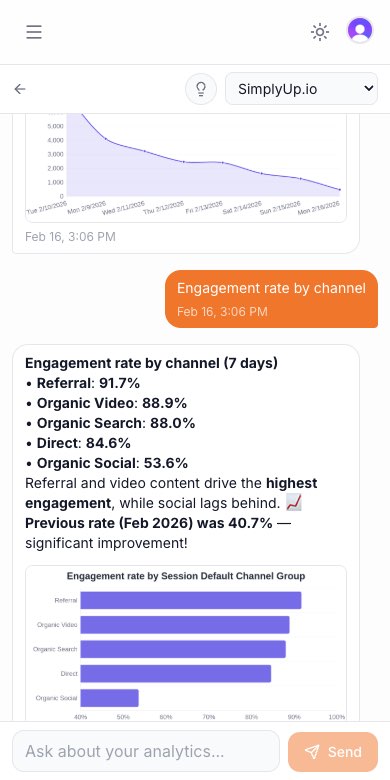
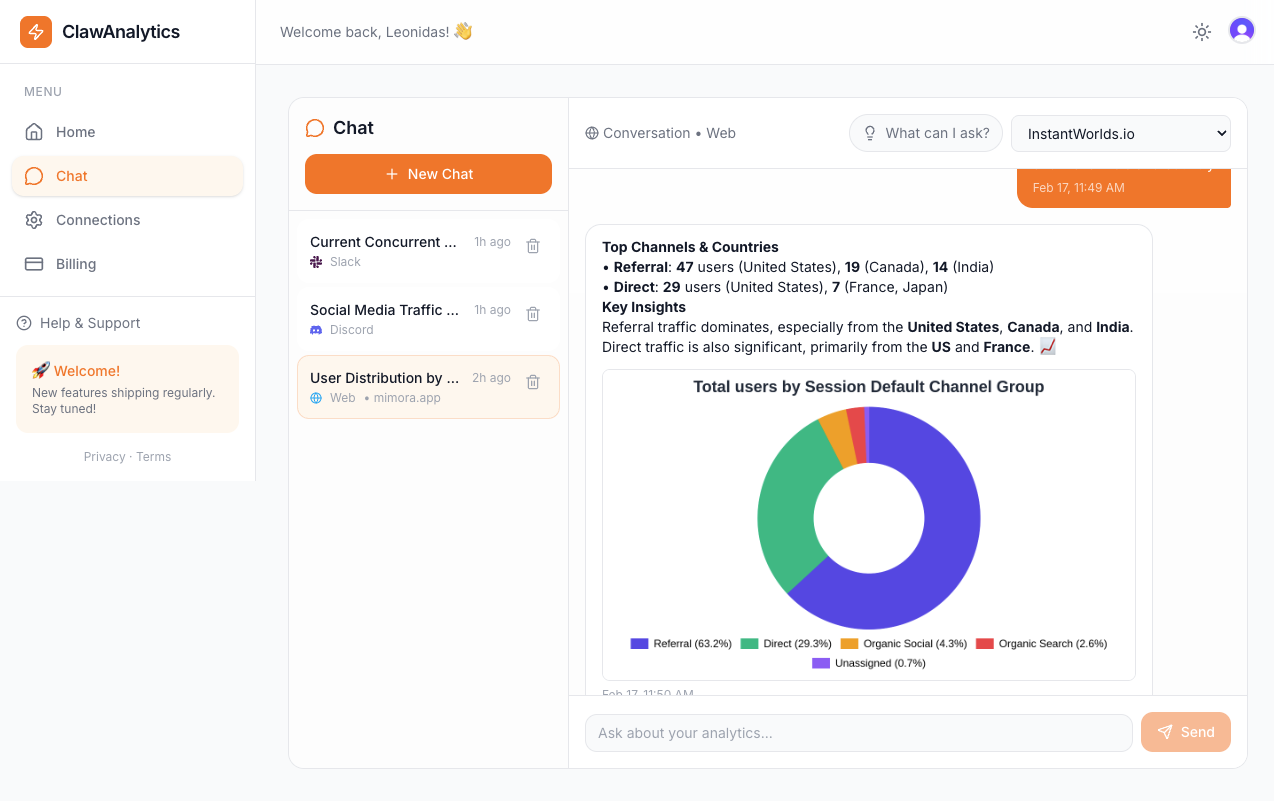
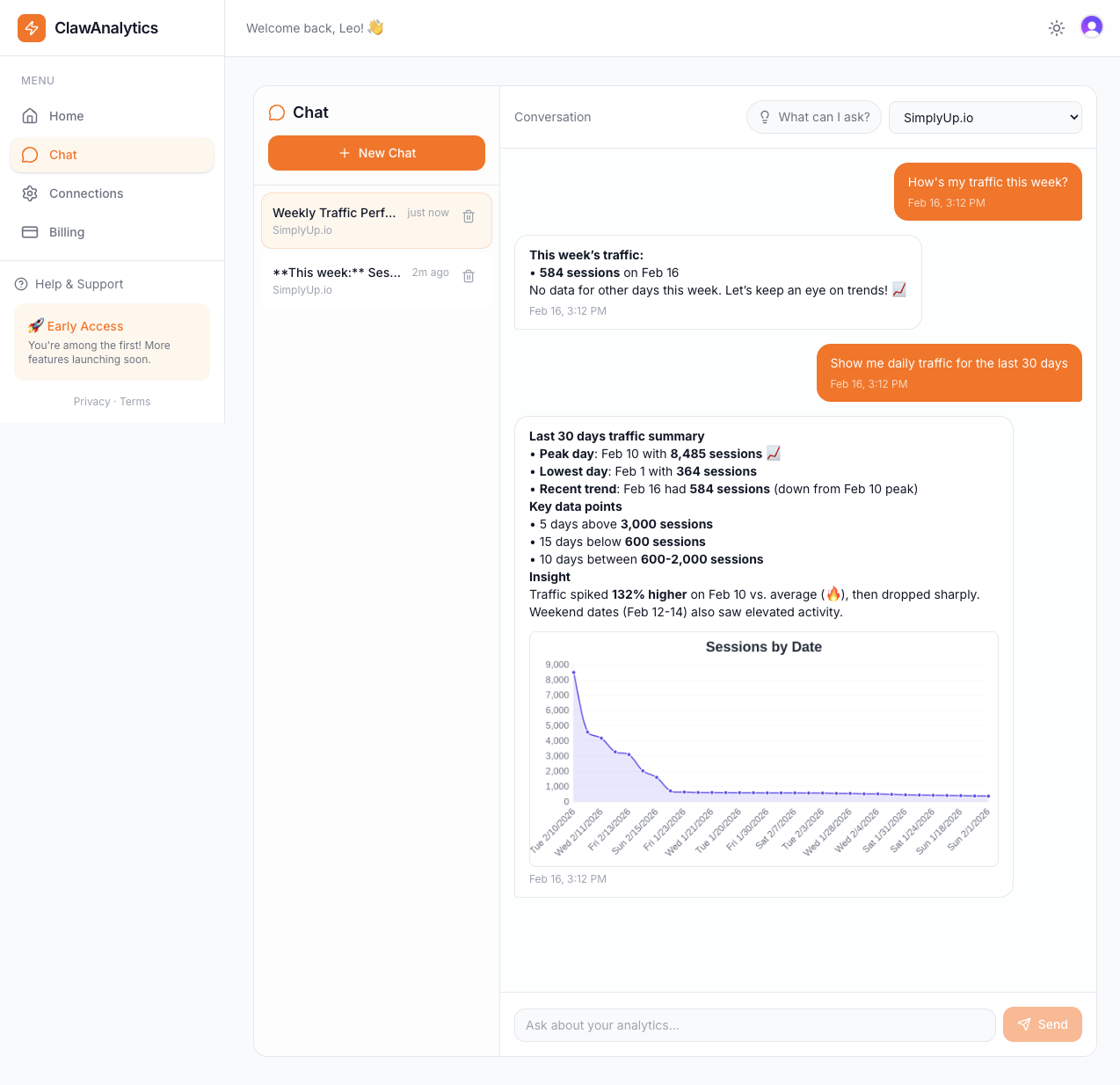
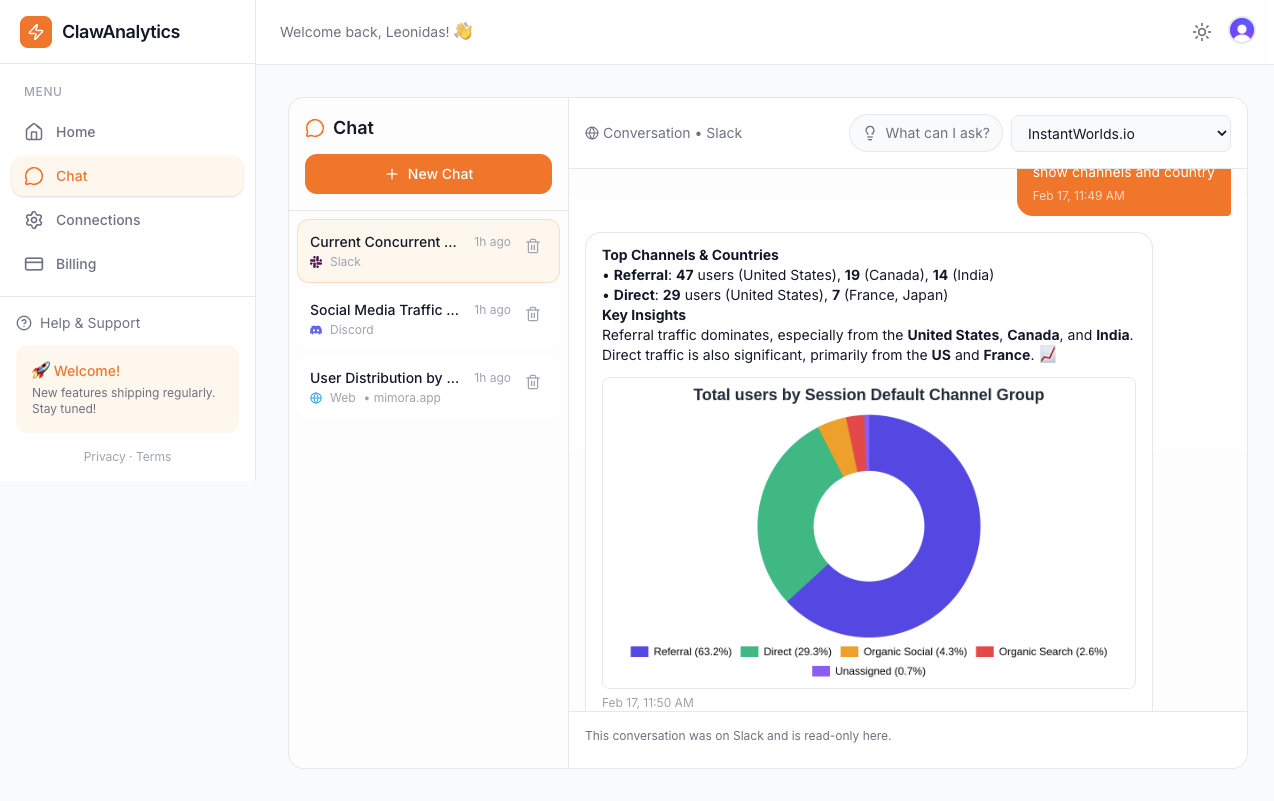
ClawAnalytics makes social tracking straightforward.
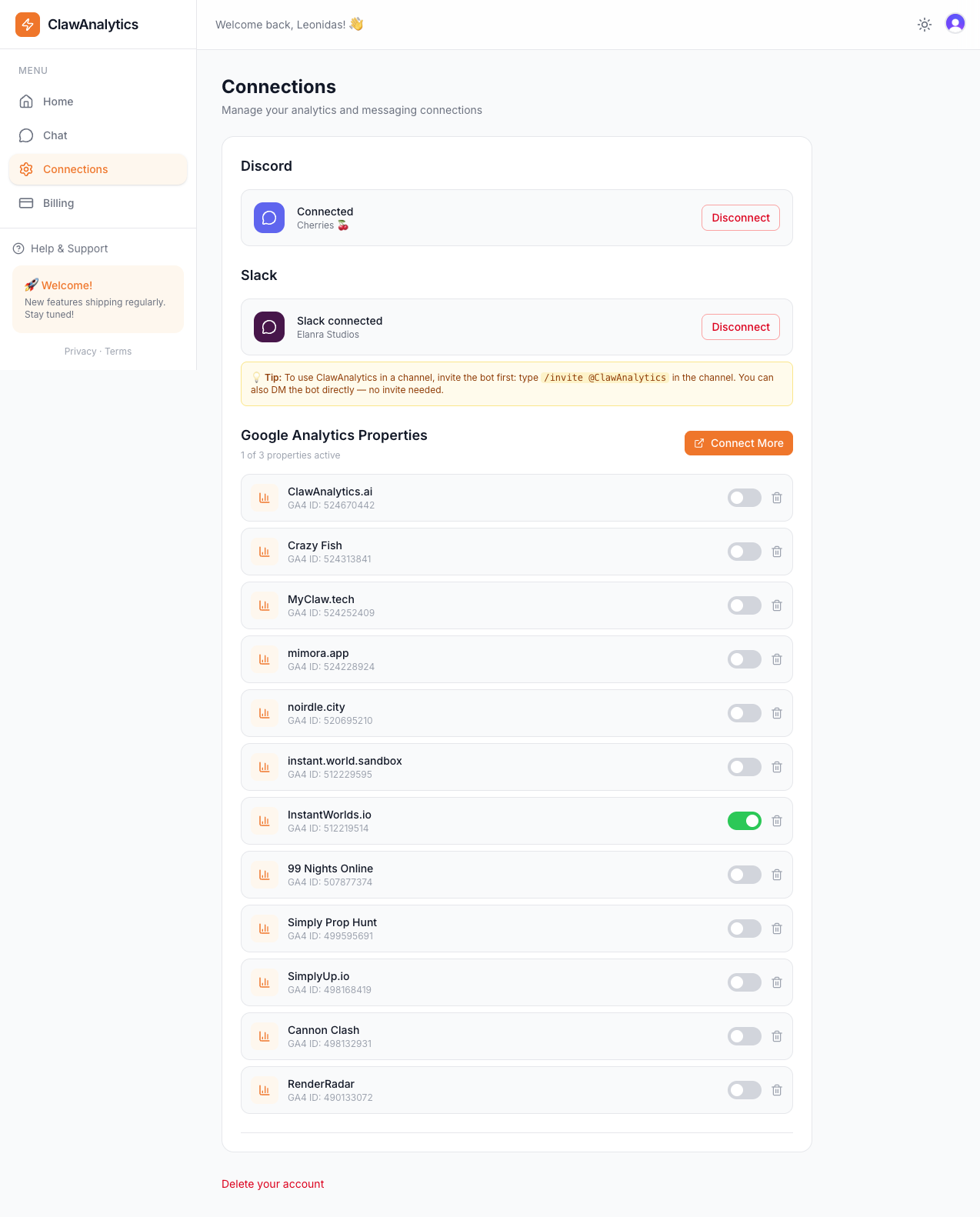
You connect your store and social accounts once. The dashboard shows:
- Revenue generated from each platform
- Which posts and ads drive the most sales
- Customer acquisition cost per platform
You get answers to questions like:
- Should we increase budget on Instagram or Pinterest?
- Are our TikTok views translating to sales, or just vanity metrics?
- Which influencer partnership delivered the best return?
ClawAnalytics also identifies trends. If Facebook traffic is declining while Instagram grows, you can shift strategy before performance drops further.
Quick Wins
Add UTM parameters to every link. Use consistent naming like source=instagram, medium=post, campaign=spring-sale. This ensures accurate tracking across all platforms.
Track pixel conversions. Install Facebook Pixel, TikTok Pixel, and Pinterest Tag. These capture conversions that happen after users leave the platform.
Create platform-specific landing pages. A visitor from Instagram expects to see products featured in lifestyle contexts. Match the creative to the source.
Test posting times by measuring when engagement peaks. Schedule your most important posts when your audience is most active. Most platforms have built-in analytics for this.