Ecommerce

How to Track Top Exit Pages for Ecommerce

Learn how to identify where ecommerce visitors leave your site so you can optimize checkout and reduce cart abandonment.

A customer adds three items to their cart, clicks checkout, then stares at the shipping options and closes the tab. That cart abandonment just cost you a sale. But was it the shipping cost? The form length? The slow load time? Without tracking exit pages, you are guessing.

Why Top Exit Pages Matter for Ecommerce

Understanding exit pages is essential for ecommerce success.

Checkout optimization requires specific data. If you do not know where customers leave, you cannot fix the problem. Exit page data points you directly to the bottleneck.

Cart abandonment has a direct revenue cost. The average ecommerce cart abandonment rate is around 70%. Reducing this by even a few percentage points means significant revenue.

Different products have different patterns. Electronics buyers might exit on comparison pages, while fashion shoppers may leave after viewing sizing guides. Exit data reveals these patterns.

Mobile vs desktop behavior differs. You might find desktop users exit at payment, while mobile users leave at shipping selection. Tailoring fixes to each device improves results.

How to Check in GA4

Here is how to access exit page data in Google Analytics 4.

In GA4, click on Reports > Engagement > Pages and screens. By default, this shows page views. To see exit data, click the Add metric button and search for “Exits” or “Exit rate”. Add these metrics to your report.

The exit rate shows the percentage of sessions that ended after viewing each page. Pages with high exit rates are where users are most likely to leave your site.

For deeper analysis, go to Explore and create a funnel analysis. Define steps as pages, then see where the biggest drop-off occurs. This tells you exactly which page is causing users to exit.

The Easier Way

ClawAnalytics simplifies exit page analysis for ecommerce businesses.

Instead of building custom reports, ClawAnalytics automatically identifies your top exit pages and compares them against industry benchmarks. You see immediately which pages need attention.

ClawAnalytics also shows you:

  • Which products are most often viewed before exit
  • How exit behavior changes between new and returning customers
  • Whether mobile or desktop users leave more often at each step

This context helps you prioritize fixes that will have the biggest impact on revenue.

Quick Wins

Use these tactics to reduce exits from your ecommerce site.

Optimize your cart page. Show product thumbnails, allow easy quantity changes, and display the total with shipping calculated.

Simplify checkout. Reduce form fields to the essentials. Offer guest checkout. Show security badges prominently.

Use exit-intent popups. Offer a discount code when users move their cursor toward close, but only after they have added something to cart.

Improve page speed. Slow-loading product and checkout pages drive users away. Compress images and enable caching.

Retarget abandoned carts. Install pixels to capture exiters and serve them ads on social media to bring them back.
Check your analytics from anywhere

On your morning commute. At a coffee shop. In a meeting. Pull up your analytics on any device and get instant answers.

  • Web dashboard on desktop & mobile
  • Discord bot for team channels
  • Slack integration for your workspace
  • MCP server for AI agents (Claude, Cursor)
See your traffic in 60 seconds →
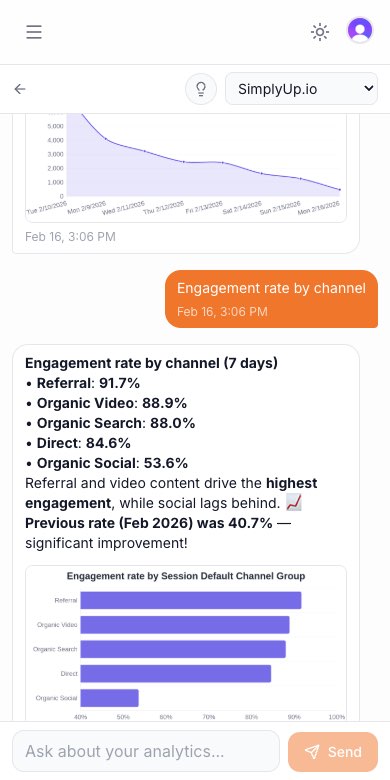
ClawAnalytics mobile chat showing engagement rate breakdown with charts

How ClawAnalytics helps

Skip the dashboards. Get answers in seconds.

🔗
1

Connect GA4

One-click OAuth. Read-only access. Takes 30 seconds to link your Google Analytics property.

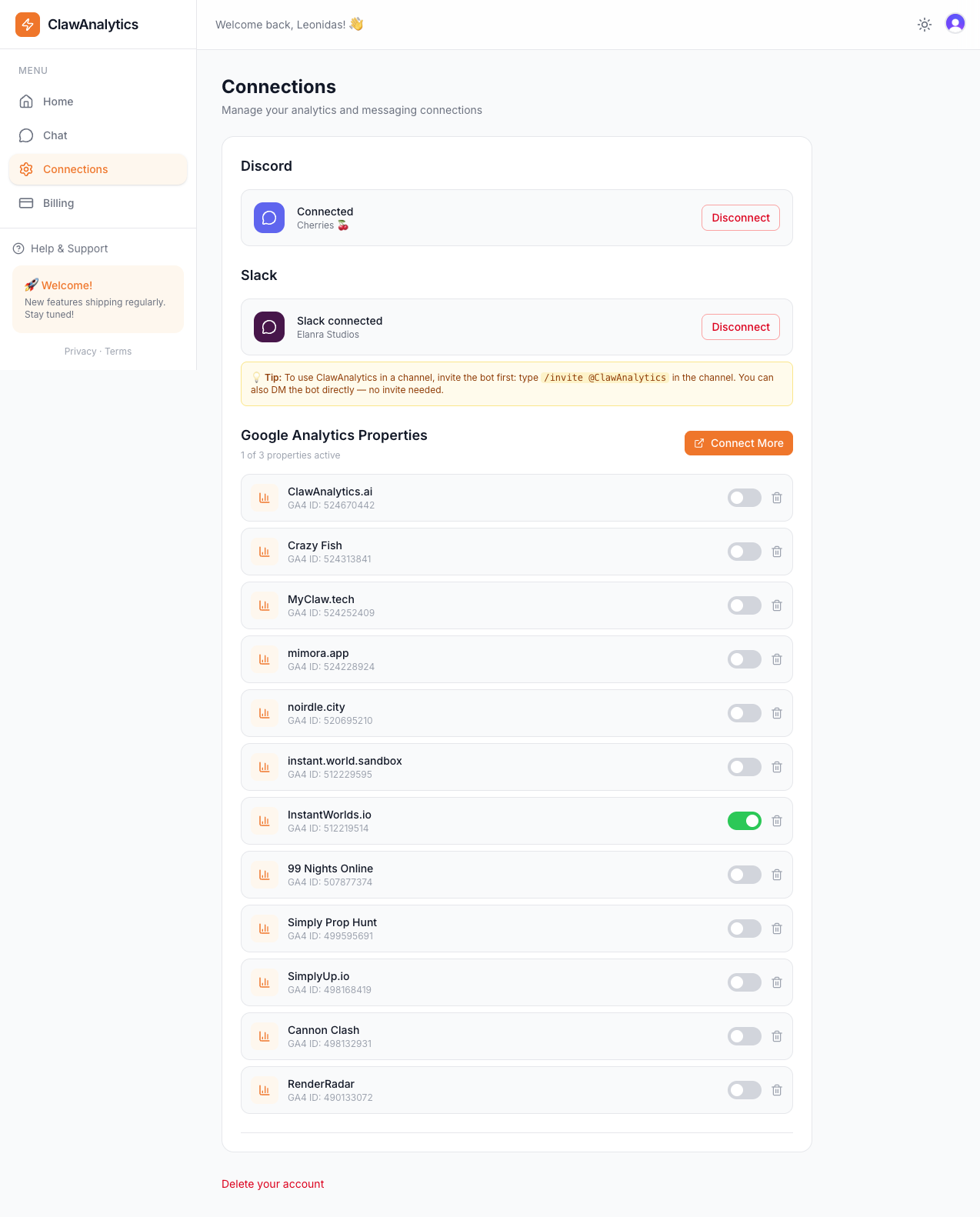
ClawAnalytics connections page showing Google Analytics properties linked
💬
2

Ask questions

Type in plain English. No query language, no filters, no date pickers. Just ask what you want to know.

ClawAnalytics chat interface with natural language query
📊
3

Get answers with charts

Instant responses with visualizations. Share charts with your team or export the data.

ClawAnalytics showing chart response to analytics query

See it in action

Ask a question. Get a chart. That simple.

ClawAnalytics Chat
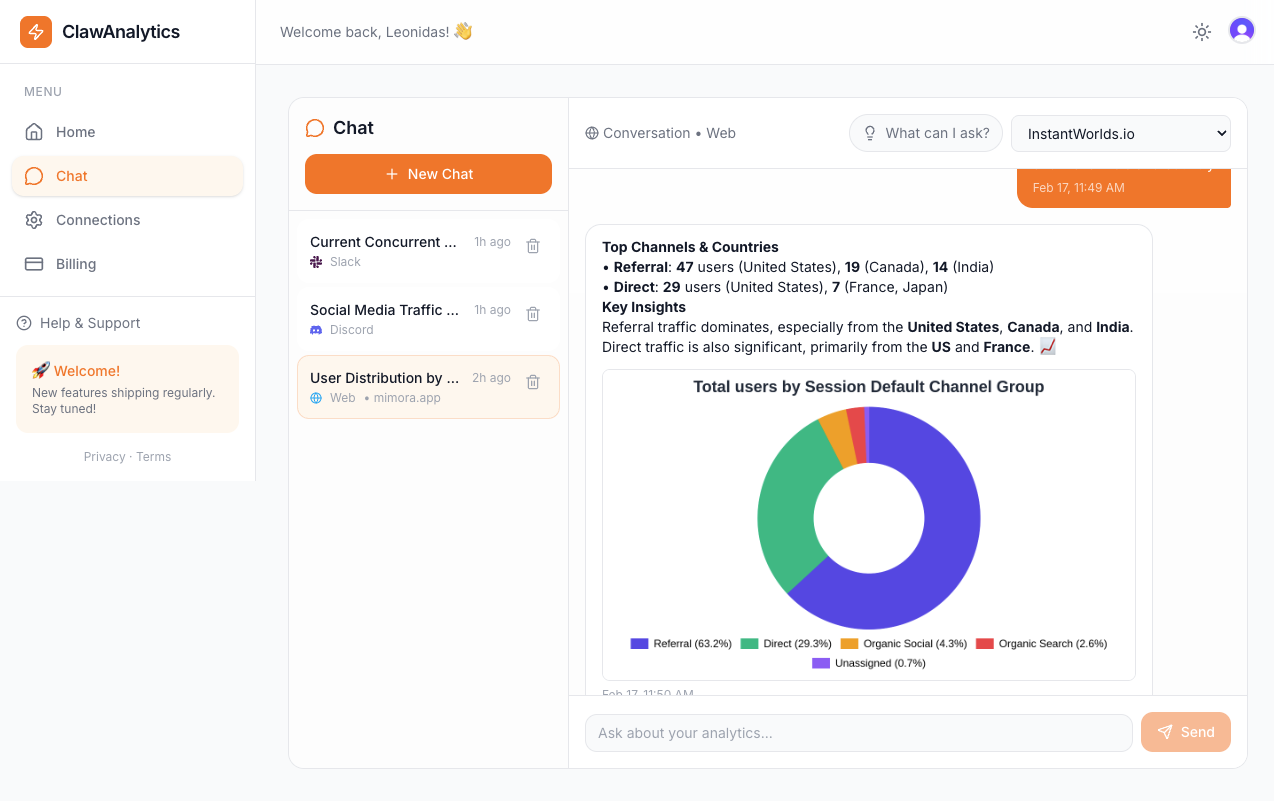
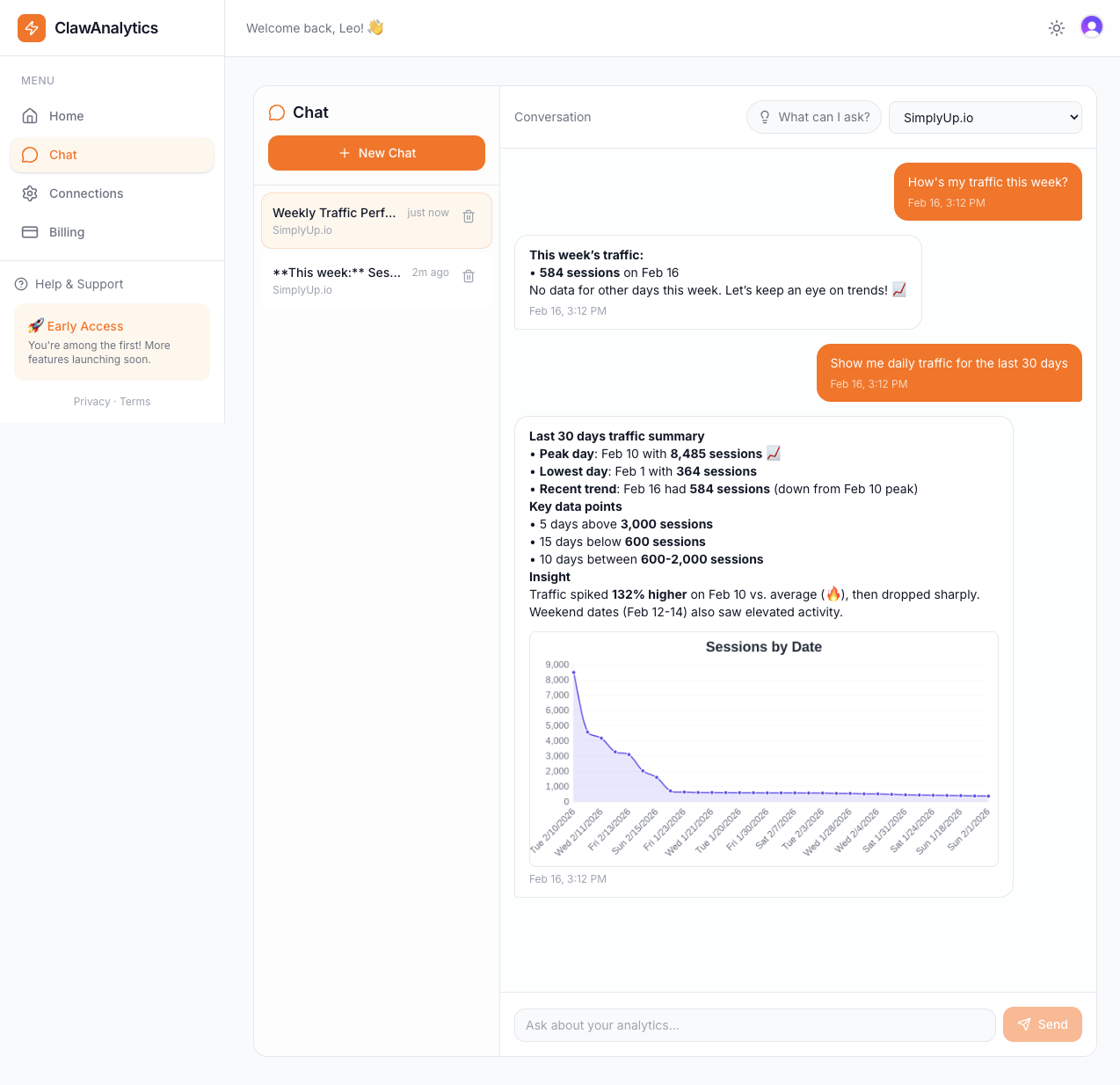
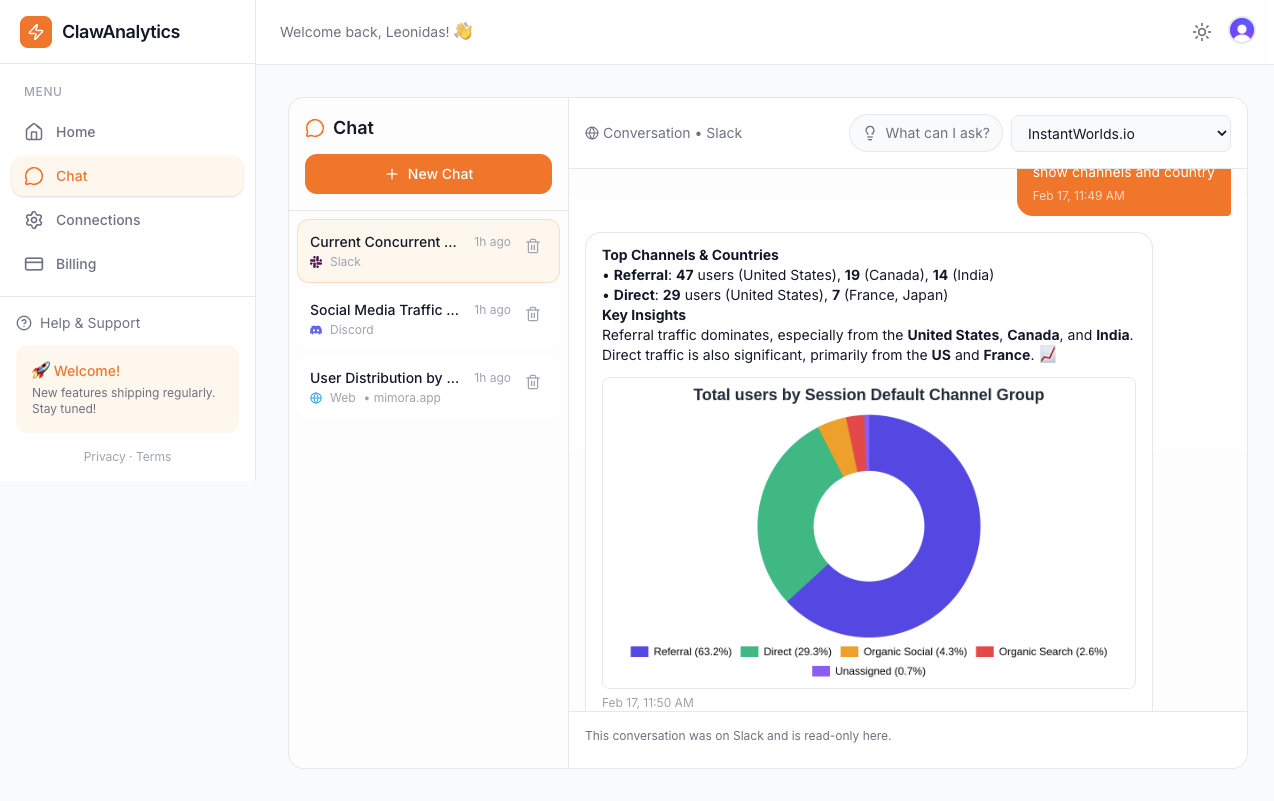
ClawAnalytics chat interface showing a natural language analytics query with chart response

Works on web, Discord, and Slack. Also available as an MCP server for AI agents.

Leonidas Maliokas
"I used to open Google Analytics 5 times a day and still miss things. Now I get a summary every morning and ask follow-ups when something looks off. Takes 10 seconds instead of 10 minutes."

Leonidas Maliokas

Founder, Elanra Studios

🎮 5 games monitored 💼 3 businesses

Simple, honest pricing

Start free. Upgrade when you're ready.

Free

Try it out

$0 /month
  • 5 websites
  • 30 questions/month
  • Web dashboard
  • No credit card
Start Free

Website

For small businesses

$9 /month
  • 5 websites connected
  • 100 questions/month
  • Daily morning summary
  • Web dashboard + Discord
Get Started

Business

For agencies and portfolios

$79 /month
  • Unlimited websites
  • 2,000 questions/month
  • Everything in Pro
  • ✅ API access
  • ✅ MCP integration
  • ⭐ Priority support
Get Started

Stop opening dashboards.
Start asking.

Connect Google Analytics in 30 seconds. Get answers from the dashboard or Discord. Start free — no credit card needed.

Try it free — ask your first question
30-second setup Free plan available Cancel anytime

Got questions?

Why should ecommerce businesses track exit pages?
Exit pages reveal where customers give up. If most people leave from the cart page, you know checkout is the problem, not your product pages.
How do I find exit page data in GA4?
In GA4, go to Engage > Pages and screens. Add the Exit clicks metric to see which pages have the highest exit rates.
How does ClawAnalytics help with exit page analysis?
ClawAnalytics highlights the exact pages where customers leave and suggests fixes based on industry benchmarks for your product category.

Related guides

More resources to help you get the most from your analytics.