You launch a store selling pet supplies. You run Facebook Ads targeting dog owners. Clicks come in fast, but no one buys. After testing, you discover your ad traffic bounces because product images look different from what customers expected. You fix the photos, and conversions triple overnight.
Why Traffic Sources Matter for Dropshipping
Dropshipping operates on thin margins, making every traffic source decision critical. You need to know exactly which channels deliver customers who actually purchase, not just visitors who browse.
The difference between profitable and unprofitable dropshipping often comes down to traffic quality. Paid social might bring lots of clicks but few buyers. Organic TikTok might convert better but take longer to build. Understanding your numbers helps you scale what works and kill what does not.
Picture this: you spend $1000 on Instagram Ads and $500 on Google Ads. Instagram brings 500 visitors, Google brings 200. But Google delivers 8 sales at $60 average order value while Instagram delivers only 3 sales. Google is your winner, even though it brought less traffic.
What Causes Dropshipping Traffic Issues
Targeting the wrong audience wastes budget. If your ad targeting is too broad or based on incorrect assumptions about who wants your product, clicks wont convert.
Poor product-page trust signals scare buyers. Dropshipping faces inherent trust challenges since customers cant inspect products. Missing reviews, unclear return policies, or amateur design signals scam.
Slow loading speeds kill conversions. Many dropshipping sites load slowly due to heavy apps and unoptimized images. Research shows 40% of visitors leave sites that take over 3 seconds to load.
Mismatched ad-to-landing-page experience creates confusion. If your ad promises one thing and the landing page delivers another, visitors leave immediately.
High ticket prices without justification hurt sales. Dropshipping products often face price comparison with Amazon. Your site must communicate unique value or customers go elsewhere.
How to Track It
Google Analytics 4 provides essential dropshipping insights. Set up Enhanced Ecommerce tracking to see exactly which traffic sources drive product views, add-to-carts, and purchases. Focus on the “Multi-channel Funnels” report to understand which sources contribute to conversions over time.
Create UTM parameters for every campaign. Name them systematically: source_platform_campaign_product. This lets you drill down in GA4 and see exactly which ads perform.
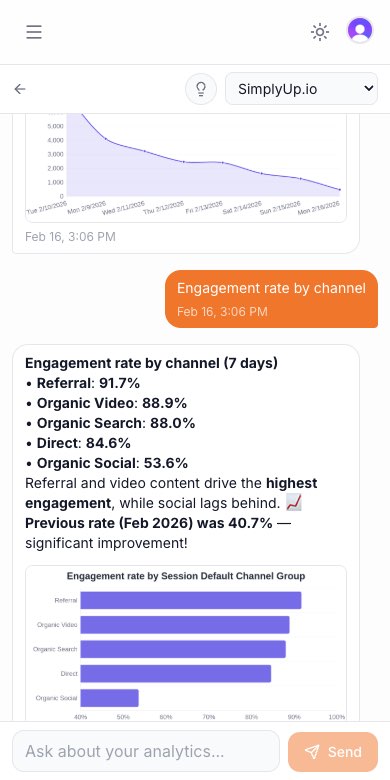
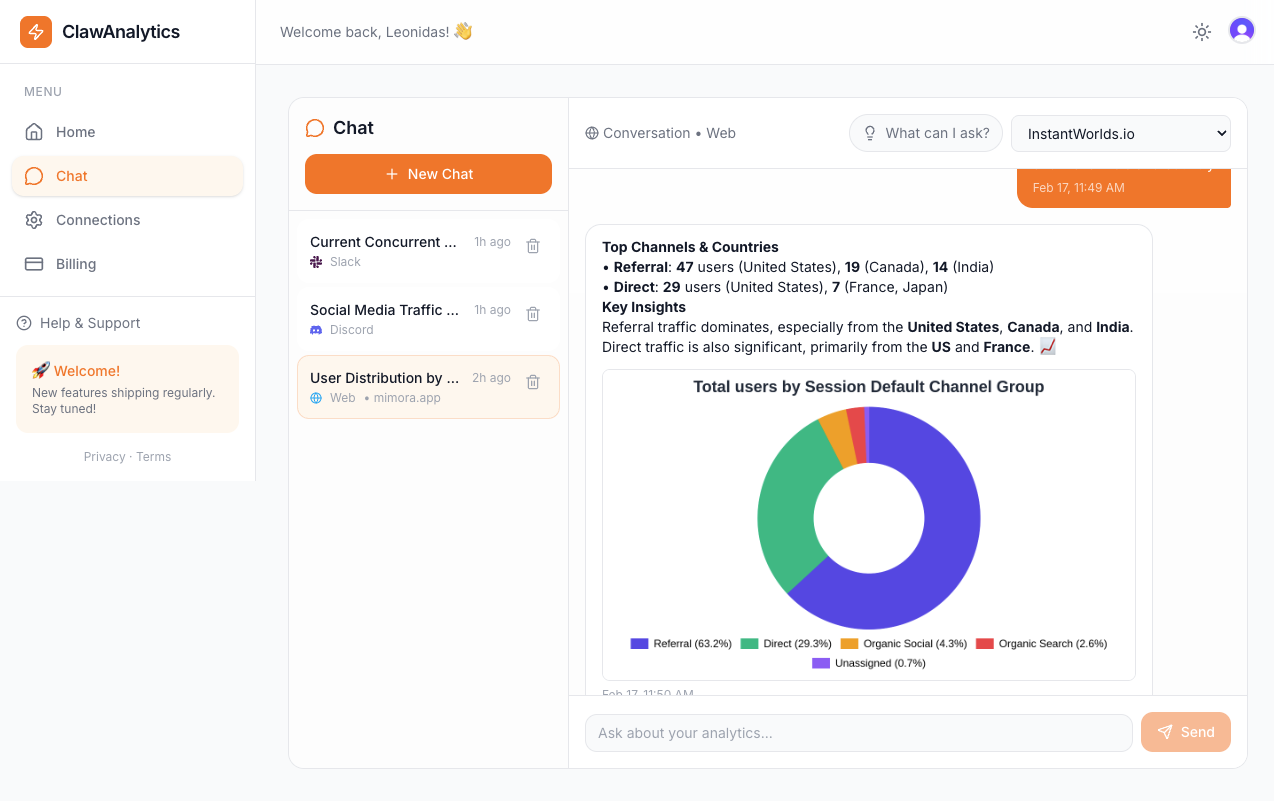
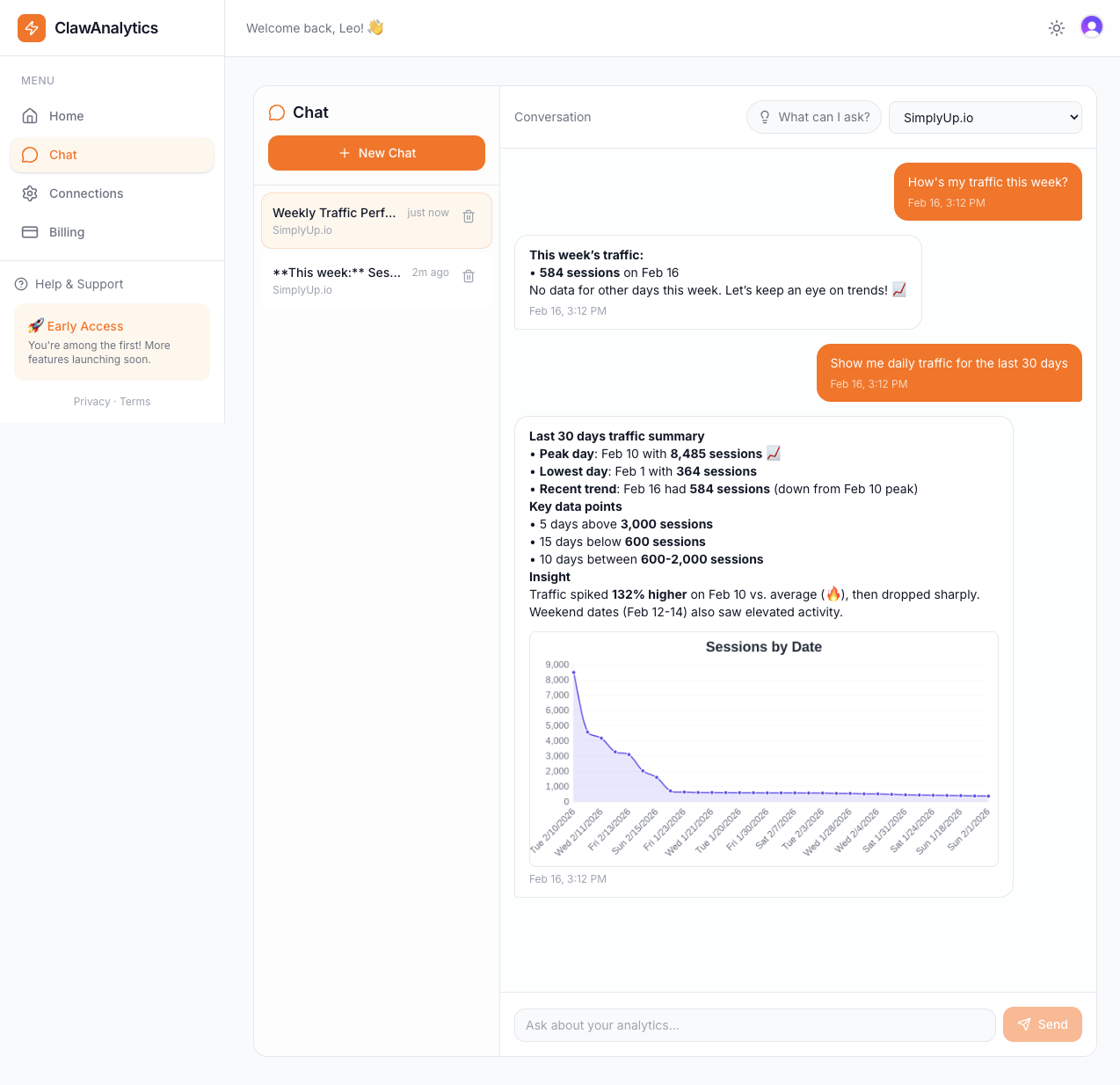
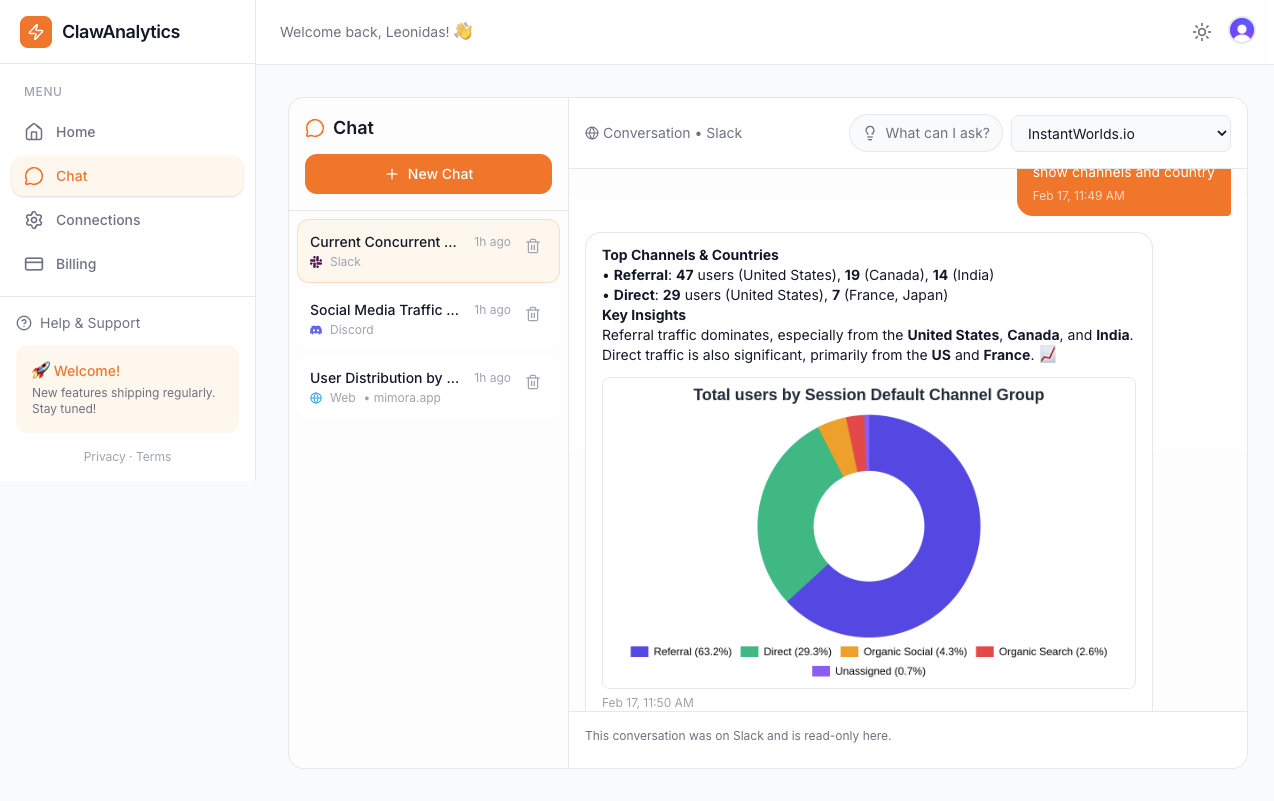
ClawAnalytics helps you answer questions like “Which ad creative brings customers who buy multiple items?” or “Is TikTok traffic lower quality than Facebook, or just slower to convert?” The AI identifies patterns across your traffic data that manual analysis misses.
Track micro-conversions: email signups, social follows, and product saves. These show interest even when visitors dont buy immediately.
Quick Wins
-
A/B test landing pages for each traffic source - Send Facebook traffic to a page optimized for social proof, Google traffic to pages focused on SEO relevance. Track which converts better.
-
Set up conversion events in Meta and Google Ads - Track not just purchases but add-to-carts and checkout starts. This helps optimize for the right actions.
-
Implement retargeting pixels correctly - Many dropshippers lose money by not following up with visitors who showed interest. Set up separate audiences for different engagement levels.
-
Monitor traffic quality metrics weekly - Check bounce rate, pages per session, and time on site by source. If one channel brings lots of cheap traffic but zero conversions, cut it fast.