Mike owns a landscaping company in Phoenix. Last spring, he noticed something strange. His Google Ads were running, his website was getting visits, but his phone wasn’t ringing. Then he checked his traffic sources in Analytics and discovered that 60% of his site visitors came from a single blog post: “How to Choose the Right Plants for Desert Landscaping.”
That post was driving more leads than his $1,000 monthly ad budget. He didn’t have to pay for each view. He just had to understand where his traffic came from.
Why Traffic Sources Matter for Landscaping
Landscaping is visual. It’s emotional. Homeowners see a beautiful yard and want the same for their home. But the path to getting there varies wildly.
What good looks like:
- Image searches bring high-intent visitors looking at your portfolio
- Local SEO captures homeowners searching for “landscaper near me”
- Pinterest and Instagram drive discovery for design inspiration
- Referrals from home improvement stores bring project-based clients
The money in landscaping is in big projects. Understanding which traffic sources bring those projects changes how you market.
What Causes Landscaping Issues with Traffic Sources
1. No portfolio SEO. Landscaping is visual, but most company sites bury their images. Optimize image filenames and alt text so your projects show up in image search.
2. Ignoring seasonal search patterns. In cold climates, search peaks in March. In warm climates, it peaks in January. Your traffic strategy must match these cycles.
3. No tracking on before/after posts. Those transformation posts on social media often generate leads offline. Set up tracking so you know which posts bring calls.
4. Missing the commercial market. Commercial landscaping is different: property managers, HoAs, and businesses. They find you through different channels than homeowners.
5. Not connecting online to offline. Many landscaping leads start on mobile, then convert via phone call. If you’re not tracking mobile-to-call conversion, you’re missing data.
How to Track It
Here’s how to see your landscaping traffic in GA4:
- Open Reports > Traffic Acquisition
- Add a filter for “Landscaping” related terms
- Look at “Sessions by user campaign” for paid campaigns
- Compare “Engaged sessions” to “Sessions” to see quality
Now ask the questions that matter:
“Which projects page brings the most inquiries?”
Track PDF downloads of your service guides as conversions. Then see which traffic sources drive those downloads.
“Are my seasonal campaigns working?”
Set up custom reports comparing traffic sources by month. Look for patterns: when do different sources peak?
“Is Pinterest actually bringing leads?”
Add UTM parameters to all Pinterest links. Many landscapers get great engagement but don’t connect it to actual bookings.
“What should I post more of?”
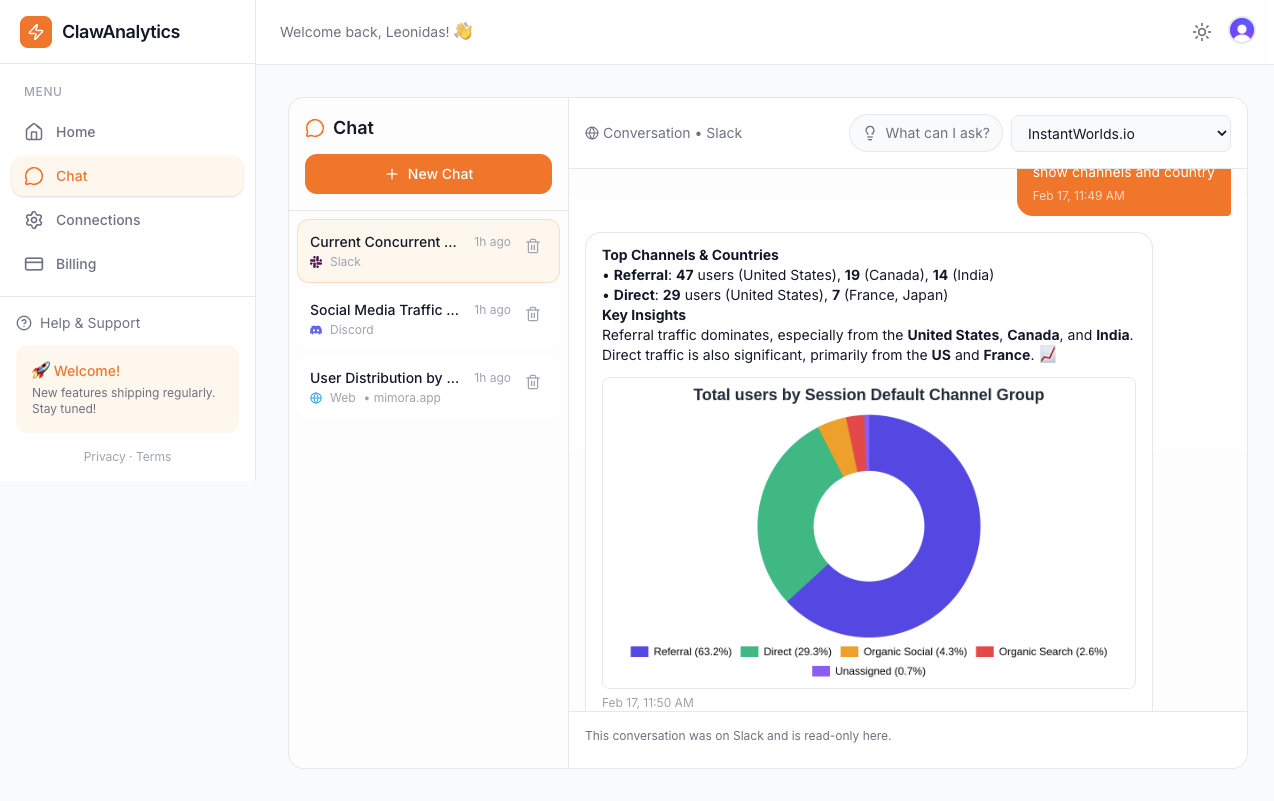
ClawAnalytics can help you see which content types, from which sources, lead to actual estimates. You’ll know whether to post more project photos or more tips articles.
Quick Wins
-
Optimize your portfolio for image search. Use descriptive filenames like “desert-landscape-design-phoenix.jpg” and add alt text to every image.
-
Claim your Google Business Profile. This captures “near me” searches which are huge for landscaping. Add photos regularly.
-
Create a seasonal content calendar. In January, post about planning. In March, post about spring prep. This captures search at the right time.
-
Track referrals from material suppliers. Landscaping supply stores often recommend trusted installers. Ask how customers found you and track in your CRM.