Your neighbor opens a pet store downtown. Six months later, she calls you frustrated. Her website gets 2,000 visitors a month but hardly anyone walks through the door. She knows people are finding her online. She just cannot figure out where they are coming from or why they are not converting. This is a traffic source problem, and it is easier to fix than you think.
Why Traffic Sources Matter for Pet Stores
Traffic sources tell you where your customers discover your business. For pet stores, this matters more than most industries because you serve a local community with specific needs.
When you know which channels drive traffic, you can allocate your marketing budget wisely. A pet store spending $500 monthly on Instagram ads but getting zero store visits from it should move that money to local Google ads or community partnerships instead.
Here is a dollar example. If your website gets 1,000 visitors per month and 5% convert to in-store purchases averaging $45, that is $2,250 in monthly revenue. If half your traffic comes from social media but converts at only 1%, you are missing $1,125 in potential revenue by not optimizing your top-performing channels.
What Causes Pet Store Traffic Source Problems
Relying on a single traffic channel. If 80% of your traffic comes from Instagram, algorithm changes or account issues could cut your visitors overnight. Diversification protects your business.
Ignoring local search intent. Pet owners near your store search for things like “dog food near me” or “pet store open now.” If your website does not rank for these terms, you are invisible to nearby customers.
No UTM tracking on campaigns. Running a Facebook promotion but not tagging it means you cannot tell if it brought 10 visitors or 1,000. Without this data, you cannot optimize.
Website not mobile-optimized. Over 60% of local searches happen on mobile. If your site loads slowly or looks broken on phones, visitors leave immediately.
Mixing up traffic and engagement. High traffic numbers mean nothing if visitors bounce in 3 seconds. You need quality visitors who explore your site.
How to Track It
Open Google Analytics 4 and navigate to Traffic Acquisition under the Reports section. Look at the default channel groups to see how traffic breaks down. Pay attention to the Secondary dimension to understand not just the channel but the specific source, like seeing “google” versus “facebook” within the Social channel.
For pet stores specifically, you want to track these questions. Which neighborhoods do my visitors come from? This tells you if your marketing reaches your actual service area. What search terms bring pet owners to my site? Use the Search Terms report to see if people find you for pet food, grooming, or supplies. How long do visitors stay on my product pages? Longer time on site usually means higher purchase intent.
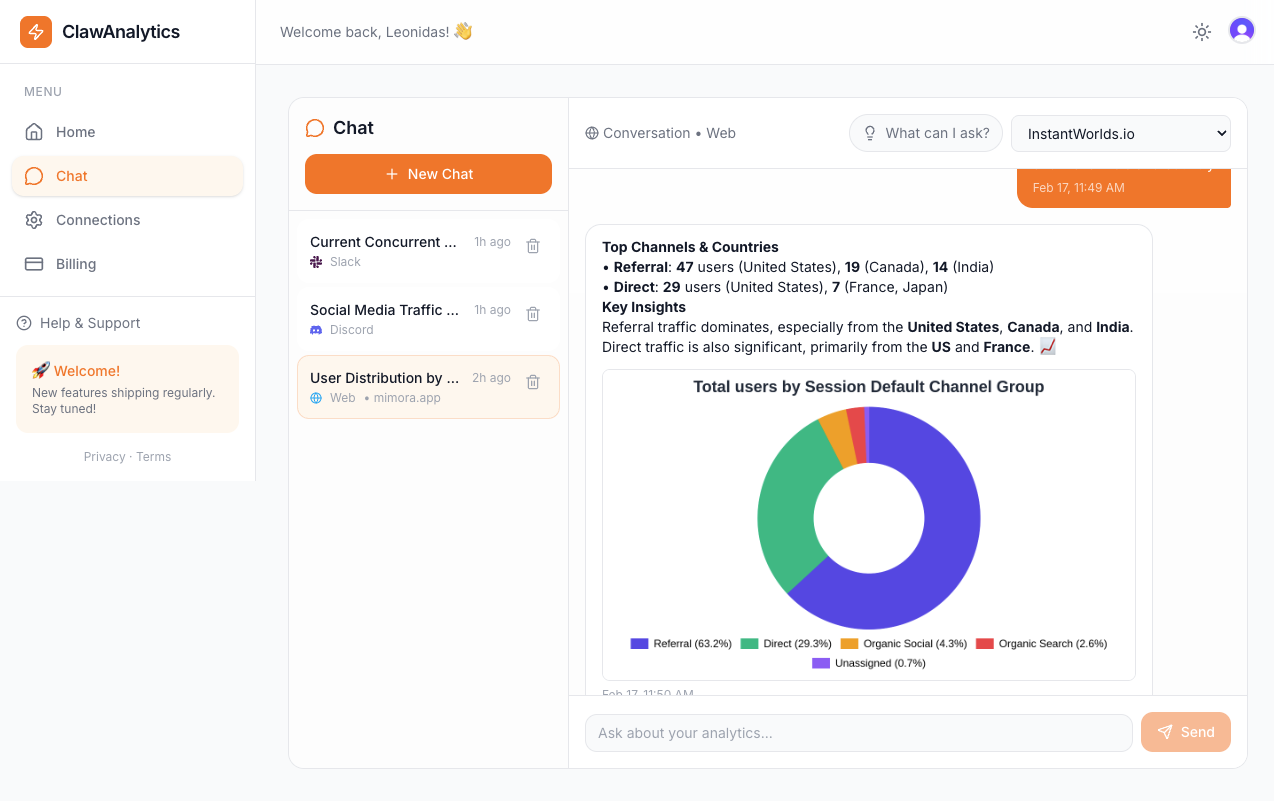
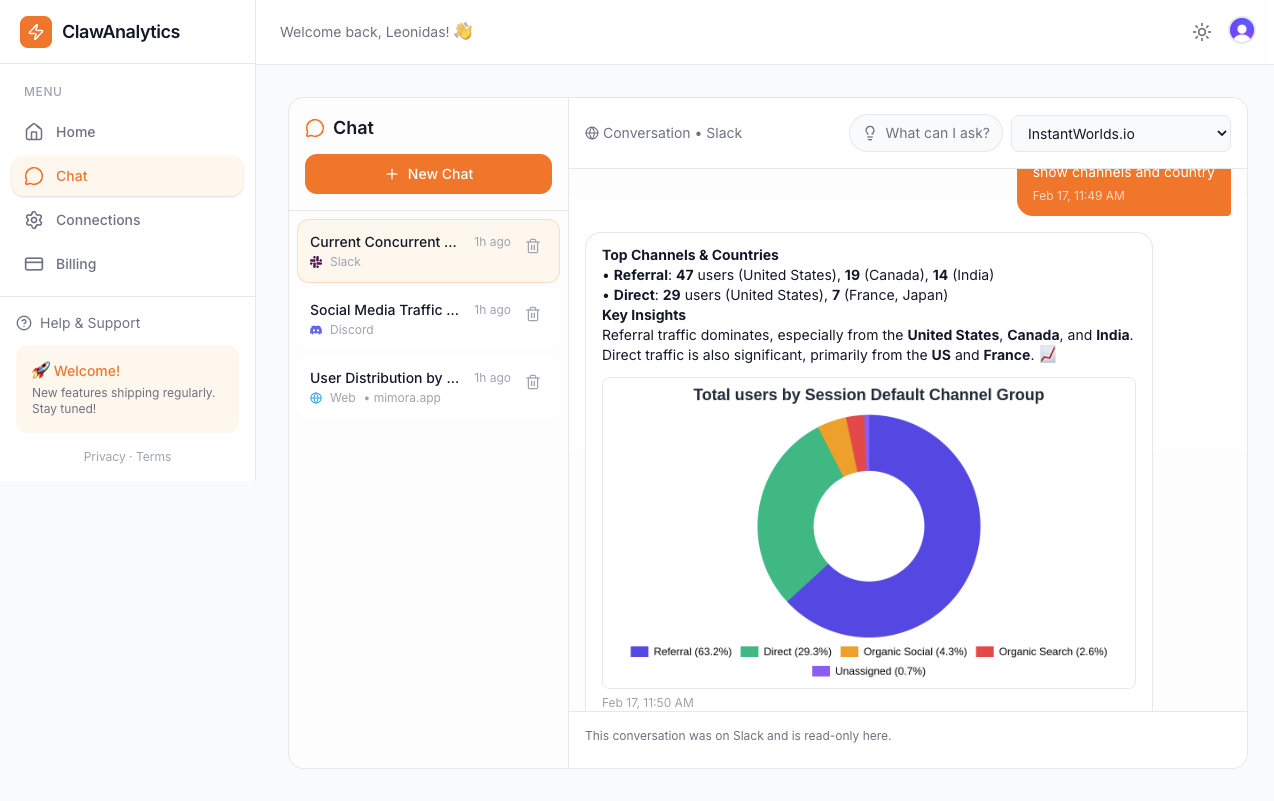
ClawAnalytics makes this easier by showing you which traffic sources actually convert. Instead of guessing which channel brings the most engaged visitors, you see the data directly. You might discover that Pinterest visitors spend twice as long on your site as Facebook visitors, even though Facebook sends more traffic.
Set up custom alerts in GA4 to notify you when traffic from a specific source drops by more than 20%. This catches problems early, before they impact your store.
Quick Wins
-
Claim your Google Business Profile and ensure your address, hours, and phone number are accurate. This captures local search traffic automatically.
-
Add UTM parameters to every marketing link. Use a free UTM builder and create consistent naming like “spring_sale_facebook” so all your data stays organized.
-
Create a “Top Products” page for each pet category you carry. Dogs, cats, birds, and fish each have different customers. Separate pages capture more search traffic.
-
Install a live chat widget on your website. Visitors from search are often ready to buy but have questions. Answering quickly converts more sales.
-
Set up conversion tracking for store visits. If you cannot track in-store purchases directly, use promo codes unique to each traffic source to measure effectiveness.