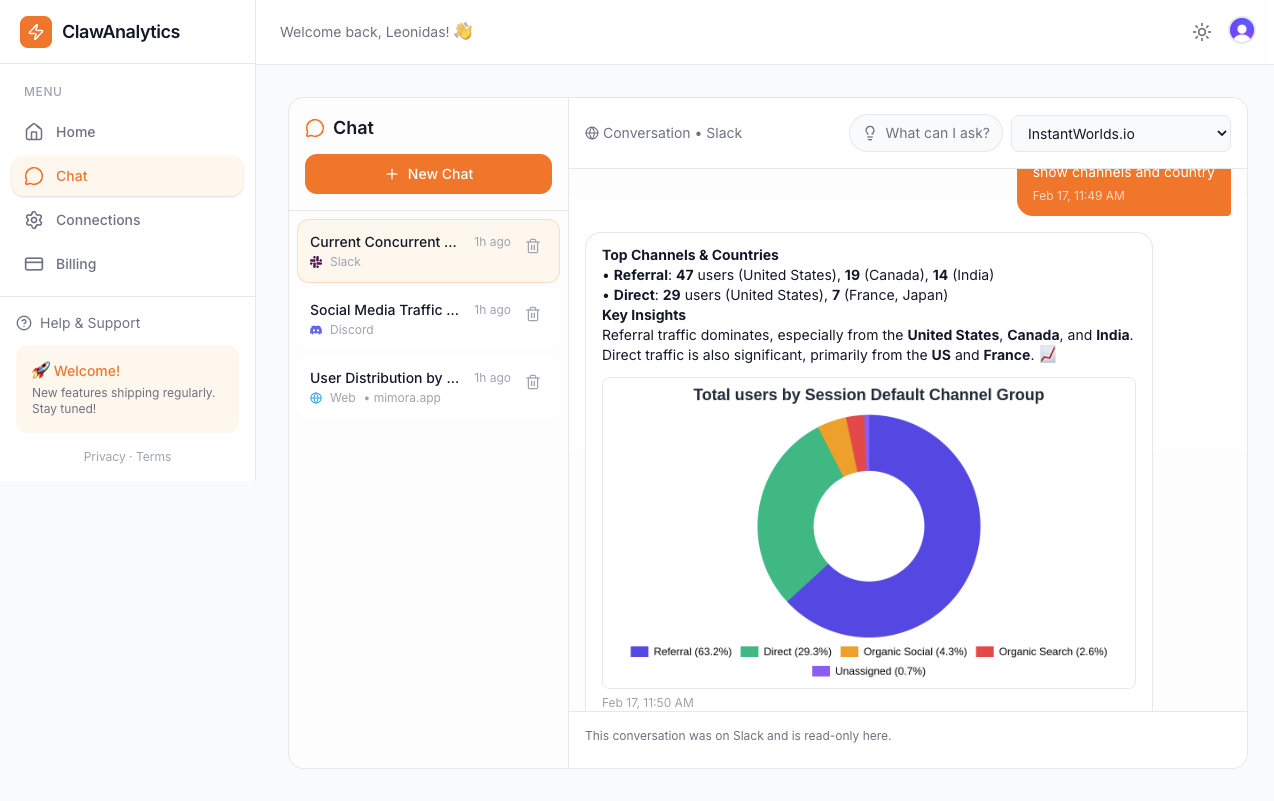
Model Context Protocol (MCP) for analytics revolutionizes how AI assistants interact with business data by enabling direct, secure access to analytics platforms like Google Analytics 4. Instead of manually copying data or describing metrics to AI assistants, MCP allows tools like Claude to query live analytics data directly, providing real-time insights and automated report generation based on current business performance.
Understanding Model Context Protocol
Model Context Protocol serves as a standardized communication layer between AI assistants and external data sources. For analytics, MCP creates secure connections that allow AI systems to query databases, APIs, and business intelligence platforms without requiring manual data transfer or screen sharing.
The protocol establishes authenticated sessions where AI assistants can request specific information from analytics platforms while maintaining security and privacy controls. This enables conversational analytics where users can ask complex questions and receive answers based on live data rather than static information.
MCP differs from traditional API integrations by providing a standardized interface that works across multiple AI platforms and analytics tools. Instead of building custom integrations for each combination, MCP creates universal connections that maintain consistency regardless of the specific AI assistant or data source.
How MCP Analytics Implementation Works
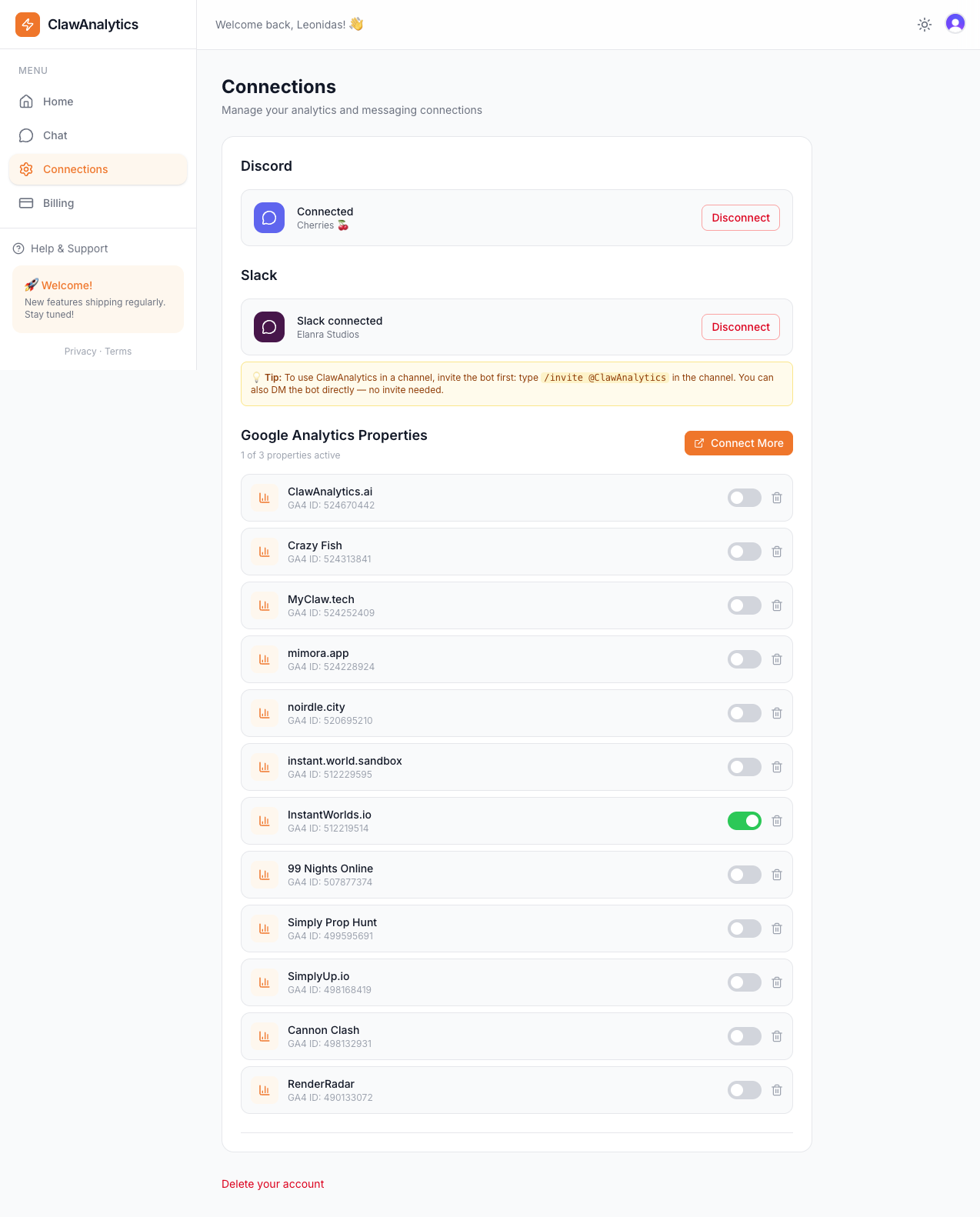
Server setup involves installing MCP server software that connects to your analytics platforms through official APIs. ClawAnalytics provides MCP server functionality that authenticates with Google Analytics 4 and translates AI requests into appropriate API calls.
Authentication occurs through secure OAuth 2.0 flows where you grant permission for the MCP server to access your analytics data. This process ensures that AI assistants can only access information you explicitly authorize while maintaining standard security practices.
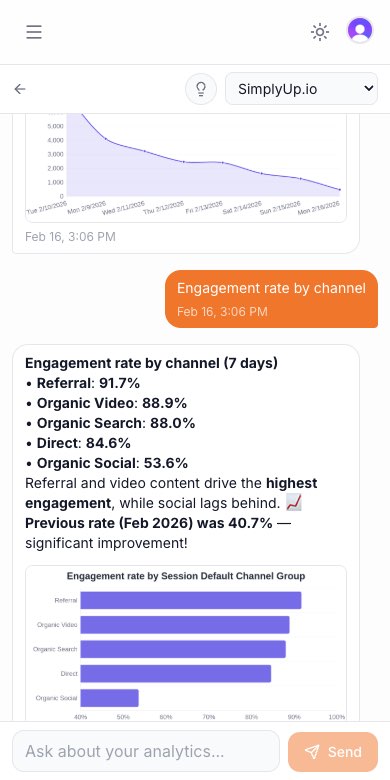
Query translation converts natural language AI requests into specific analytics queries. When you ask Claude “What was my conversion rate last week?”, the MCP server translates this into GA4 API calls with appropriate date filters and metric specifications.
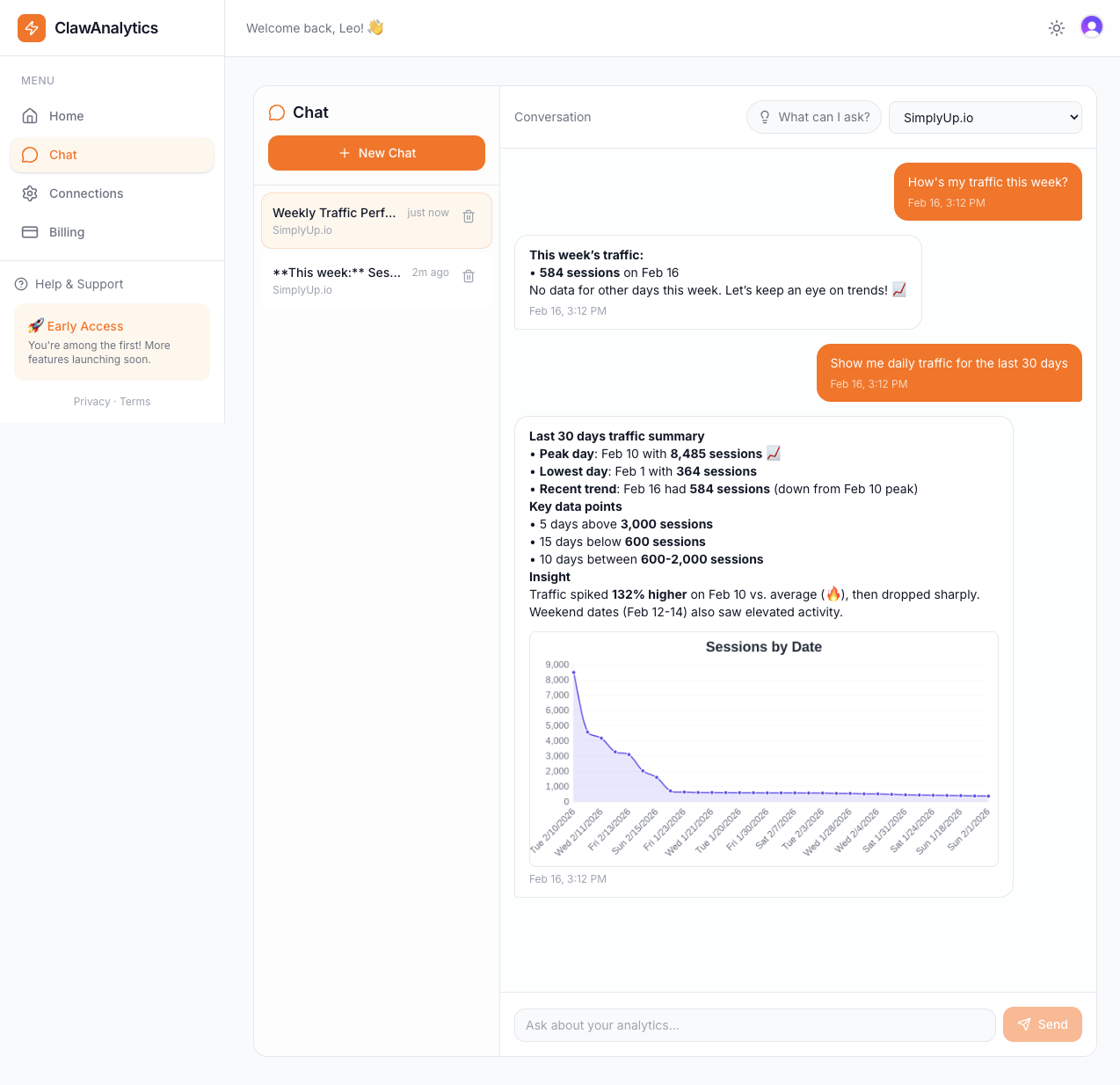
Real-time data access ensures that AI responses reflect current business performance rather than outdated information. Each query fetches live data from your analytics platform, enabling dynamic insights and up-to-date strategic recommendations.
Benefits of MCP Analytics Integration
Seamless AI conversations become possible when analytics data integrates directly into AI assistant workflows. Users can ask complex questions about business performance and receive detailed answers without switching between different tools or copying data manually.
Real-time insights emerge from live data connections that provide current information rather than historical snapshots. AI assistants can identify trends, explain metric changes, and provide strategic recommendations based on the most recent business performance.
Automated reporting capabilities allow AI assistants to generate comprehensive analytics reports on demand. Instead of manually building dashboards or exporting data, users can request specific reports that combine multiple metrics with explanatory analysis.
Workflow integration embeds analytics directly into existing business processes where AI assistants already provide value. Teams can incorporate data-driven insights into strategic planning, content creation, and operational decision-making without additional tool switching.
Technical Requirements and Setup
MCP server installation requires basic technical setup to establish connections between AI assistants and analytics platforms. ClawAnalytics provides straightforward installation processes that handle most complexity while requiring minimal technical expertise.
Network configuration may require firewall or proxy adjustments to enable secure communication between MCP servers and analytics APIs. Organizations should review security policies and ensure compliance with data access requirements.
Authentication management involves configuring OAuth connections and managing refresh tokens for sustained access to analytics data. Proper setup ensures uninterrupted AI access while maintaining security best practices.
Performance considerations include query rate limits and data transfer volumes that affect response times and system reliability. Effective MCP implementations optimize for common query patterns while respecting API limitations.
Security and Privacy Considerations
Data encryption ensures that all communication between AI assistants, MCP servers, and analytics platforms uses secure transmission protocols. Information remains protected during transit and processing without compromising privacy standards.
Access control mechanisms limit AI assistant access to specifically authorized analytics data and user accounts. Organizations can configure granular permissions that align with existing security policies and compliance requirements.
Temporary data processing means that AI assistants process analytics information on-demand without permanent storage. This approach minimizes data retention risks while providing comprehensive analytical capabilities.
Audit logging provides visibility into AI analytics queries and data access patterns. Organizations can monitor what information is accessed, when, and by whom to maintain compliance and security oversight.
Common Use Cases for MCP Analytics
Strategic planning benefits from AI assistants that can query multiple analytics dimensions simultaneously and provide comprehensive business insights. Teams can ask complex questions about market performance, customer behavior, and operational efficiency with immediate, data-driven answers.
Content optimization leverages AI analytics to understand audience preferences, traffic patterns, and engagement metrics. Content creators can receive personalized recommendations based on live performance data rather than manual analysis.
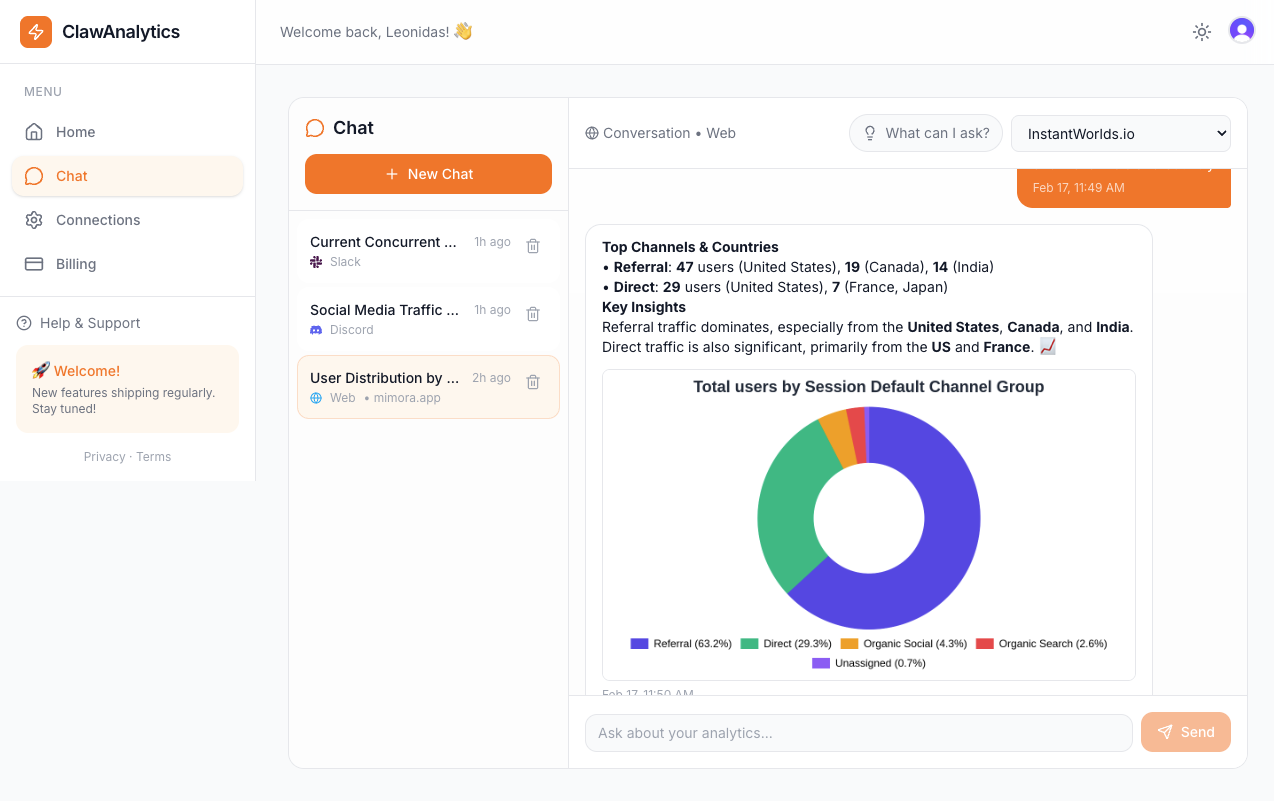
Marketing campaign management uses MCP analytics to evaluate performance across multiple channels and time periods. AI assistants can explain conversion rate changes, identify top-performing traffic sources, and suggest optimization strategies based on current data.
Business intelligence automation combines analytics querying with AI-generated insights and recommendations. Teams receive not just data but strategic analysis that connects metrics to actionable business decisions.
Implementation Best Practices
Start with specific use cases that address common analytics questions in your organization. MCP analytics delivers immediate value when replacing routine manual queries with automated AI responses based on live data.
Establish clear data governance policies for AI analytics access, including guidelines for appropriate queries, result validation, and decision-making based on AI-generated insights from live business data.
Test authentication and connection reliability before relying on MCP analytics for critical business decisions. Ensure that OAuth tokens refresh properly and that connection failures have appropriate fallback procedures.
Monitor usage patterns and query performance to optimize MCP analytics implementation over time. Understanding which questions work well and which cause delays helps improve the system for your specific business needs.
Future Evolution of MCP Analytics
Multi-platform integration will enable AI assistants to query multiple analytics sources simultaneously through standardized MCP connections. This evolution will provide comprehensive business insights that span different tools and data sources.
Advanced reasoning capabilities will allow AI assistants to perform complex analytical calculations and provide strategic recommendations based on real-time data patterns and business context.
Automated insight discovery will proactively identify important trends and anomalies in analytics data, alerting users to significant changes without requiring explicit queries or manual monitoring.
Predictive analytics integration will combine historical data access with forecasting capabilities, enabling AI assistants to answer questions about future business performance based on current trends and patterns.
Comparing MCP Analytics to Traditional Approaches
Traditional analytics workflows require manual dashboard navigation, report building, and data interpretation that can take hours for complex analyses. MCP analytics provides instant access to the same information through conversational AI interfaces.
Static reporting approaches become outdated quickly and require manual updates to reflect current business performance. MCP analytics ensures that AI responses always reflect live data while providing contextual explanations and insights.
Technical barriers traditionally limit analytics access to specialists who understand dashboard interfaces and query languages. MCP analytics democratizes data access by enabling natural language questions through familiar AI assistant interactions.
Manual integration efforts required for connecting AI workflows with business data are eliminated through standardized MCP protocols that provide consistent, secure access across different platforms and use cases.
Model Context Protocol for analytics represents a fundamental advancement in making business intelligence accessible and actionable through AI assistant workflows. By enabling direct, secure connections between AI systems and analytics platforms, MCP eliminates traditional barriers while providing real-time insights that drive better business decisions across all organizational levels.