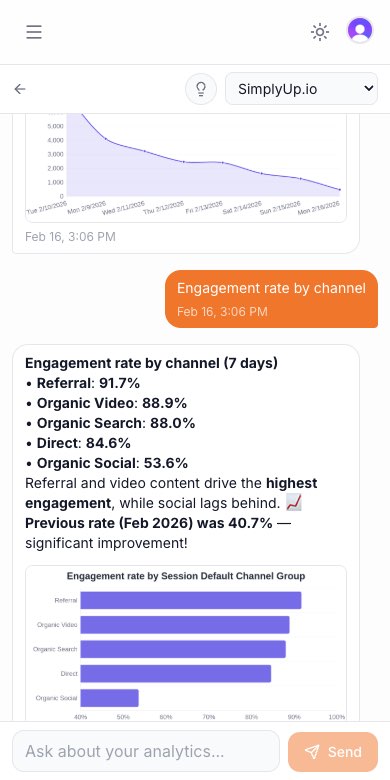
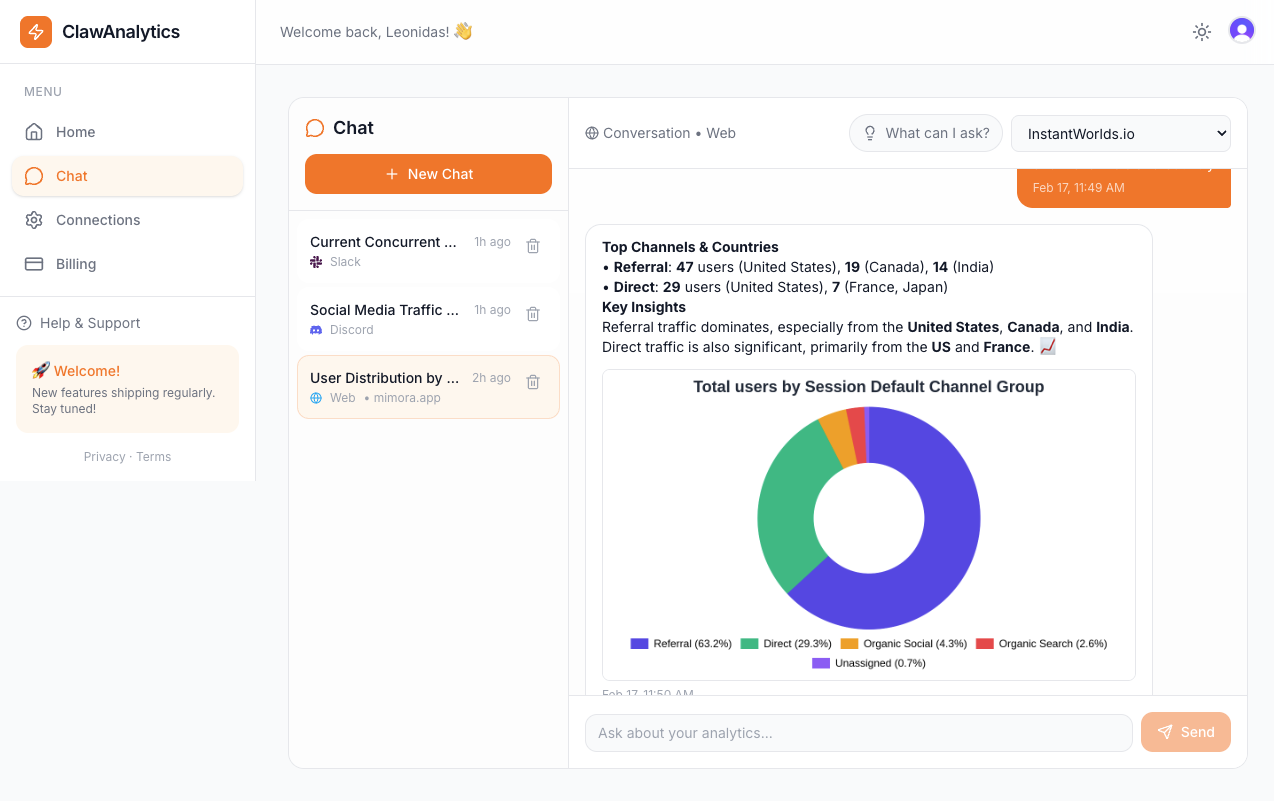
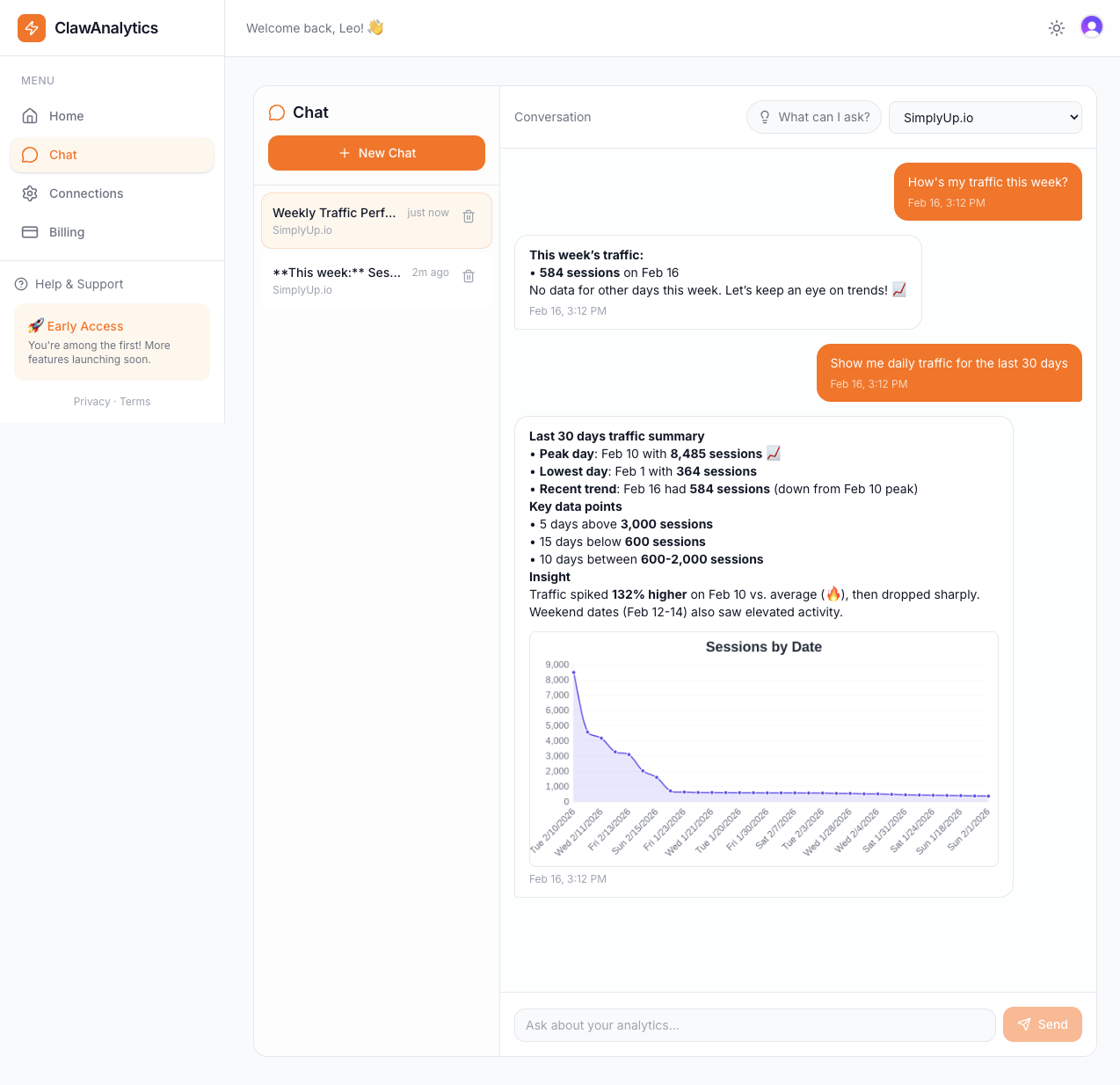
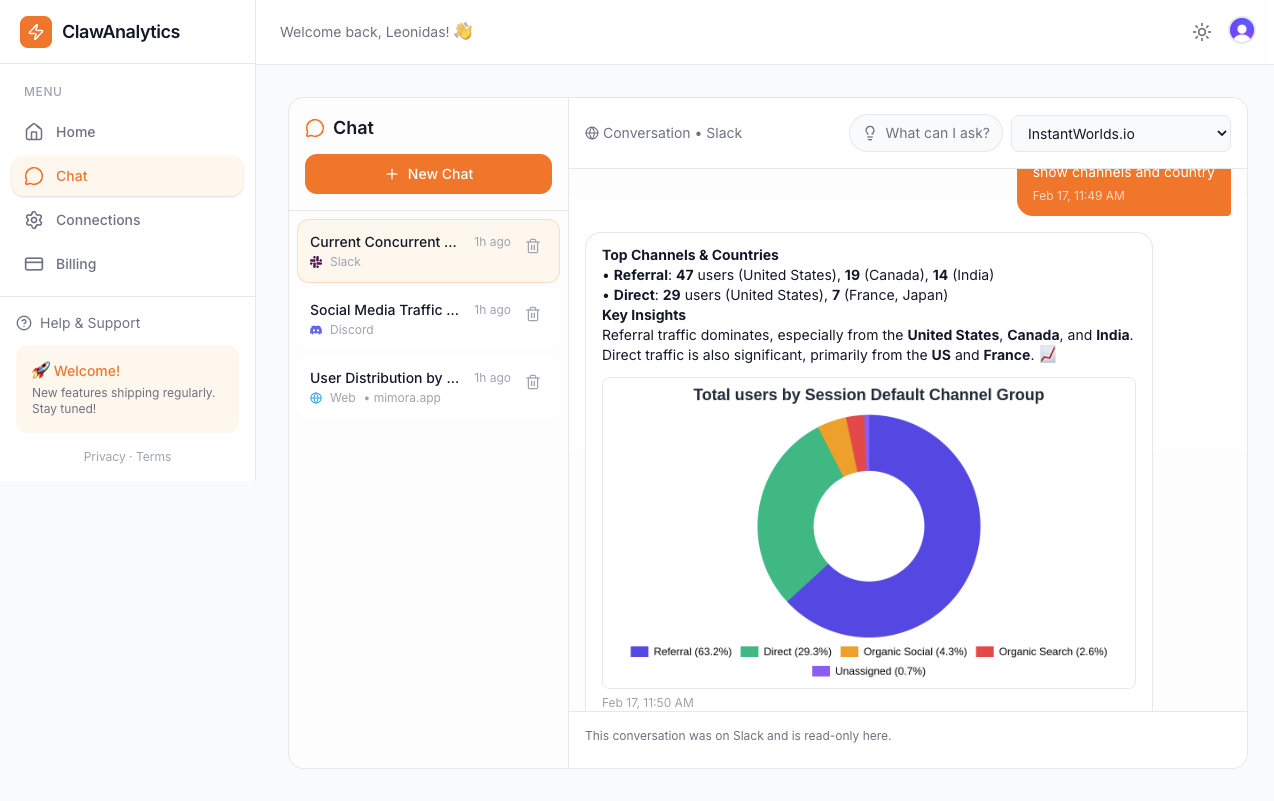
Natural language GA4 querying transforms Google Analytics 4 from a complex dashboard system into a conversational interface where users can ask questions in plain English and receive instant answers with visualizations. Instead of navigating GA4’s intricate menu system, building custom reports, or learning metric definitions, users simply ask “What was my traffic from social media this month?” and get immediate, accurate results with relevant charts and explanations.
The Problem with Traditional GA4
Google Analytics 4’s interface complexity creates barriers for most users who need analytics insights. The platform requires understanding dozens of menu options, report types, dimension combinations, and metric definitions before users can extract meaningful information.
Report building in GA4 demands technical knowledge about data relationships, filter configurations, and visualization options. Non-technical team members often struggle to create accurate reports, leading to either dependence on technical specialists or potentially misleading self-service attempts.
Data interpretation challenges arise when GA4 presents raw metrics without context or explanation. Users receive numbers and charts but may not understand what they mean for business decisions or how to act on the insights.
Time inefficiency results from the multiple steps required to answer simple business questions. What should take seconds stretches into minutes or hours of dashboard navigation, report configuration, and data export processes.
How Natural Language GA4 Querying Works
API integration forms the foundation, where natural language systems connect directly to the GA4 reporting API rather than scraping the web interface. This provides access to all available data while ensuring accuracy and reliability.
Natural language processing interprets user questions and maps them to appropriate GA4 metrics, dimensions, and filters. Advanced NLP models understand business terminology and can translate requests like “mobile users from search engines” into precise API parameters.
Context understanding allows the system to maintain conversation history and interpret follow-up questions. Users can ask “What about tablet users?” after initially querying mobile traffic, and the system understands the context without requiring complete restatement.
Response generation combines GA4 data with explanatory text and appropriate visualizations. Instead of raw numbers, users receive contextual explanations about what the data means and why it matters for their business.
Types of Natural Language GA4 Systems
Standalone conversational platforms like ClawAnalytics focus specifically on making GA4 data accessible through natural language interfaces. These systems typically offer web dashboards, chat integrations, and mobile access for GA4 querying.
Integrated analytics assistants embed natural language capabilities within existing business intelligence tools or custom applications. These solutions provide GA4 access alongside other data sources through unified conversational interfaces.
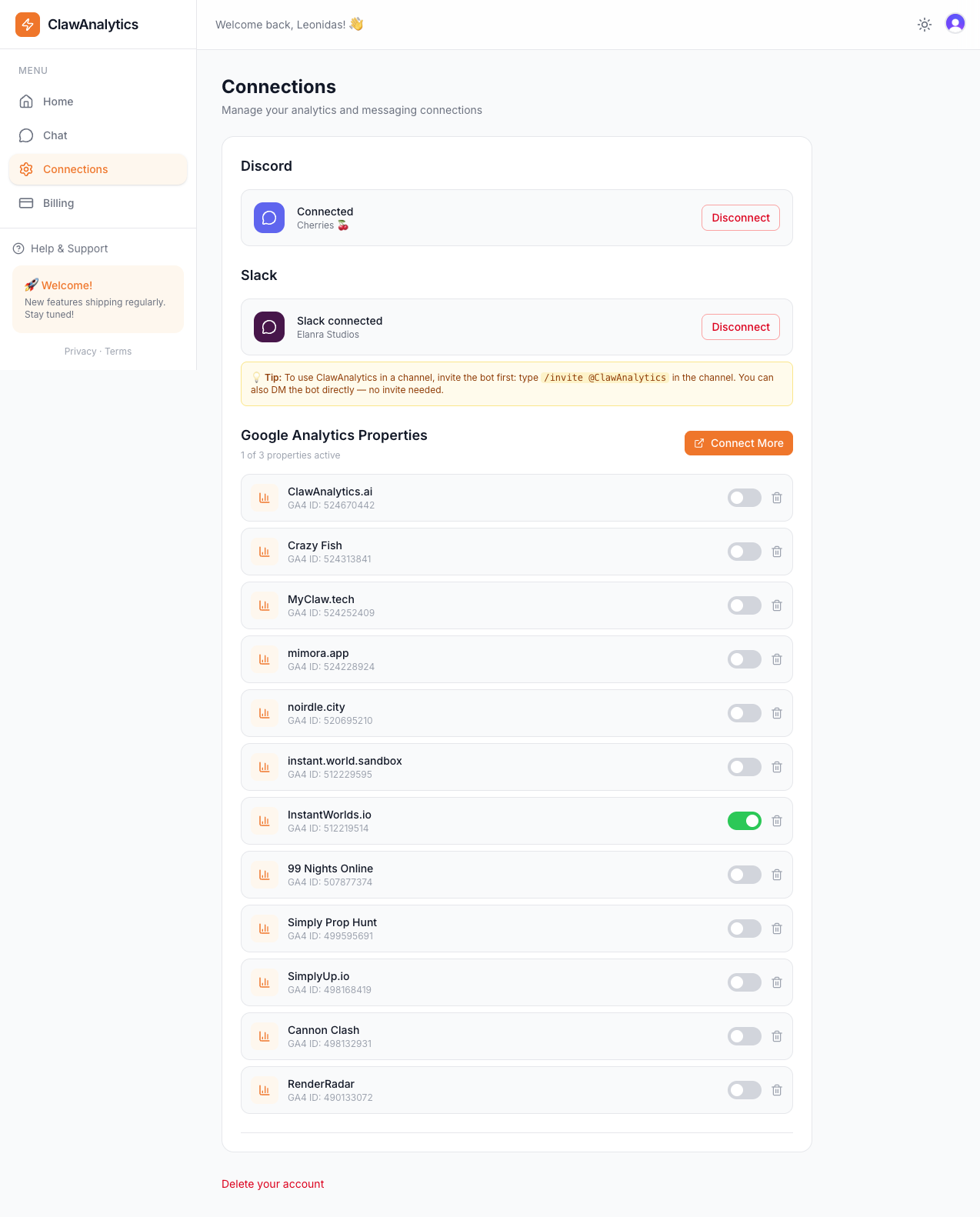
Communication platform bots bring GA4 querying into Discord, Slack, Microsoft Teams, or other collaboration tools. Teams can access analytics directly within their communication workflows without switching applications.
AI assistant integrations connect GA4 data to general-purpose AI assistants through protocols like Model Context Protocol (MCP), allowing personal AI assistants to query analytics data alongside other business functions.
Business Applications and Benefits
Marketing teams use natural language GA4 querying for campaign optimization and performance monitoring. Questions about traffic sources, conversion rates, and audience behavior receive immediate answers, enabling rapid strategy adjustments without technical assistance.
Content creators leverage conversational GA4 access to understand audience preferences and optimize publishing strategies. Queries about popular content, traffic patterns, and engagement metrics inform content planning and distribution decisions.
E-commerce businesses apply natural language GA4 to understand customer behavior, product performance, and sales funnel optimization. Product managers can query conversion rates, cart abandonment, and customer journey metrics through simple questions.
Agency professionals manage multiple client accounts through natural language GA4 interfaces, switching between properties and generating client reports through conversational queries rather than manual dashboard navigation.
Advantages Over Traditional GA4 Usage
Accessibility dramatically improves when eliminating the need to learn GA4’s complex interface. Anyone can ask business questions and receive meaningful answers regardless of their technical background or GA4 experience.
Speed increases significantly as natural language queries provide instant results compared to the multiple steps required for GA4 report building. Teams can get answers during meetings rather than waiting for technical specialists to build reports.
Accuracy often improves because natural language systems apply consistent query parameters and avoid human errors common in manual report configuration. The same question asked multiple times returns identical results with proper filter application.
Collaboration enhances when analytics becomes conversational within team communication tools. Insights can be shared contextually during discussions without requiring screenshots or exported reports from GA4.
Implementation Considerations
Data quality requirements become more important with natural language GA4 querying because automated insights depend on accurate GA4 configuration. Poor event tracking or incorrect goal setup leads to misleading conversational results.
Permission management must extend to natural language systems, ensuring users can only access GA4 data appropriate to their roles. This requires integration with existing access controls and potentially custom permission configurations.
Query complexity limitations mean that highly specific or custom analyses may exceed natural language capabilities. While modern systems handle most standard GA4 questions, complex calculated metrics or custom reporting may still require traditional approaches.
Training requirements shift from learning GA4 interface navigation to understanding effective question formulation. While natural language is intuitive, knowing how to ask specific, well-structured questions improves result quality.
Security and Privacy Implications
OAuth integration ensures secure access to GA4 data without requiring users to share login credentials. Natural language systems typically use Google’s official authentication mechanisms for safe data access.
Data handling practices become critical when third-party natural language platforms access GA4 information. Organizations must evaluate where data is processed, stored, and whether it meets compliance requirements.
Query logging provides audit trails for GA4 data access through natural language interfaces. This visibility becomes important for understanding who accesses what information and when, especially for sensitive business metrics.
Best Practices for Natural Language GA4 Implementation
Start with common use cases by identifying the most frequently asked GA4 questions in your organization. Natural language systems deliver immediate value when addressing routine queries that currently require manual report building.
Establish clear governance policies for natural language GA4 usage, including guidelines for appropriate questions, result validation, and decision-making based on conversational insights.
Validate GA4 setup before implementing natural language querying to ensure accurate tracking, proper goal configuration, and clean data collection. Poor GA4 implementation leads to misleading conversational results.
Train team members on effective question formulation to maximize the value of natural language GA4 systems. Understanding how to ask specific, contextual questions improves both result accuracy and usefulness.
Future Development of Natural Language GA4
Predictive capabilities will expand beyond historical data querying to forecast future trends based on GA4 patterns. Natural language systems will answer questions like “What will my traffic be next month?” based on historical data analysis.
Multi-property querying will enable natural language access to multiple GA4 properties simultaneously, allowing agencies and large organizations to compare performance across different websites or applications through conversational interfaces.
Advanced visualization will automatically generate custom charts and reports based on natural language questions, moving beyond standard GA4 visualizations to create optimal representations for specific queries.
Integration depth will increase with other Google products and third-party tools, allowing natural language queries that combine GA4 data with advertising performance, search console information, and business intelligence platforms.
Natural language GA4 querying represents a fundamental improvement in analytics accessibility, transforming Google Analytics from a tool for specialists into a resource for entire organizations. By eliminating interface complexity while maintaining data accuracy, these systems democratize analytics insights and enable more agile, data-driven decision-making across all business functions.