Restaurants Last updated February 22, 2026

How to Track Bounce Rate for Restaurants

Your restaurant bounce rate reveals how many visitors leave without engaging. Learn what causes bounces, what good looks like, and how to fix it with real data.

You invested in a beautiful website for your restaurant, complete with professional food photography, your full menu, and an online reservation system. Then you check your analytics and see that 52% of visitors landed on your page and left immediately without viewing your menu, checking hours, or making a reservation.

That 52% is your bounce rate, and it represents potential diners who never discovered your amazing food.

Why Bounce Rate Matters for Restaurants

For restaurants, your website is often the first impression before a customer ever walks through the door.

  • It impacts table turnover. More website engagement means more reservations and better planning for your kitchen and staff.
  • It reveals what customers want. High bounce rates on specific pages tell you what information is missing or hard to find.
  • It affects local search visibility. Google uses engagement metrics to determine where to rank your restaurant in local searches. High bounce rates can push you down in results.

Imagine you get 3,000 visitors monthly and 50% bounce. That is 1,500 potential customers leaving without seeing your menu or hours. If just 5% of engaged visitors become dine-in guests spending $35 per person, reducing your bounce rate to 35% could mean an additional 130 customers per month, adding roughly $4,500 in revenue.

What Causes Restaurant Visitors to Bounce

Missing essential information. If visitors cannot immediately find your hours, address, or phone number, they will leave and choose a restaurant that makes it easier.

Menu not optimized for mobile. The majority of restaurant searches happen on phones. If your menu requires zooming, scrolling sideways, or waiting for images to load, customers will bounce.

No prices on the menu. Many diners need to know pricing before committing. Hiding prices to seem upscale actually drives away budget-conscious customers.

Slow website performance. Restaurant WiFi is often spotty, and customers may be searching on cellular data. Slow-loading sites lose visitors in seconds.

Outdated information. If your hours are wrong during holidays or your menu items are no longer available, visitors will feel frustrated and go elsewhere.

How to Track It

In Google Analytics 4, use the Geo report to see which neighborhoods generate the most traffic and which have the highest bounce rates. This helps you understand if your website is reaching the right audience.

But analyzing all this data takes time you do not have when running a busy kitchen.

ClawAnalytics lets you ask questions like:

  • What is the bounce rate for my menu page compared to my homepage
  • Show me which hours of the day have the highest bounce rate
  • Compare bounce rates between mobile and desktop visitors

Getting these insights in seconds helps you make fast improvements to your site.

Quick Wins to Reduce Bounce Rate

  1. Display hours, location, and phone number in the header. Make this information visible on every page without requiring a click. Customers should never have to hunt for it.

  2. Create a mobile-first menu. Use large readable text, clear section headers, and include prices. Avoid large hero images that slow down loading on mobile connections.

  3. Add a one-click reservation button. Place a prominent reservation or order button above the fold. Do not make customers scroll to find it.

  4. Show your best dishes. Feature 3-4 signature items with mouth-watering photos near the top of your page to create immediate appetite appeal and keep visitors engaged.
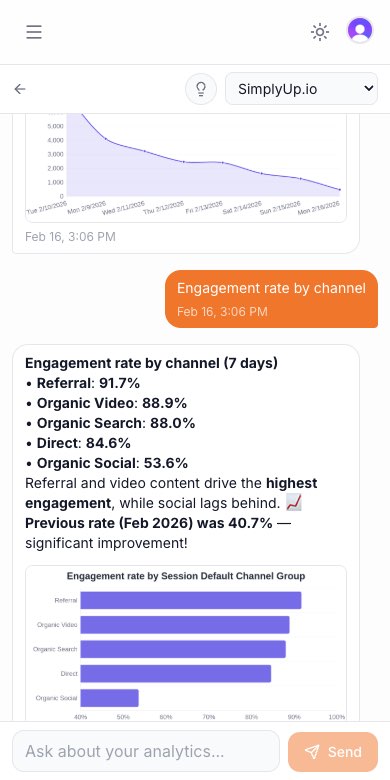
Check your analytics from anywhere

On your morning commute. At a coffee shop. In a meeting. Pull up your analytics on any device and get instant answers.

  • Web dashboard on desktop & mobile
  • Discord bot for team channels
  • Slack integration for your workspace
  • MCP server for AI agents (Claude, Cursor)
See your traffic in 60 seconds →
ClawAnalytics mobile chat showing engagement rate breakdown with charts

How ClawAnalytics helps

Skip the dashboards. Get answers in seconds.

🔗
1

Connect GA4

One-click OAuth. Read-only access. Takes 30 seconds to link your Google Analytics property.

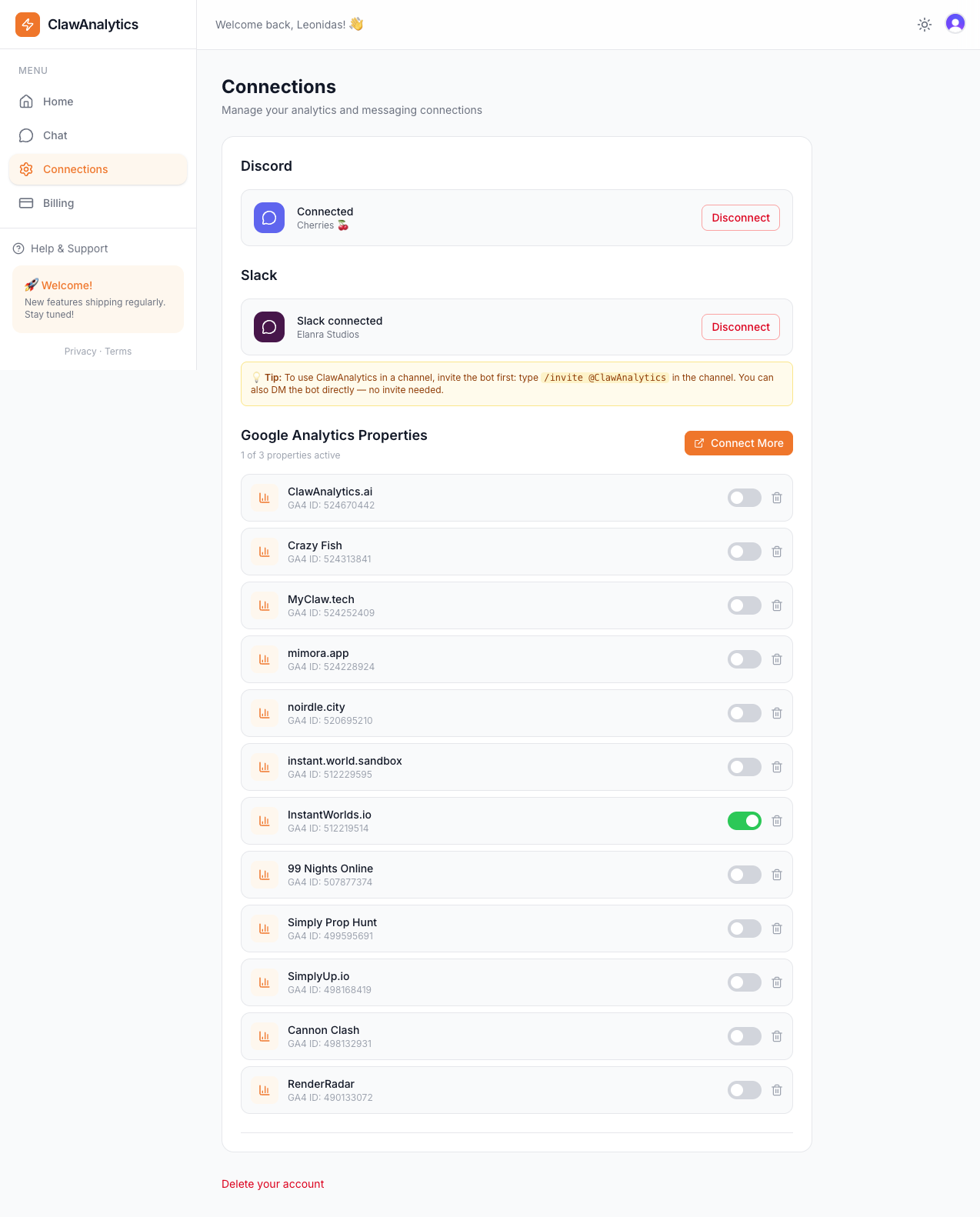
ClawAnalytics connections page showing Google Analytics properties linked
💬
2

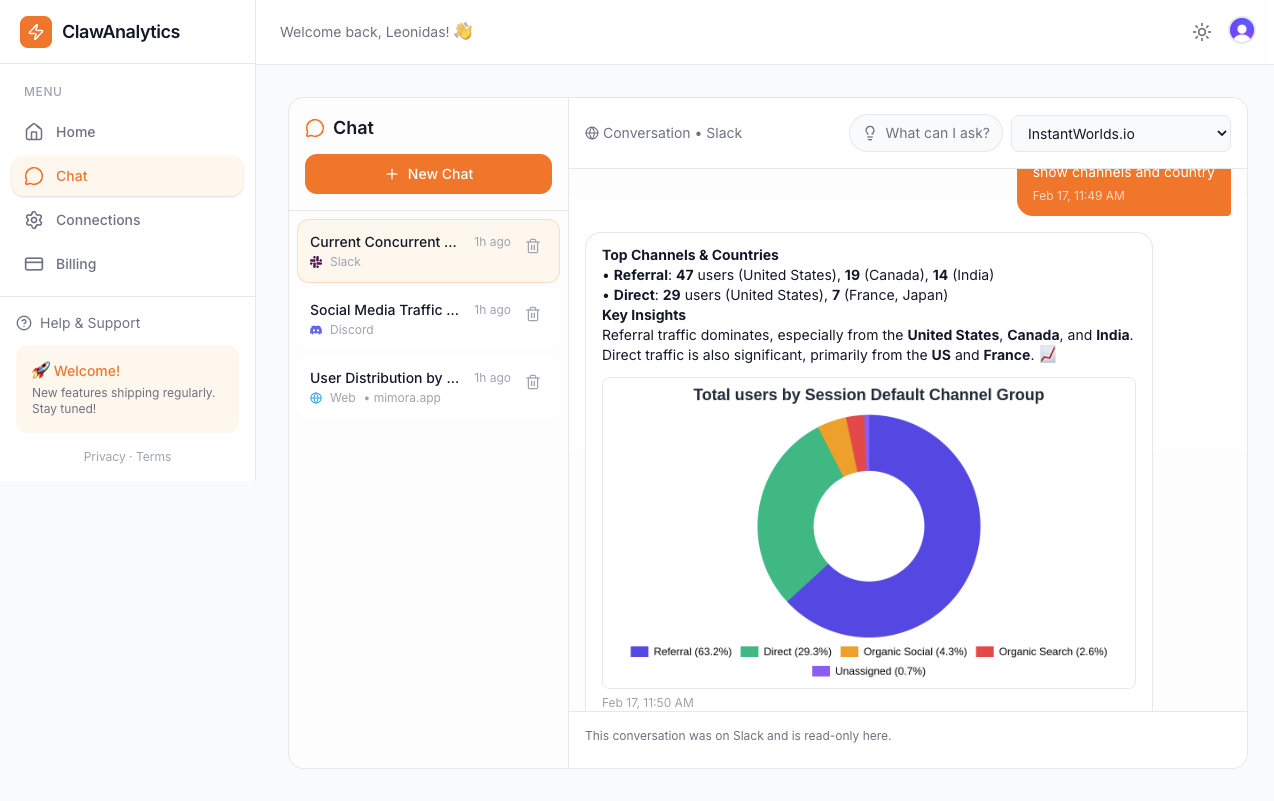
Ask questions

Type in plain English. No query language, no filters, no date pickers. Just ask what you want to know.

ClawAnalytics chat interface with natural language query
📊
3

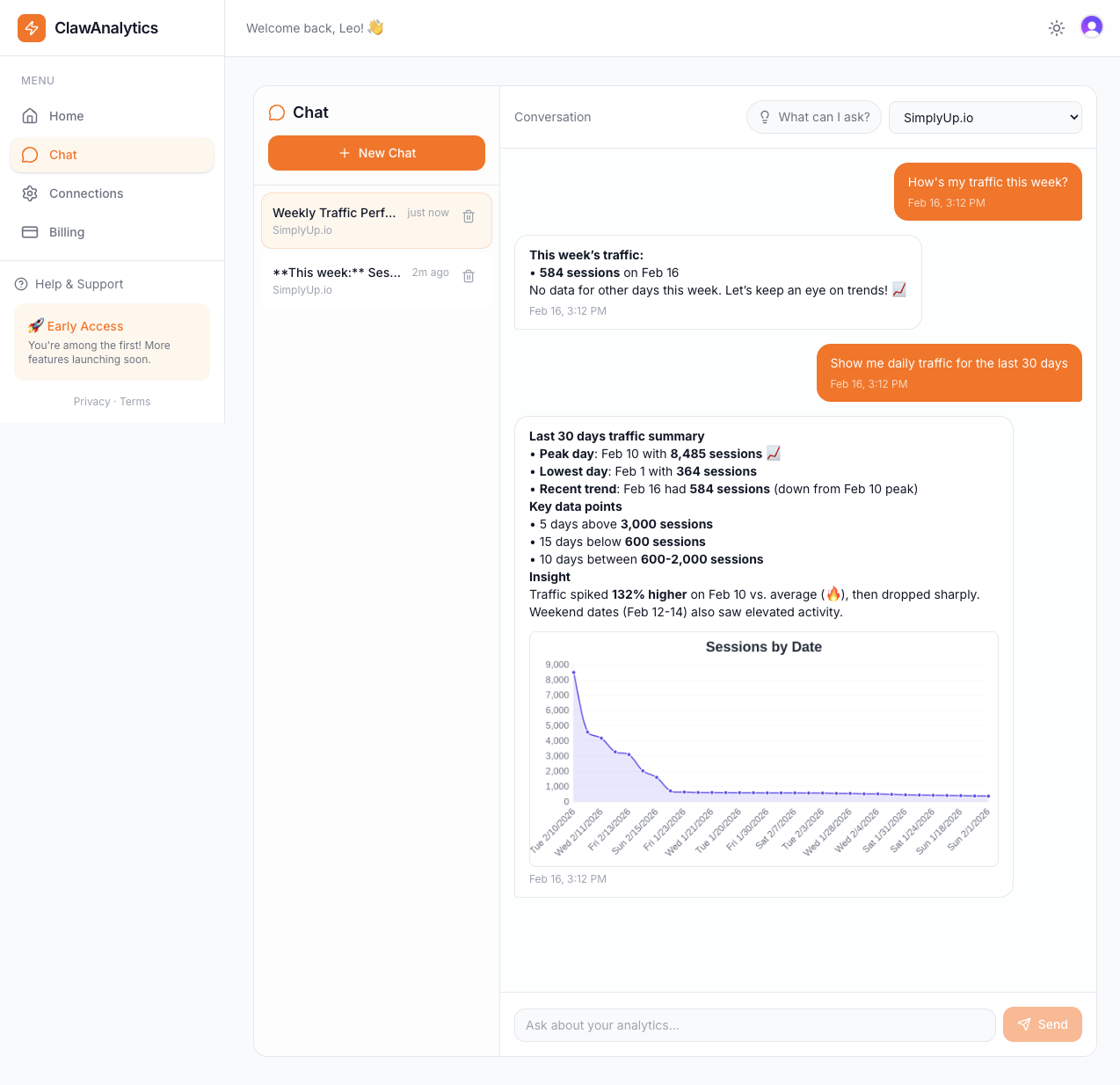
Get answers with charts

Instant responses with visualizations. Share charts with your team or export the data.

ClawAnalytics showing chart response to analytics query

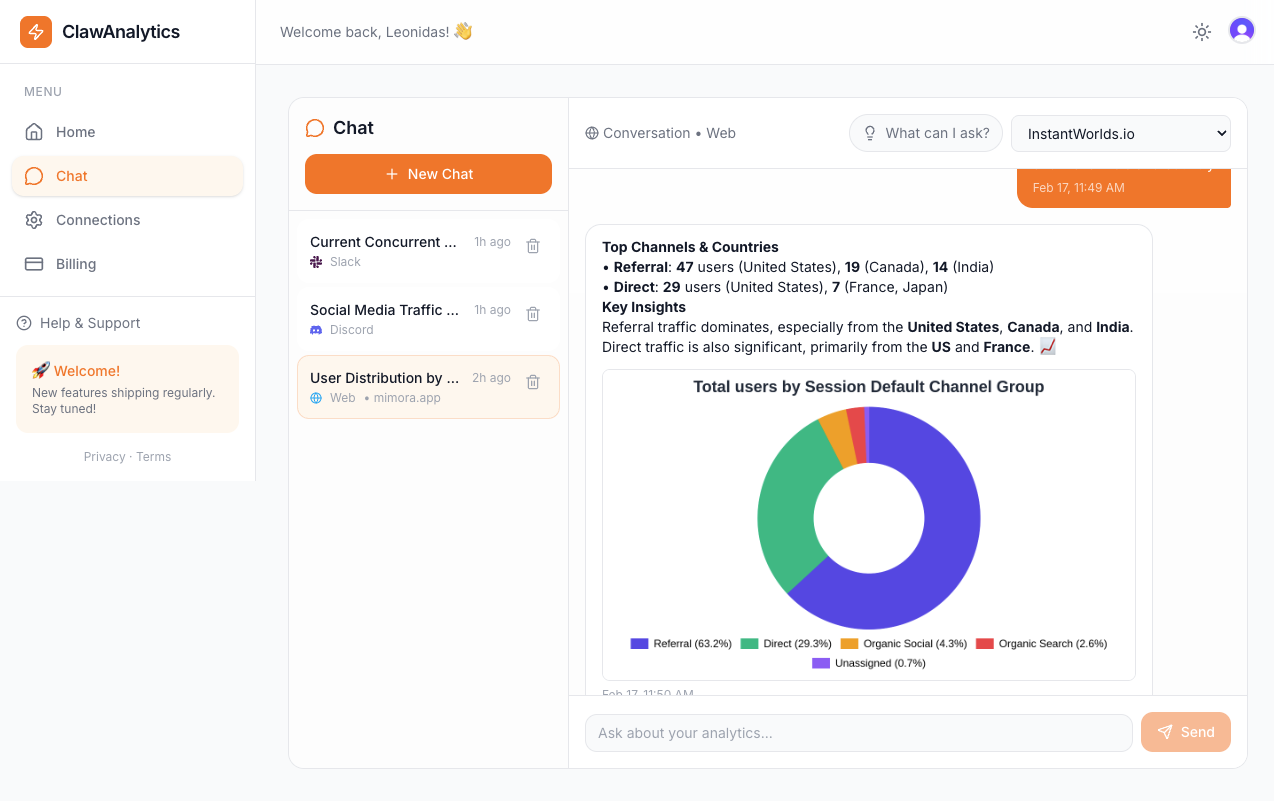
See it in action

Ask a question. Get a chart. That simple.

ClawAnalytics Chat
ClawAnalytics chat interface showing a natural language analytics query with chart response

Works on web, Discord, and Slack. Also available as an MCP server for AI agents.

Leonidas Maliokas
"I used to open Google Analytics 5 times a day and still miss things. Now I get a summary every morning and ask follow-ups when something looks off. Takes 10 seconds instead of 10 minutes."

Leonidas Maliokas

Founder, Elanra Studios

🎮 5 games monitored 💼 3 businesses

Simple, honest pricing

Start free. Upgrade when you're ready.

Free

Try it out

$0 /month
  • 5 websites
  • 30 questions/month
  • Web dashboard
  • No credit card
Start Free

Website

For small businesses

$9 /month
  • 5 websites connected
  • 100 questions/month
  • Daily morning summary
  • Web dashboard + Discord
Get Started

Business

For agencies and portfolios

$79 /month
  • Unlimited websites
  • 2,000 questions/month
  • Everything in Pro
  • ✅ API access
  • ✅ MCP integration
  • ⭐ Priority support
Get Started

Stop opening dashboards.
Start asking.

Connect Google Analytics in 30 seconds. Get answers from the dashboard or Discord. Start free — no credit card needed.

Try it free — ask your first question
30-second setup Free plan available Cancel anytime

Got questions?

What is a good bounce rate for restaurant websites?
A good bounce rate for restaurant sites ranges from 25% to 50%. Menu and reservation pages typically have lower bounce rates (25-35%) because visitors arrive with clear intent, while about us and gallery pages often have higher rates (40-50%).
Why do customers bounce from my restaurant menu page?
Customers often bounce when menus are hard to read on mobile, prices are missing, or the page loads slowly. If they cannot quickly see what you offer and at what price, they will check your competitors instead.
How can I reduce bounce rate for my reservation page?
Display the reservation form prominently, show available time slots immediately without requiring account creation, and include your phone number for customers who prefer to call. Make the booking process feel effortless.
Does bounce rate differ between lunch and dinner traffic?
Yes. Lunch traffic often has higher bounce rates (40-55%) because customers are quickly scanning during work breaks, while dinner traffic tends to have lower bounce rates (30-40%) as visitors are planning a more deliberate dining experience.

Related guides

More resources to help you get the most from your analytics.